

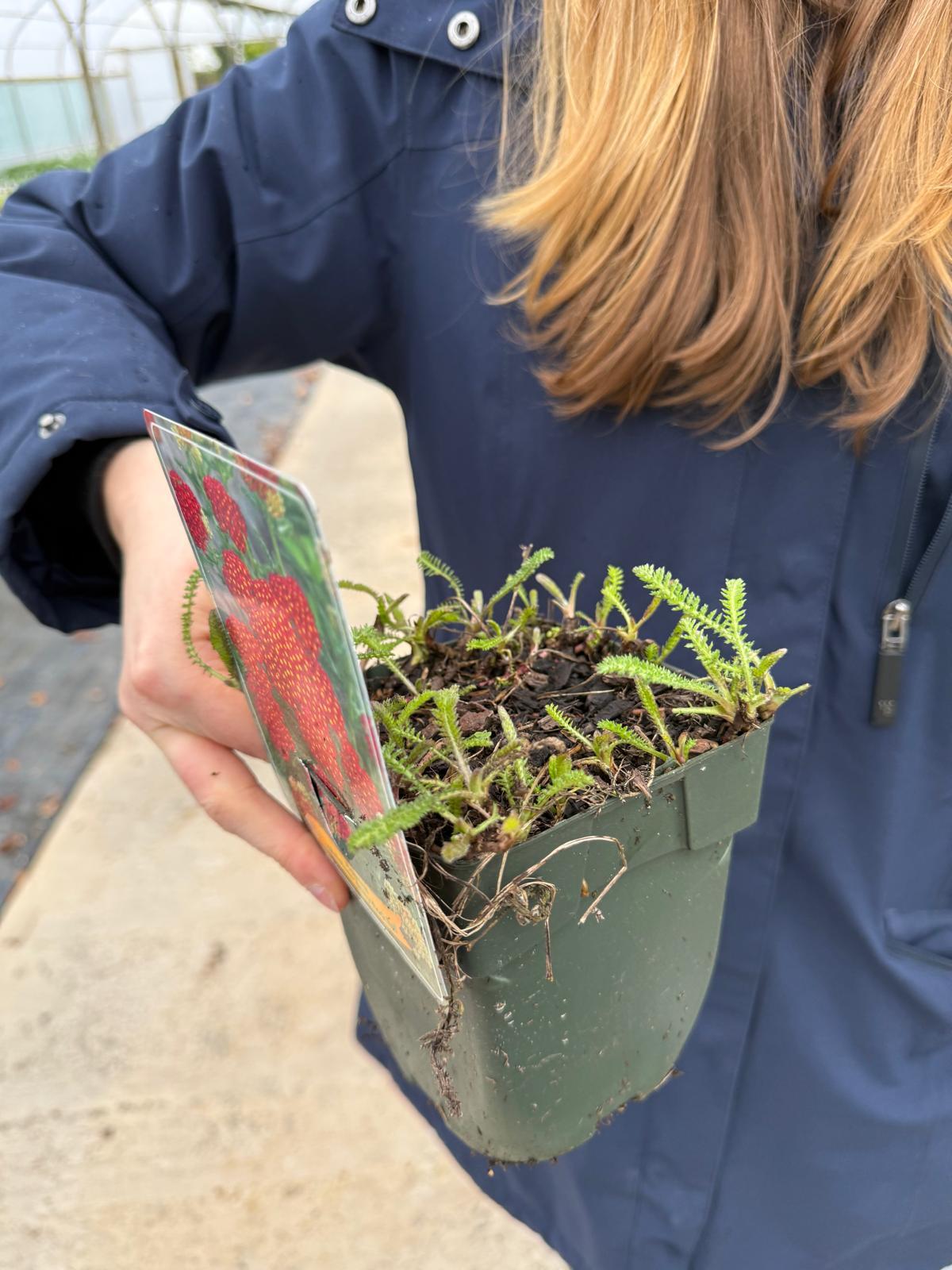
About Achillea Milly Rock Red 3 Litre Pot
Achillea millefolium ‘Milly Rock Red’ – A Compact, Vibrant Red Yarrow
Achillea millefolium ‘Milly Rock Red’ is a compact, hardy perennial prized for its intense deep red flower heads and finely textured, fern-like foliage. Flowering from early summer through late summer, the flat-topped blooms are held on sturdy stems above neat clumps of aromatic, grey-green leaves. Its long flowering season, strong colour, and compact habit make it ideal for borders, containers, and pollinator-friendly planting schemes.
With its bold colour, tidy form, and reliable performance, ‘Milly Rock Red’ brings long-lasting vibrancy and structure to any garden.
Why Grow Achillea ‘Milly Rock Red’?
Rich Red Flowers – Intense crimson-red blooms throughout summer.
Compact Growth Habit – Neat, low-growing and garden-friendly.
Long Flowering Season – Flowers from early to late summer.
Pollinator Friendly – Attracts bees and butterflies.
Drought Tolerant – Hardy and resilient once established.
Height and Spread
Typically grows to 30–40cm (12–16in) in height with a spread of 35–45cm (14–18in).
Where to Site Your Achillea ‘Milly Rock Red’
-
Mixed Borders: Adds bold colour and texture
-
Containers: Ideal for patios and terraces
-
Pollinator Gardens: Supports bees and butterflies
-
Rock Gardens: Perfect for well-drained sites
-
Contemporary Planting: Suits modern designs
How to Grow and Care
Soil – Prefers well-drained soil; thrives in poor, sandy, or rocky soils.
Light – Full sun for best flowering and compact growth.
Watering – Water during establishment; drought-tolerant once mature.
Maintenance
Deadheading – Remove spent flowers to encourage repeat blooming.
Pruning – Cut back in autumn or early spring.
Pests & Diseases – Generally pest- and disease-free.
Perfect Plant Combinations
-
Perennials: Salvia, Echinacea, Coreopsis
-
Grasses: Stipa, Festuca
-
Shrubs: Lavender, Santolina
-
Pollinator Plants: Verbena, Nepeta
Conclusion
Achillea millefolium ‘Milly Rock Red’ is a compact, long-flowering perennial with vibrant red blooms and fine foliage. Hardy, drought-tolerant, and pollinator-friendly, it is perfect for borders, containers, and wildlife gardens.
Plants well with
Our growers' picks to plant alongside Achillea Milly Rock Red 3 Litre Pot for a fuller, longer-lasting display.
-
Echinacea Purpurea Magnus 2 Litre Pot
Echinacea purpureaFull sunDeciduousIn stockRegular price £4.35Regular price -
Salvia nemorosa Amethyst 2 Litre Pot
Salvia nemorosa 'Amethyst'Full sunDeciduousIn stockRegular price £4.80Regular price -
Stipa Arundinacea 2 Litre Pot
Stipa arundinaceaFull sunSemi-evergreenIn stockRegular price £4.75Regular price -
Rudbeckia Goldstrum 2 Litre Pot
Rudbeckia fulgida var. sullivantii 'Goldsturm'Full sunDeciduousIn stockRegular price £4.95Regular price


