
-
Beech Hedging Green 60-80cm Bare Root Delivery from November
Fagus sylvaticaFull sunDeciduousPre-orderRegular price £1.45Regular price£1.60Sale price £1.45Sale -
Beech Hedging Green 80-100cm Bare Root Delivery from November
Fagus sylvaticaFull sunDeciduousPre-orderRegular price £1.71Regular price£1.90Sale price £1.71Sale -
Beech Hedging Green 100-125cm Bare Root Delivery from November
Fagus sylvaticaFull sunDeciduousPre-orderRegular price £2.43Regular price£2.70Sale price £2.43Sale -
Beech Hedging Green 125-150cm Bare Root Delivery from November
Fagus sylvaticaFull sunDeciduousPre-orderRegular price £3.51Regular price£3.90Sale price £3.51Sale -
Beech Hedge Green 2 Litre Pot Grown 80-100cm
Fagus sylvaticaIn stockRegular price £4.65Regular price -
Copper Beech Hedging 80-100cm Bare Root Delivery From November
Beech Hedging CopperDeciduousPre-orderRegular price £6.50Regular price£7.25Sale price £6.50Sale -
Beech Hedging Green 150-175cm Bare Root Delivery from November
Fagus sylvaticaFull sunDeciduousPre-orderRegular price £7.11Regular price£7.90Sale price £7.11Sale -
Copper Beech Hedging Bare Root 100/125cm Delivery from November
Fagus sylvaticaFull sunDeciduousPre-orderRegular price £7.42Regular price£8.25Sale price £7.42Sale -
Beech Hedging Green Bare Root 175-200cm Delivery From November
Fagus sylvaticaPre-orderRegular price £9.54Regular price£10.60Sale price £9.54Sale -
Green Beech Root Ball 180/200cm
Fagus sylvaticaFull sunDeciduousPre-orderRegular price £35.00Regular price -
Copper Beech 7.5 Litre Pot Grown 180/200cm Delivery from October
Fagus sylvaticaFull sunDeciduousPre-orderRegular price £49.50Regular price

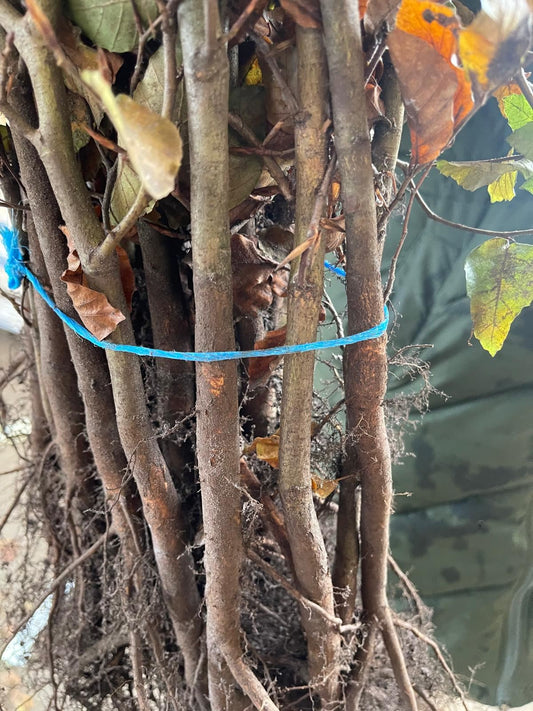

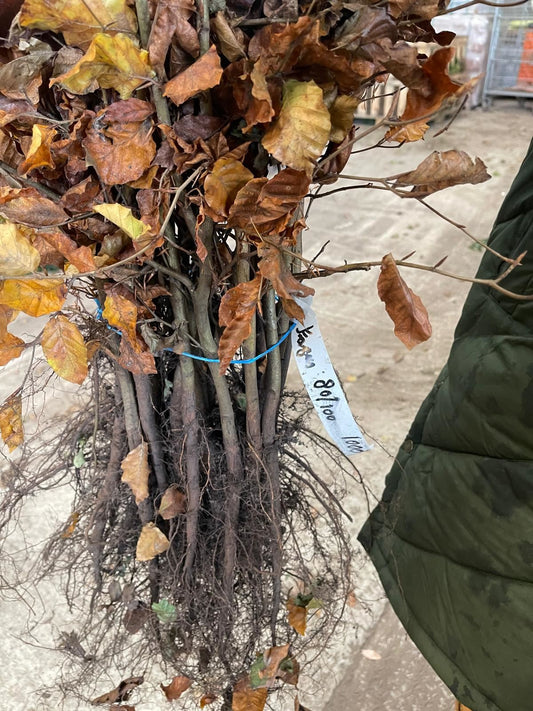


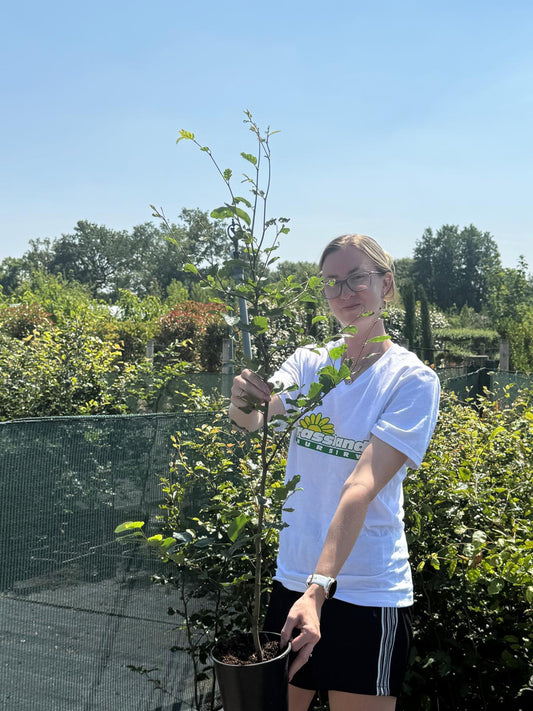

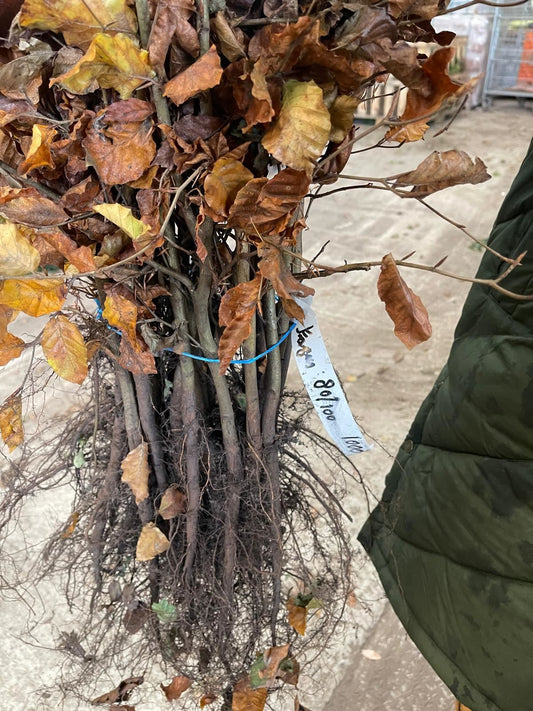


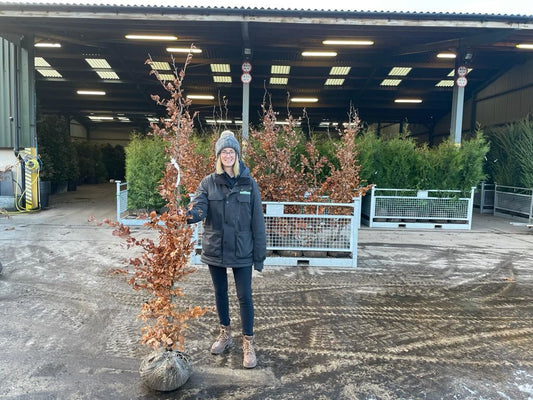


Beech hedging for classic structure and seasonal colour
Beech hedging (Fagus sylvatica) is a traditional choice for UK gardens and boundaries. Although deciduous, beech hedges retain their dry copper-coloured leaves through winter, providing a surprising level of privacy and structure compared to many other deciduous hedges.
Why choose beech for hedging?
- Dense growth suitable for formal or informal hedges
- Copper-coloured foliage retained through winter
- Fresh green leaves in spring and summer
- Long-lasting, traditional hedge option
Is beech hedging evergreen?
Beech hedging is not evergreen, but it behaves differently to most deciduous hedges. Once clipped, mature beech hedges hold onto their autumn leaves until new growth appears in spring, offering improved winter screening compared to fully bare hedges.
Best uses for beech hedging
Beech is commonly used for:
- Boundary hedges in larger gardens
- Formal clipped hedging
- Rural or traditional landscapes
- Gardens where seasonal change is welcomed
Planting height & spacing
Beech hedge plants are typically planted at:
- 60–100cm – new hedge lines
- 100–150cm+ – quicker screening
Regular trimming encourages dense, upright growth and helps maintain leaf retention.
Planting tip – soil & position
Beech hedging performs best in free-draining soil and benefits from some shelter from strong, cold winds. Avoid waterlogged ground for best results.
Beech hedging compared to other hedge types
If year-round green foliage is essential, consider evergreen options within our main Hedging Plants collection. Beech is chosen for its seasonal character and traditional appearance rather than permanent greenery.
Choosing beech hedge plants
This collection features beech plants selected specifically for hedging. Browse the options below to choose the size best suited to your planting scheme.