

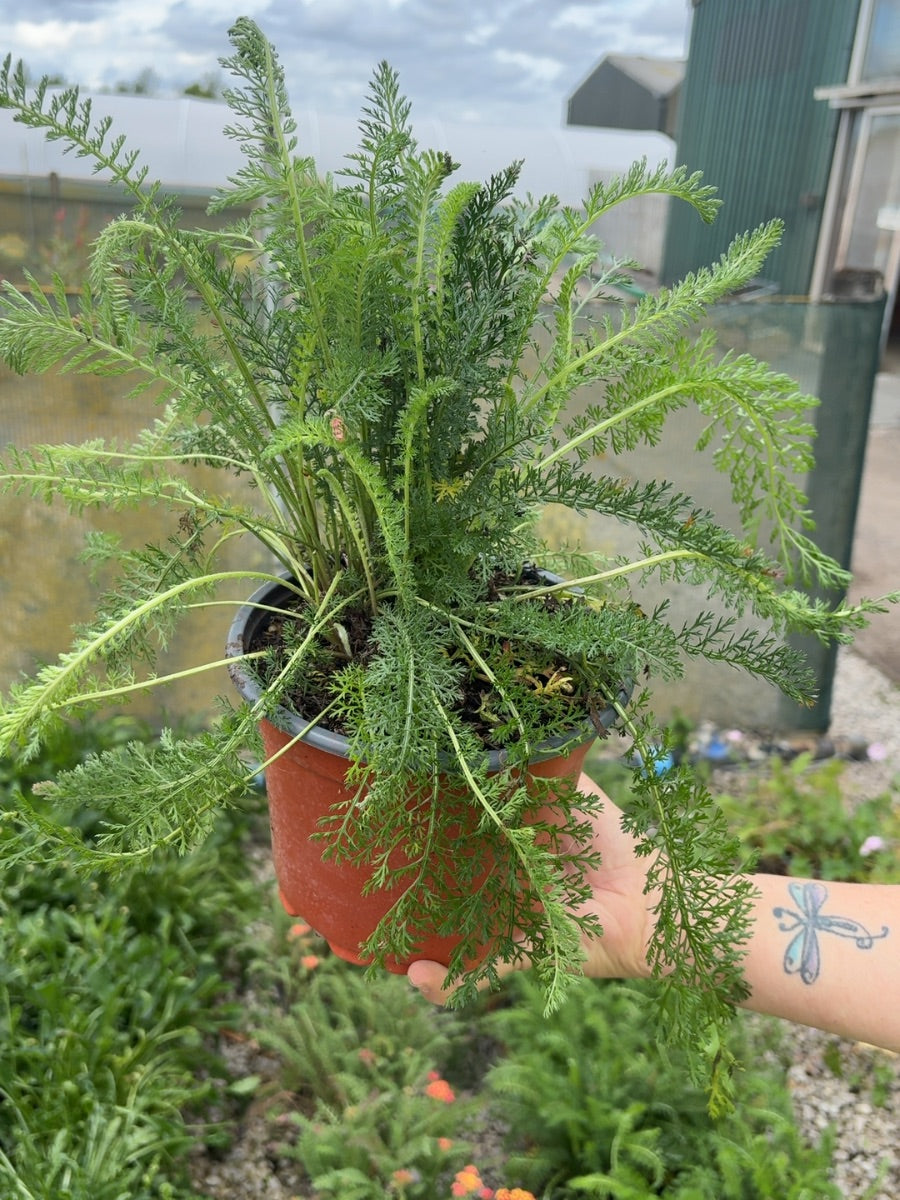
About Achillea Cerise Queen 2 Litre Pot
Achillea millefolium 'Cerise Queen' – A Vibrant, Pollinator-Friendly Yarrow with Rich Cerise Blooms
Achillea millefolium 'Cerise Queen' is a striking herbaceous perennial that brings bold, jewel-toned colour to borders and naturalistic planting schemes from early summer through to early autumn. Producing generous, flat-topped clusters of vivid cerise-pink flowers above a mound of finely divided, feathery green foliage, this classic yarrow variety is as ornamental as it is easy to grow. The intense flower colour softens attractively as the season progresses, fading to warm rose and dusky pink tones that add further depth and interest to the display.
Habit and Appearance
Bold cerise-pink flowers – Flat-topped flower heads in a rich, saturated cerise-pink make an immediate visual impact, delivering months of reliable colour from early summer into early autumn.
Finely divided foliage – The aromatic, ferny green leaves form a dense, low mound at the base, providing attractive ground-level texture even when the plant is not in flower.
Upright, clump-forming habit – Sturdy flowering stems rise clearly above the foliage, giving the plant a well-structured presence in the border without the need for staking in most situations.
Pollinator magnet – The nectar-rich flower heads are highly attractive to bees, butterflies, and a wide range of beneficial insects, making 'Cerise Queen' an excellent choice for wildlife-friendly gardens.
Fading seasonal interest – As blooms age, the flowers transition through softer rose and dusky tones, and the dried seed heads provide continued texture and interest into autumn and beyond.
Growing Conditions
Position: 'Cerise Queen' thrives in full sun and performs best when given as much direct light as possible. It will tolerate a lightly shaded position but flowering may be reduced. An open, sunny spot is ideal for the strongest display.
Soil: Prefers well-drained to dry soil and is highly tolerant of poor or sandy conditions. It is well suited to free-draining borders where many plants struggle. Heavy, waterlogged soils should be avoided, as these can cause root rot and reduce plant vigour over time.
Hardiness: Fully hardy throughout the UK, 'Cerise Queen' is a dependable perennial that will return reliably year after year with little intervention.
Care
Watering: Water regularly during the establishment period to help the plant settle in. Once established, 'Cerise Queen' is notably drought tolerant and requires very little supplementary watering, making it an ideal choice for low-maintenance or water-wise planting schemes.
Deadheading: Removing spent flower heads as they fade encourages the plant to produce a further flush of blooms and keeps the display looking fresh throughout the season. Leaving some heads in place later in the season provides food for seed-eating birds and extended structural interest.
Cutting back: Cut the plant back hard after flowering has finished to tidy the foliage and stimulate a healthy rosette of new leaves. This also helps to maintain a compact, neat habit going into winter.
Division: Clumps can spread over time and may begin to lose vigour at the centre after a few years. Dividing established plants every two to three years in spring or autumn refreshes their energy, promotes stronger flowering, and is a simple way to increase your stock.
Perfect Plant Combinations
Achillea millefolium 'Cerise Queen' combines beautifully with a wide range of border perennials and ornamental grasses. Its cerise-pink tones pair particularly well with the purple spikes of Salvia nemorosa, the silver foliage of Stachys byzantina, and the airy presence of Verbena bonariensis. For a warm, saturated colour scheme, plant alongside Gaillardia, Helenium, and Echinacea purpurea. Ornamental grasses such as Stipa tenuissima or Pennisetum add soft movement and contrast that highlights the bold, flat flower heads of 'Cerise Queen' to great effect.
Plants well with
Our growers' picks to plant alongside Achillea Cerise Queen 2 Litre Pot for a fuller, longer-lasting display.
-
Echinacea Purpurea Magnus 2 Litre Pot
Echinacea purpureaFull sunDeciduousIn stockRegular price £4.35Regular price -
Salvia Officinalis 2 Litre Pot
Salvia OfficinalisFull sunEvergreenIn stockRegular price £4.35Regular price -
Stipa Arundinacea 2 Litre Pot
Stipa arundinaceaFull sunSemi-evergreenIn stockRegular price £4.75Regular price -
Rudbeckia Goldstrum 2 Litre Pot
Rudbeckia fulgida var. sullivantii 'Goldsturm'Full sunDeciduousIn stockRegular price £4.95Regular price


