


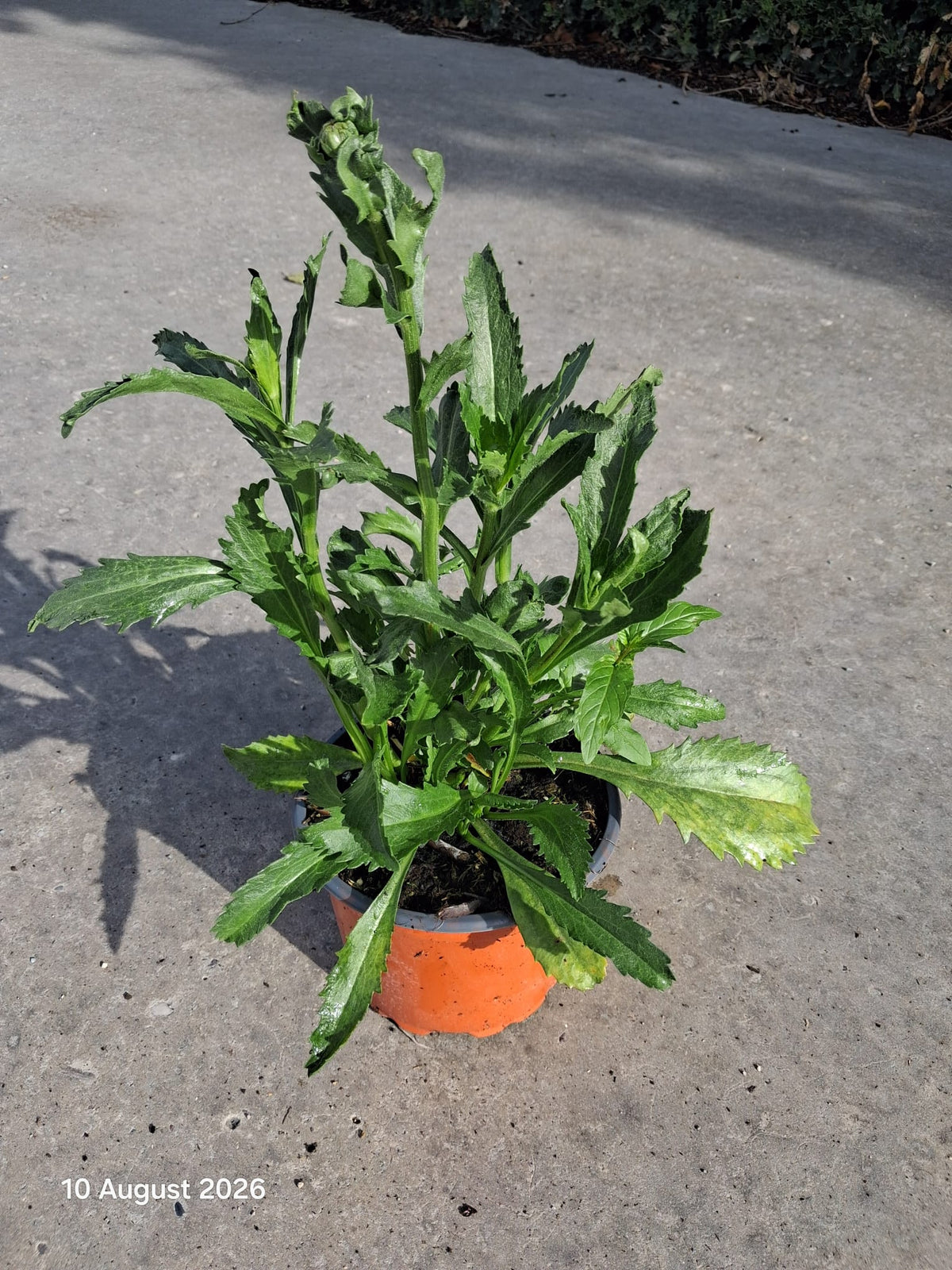

About Leucanthemum Vulgare 2 Litre Pot
Leucanthemum vulgare, commonly known as the Ox-eye daisy, is a cheerful and effortlessly charming native wildflower that brings a classic cottage-garden feel to any planting scheme. Bearing bright white ray petals surrounding a bold golden-yellow centre, the flowers are a familiar and beloved sight across meadows, roadsides and garden borders alike. A true perennial, it returns reliably year after year, spreading naturally to form generous clumps that are as attractive to pollinators as they are to the eye.
Habit and appearance
A free-flowering wildflower classic. Ox-eye daisy produces a basal rosette of dark green, toothed leaves from which slender, upright stems emerge in late spring and early summer, each topped with a single pristine daisy flower. Plants naturalise readily, self-seeding gently throughout a border or meadow planting to create a relaxed, naturalistic effect. The bright flowers are long-lasting and make excellent cut flowers, bringing a fresh, wild quality to indoor arrangements.
Growing conditions
Best in an open, sunny position. Leucanthemum vulgare thrives in full sun to light partial shade and is remarkably adaptable when it comes to soil. It performs best in well-drained, low to moderately fertile soils, and will in fact produce the most abundant flowering display when nutrients are not excessive. Highly drought-tolerant once established, it is well suited to dry borders, gravel gardens, wildflower meadows and naturalistic plantings. It grows happily in chalky, sandy or loamy soils and tolerates exposed sites with ease.
Care
Low maintenance and easy to grow. Ox-eye daisy requires very little attention once established. Deadheading spent flowers will prolong the blooming period and help control self-seeding if naturalising is not desired. Conversely, allowing the flowers to set seed will encourage the plant to spread freely, which is ideal in wildflower or meadow settings. After flowering, cut stems back to the basal rosette to keep plants tidy and to encourage a fresh flush of foliage. Division every few years in autumn or early spring will help maintain vigour and prevent clumps from becoming congested.
Wildlife value
An outstanding plant for pollinators. The open, simple flower form of Leucanthemum vulgare is perfectly suited to a wide range of beneficial insects, including bees, hoverflies and butterflies, all of which are readily attracted to the abundant pollen and nectar. It is also a valued larval food plant for certain moth species, making it an excellent choice for wildlife-friendly and ecologically conscious gardens. Including Ox-eye daisy in a mixed border or meadow planting makes a genuine contribution to supporting local biodiversity.
Plants well with
Our growers' picks to plant alongside Leucanthemum Vulgare 2 Litre Pot for a fuller, longer-lasting display.
-
Salvia nemorosa Amethyst 2 Litre Pot
Salvia nemorosa 'Amethyst'Full sunDeciduousIn stockRegular price £4.80Regular price -
Achillea Cerise Queen 2 Litre Pot
Achillea millefolium 'Cerise Queen'Full sunSemi-evergreenGetting lowRegular price £4.50Regular price -
Rudbeckia Goldstrum 2 Litre Pot
Rudbeckia fulgida var. sullivantii 'Goldsturm'Full sunDeciduousIn stockRegular price £4.95Regular price -
Echinacea Purpurea Magnus 2 Litre Pot
Echinacea purpureaFull sunDeciduousIn stockRegular price £4.35Regular price


