

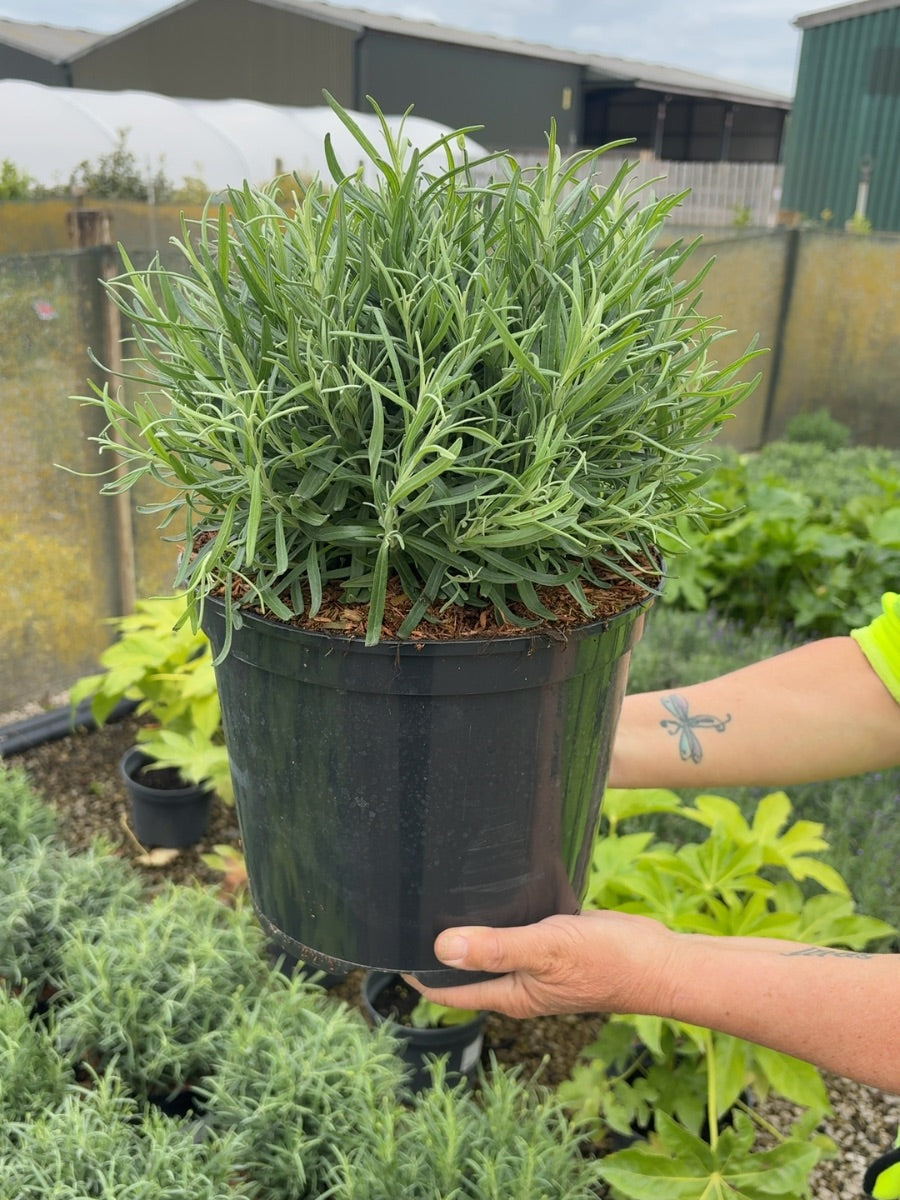

About Lavender Angustifolia Munstead 7.5 Litre Pot
Lavandula angustifolia 'Munstead' – Compact English Lavender with Rich Violet Blooms
Lavandula angustifolia 'Munstead' is one of the most popular and reliable of all the English Lavenders, beloved for its rich violet-blue flower spikes, intensely aromatic silver-grey foliage, and exceptionally neat, compact habit. Flowering earlier than many other lavender varieties, 'Munstead' is a summer staple in cottage gardens, gravel borders, and low hedging schemes, filling the air with its characteristic fragrance from early summer onwards. Fully hardy, drought tolerant once established, and wonderfully low maintenance, it is an outstanding choice for gardeners of all levels seeking reliable colour, scent, and wildlife value in a sunny position.
Habit & Appearance
Foliage:
Narrow, lance-shaped leaves in soft silver-grey form dense, bushy mounds with a distinctly neat and rounded outline. The foliage is strongly aromatic when touched or brushed against, releasing the classic lavender fragrance throughout the growing season. As an evergreen shrub, 'Munstead' retains its attractive silvery foliage through winter, providing year-round structure and texture in the border.
Flowers:
From early to mid-summer, upright flowering stems rise above the foliage carrying dense, compact spikes of richly fragrant flowers in a deep violet-blue. The blooms are exceptionally attractive to bees, butterflies, and a wide range of beneficial pollinating insects, making 'Munstead' an outstanding plant for wildlife-friendly planting. The flower spikes are also excellent for cutting and drying, retaining their fragrance and colour when harvested at the right stage.
Form:
'Munstead' develops a particularly compact and tidy dome-shaped habit, making it one of the most versatile lavenders for smaller gardens and confined spaces. Its naturally restrained growth lends itself perfectly to path edging, low informal hedging, container planting, and the front of sunny borders where structure and fragrance are both desirable.
Growing Conditions
Position:
Plant in a position that receives full sun for the best flowering performance, strongest fragrance, and most compact growth. 'Munstead' thrives in open, sunny aspects with good air circulation and performs poorly in shade, heavy shelter, or overly humid conditions. South- or west-facing borders, gravel gardens, and raised beds are ideal.
Soil:
Free-draining soil is essential for long-term success. 'Munstead' thrives in light, sandy, or chalky soils of low to moderate fertility and is highly tolerant of dry, poor conditions. Heavy, wet, or waterlogged soils — particularly in winter — are the most common cause of decline and should be improved with the addition of horticultural grit or sharp sand at planting time. On well-drained soils, established plants are exceptionally resilient.
Hardiness:
Fully hardy throughout the UK, tolerating temperatures down to approximately -15°C. 'Munstead' is one of the hardier selections of Lavandula angustifolia and performs reliably across a wide range of UK climates when planted in free-draining conditions. Young plants may benefit from a little protection in their first winter until fully established.
Watering:
Once established, 'Munstead' is highly drought tolerant and requires minimal supplementary watering. Newly planted specimens should be watered regularly during dry spells in their first growing season to encourage good root establishment. Overwatering or poorly drained conditions around the roots are far more harmful than occasional dry periods.
Care & Pruning
Pruning:
Regular light pruning is important for maintaining a compact, bushy shape and prolonging the productive life of the plant. Trim back the flowered stems promptly after flowering in late summer, removing the spent flower spikes along with a portion of the soft leafy growth. A light tidy in early spring, once the risk of hard frost has passed, helps remove any winter-damaged growth and encourages fresh, vigorous new shoots. Always avoid cutting back into old, bare, woody stems below the leafy growth, as lavender does not reliably regenerate from old wood.
Feeding:
Little or no feeding is required. 'Munstead' performs best in lean, low-fertility conditions and excessive feeding — particularly with nitrogen-rich fertilisers — will encourage soft, floppy leafy growth at the expense of flowers and fragrance. A light dressing of slow-release fertiliser in spring is sufficient if the soil is very poor.
General Maintenance:
'Munstead' is a naturally low-maintenance shrub. Deadheading spent flower spikes promptly can encourage a modest second flush of blooms and keeps the plant looking tidy through late summer. Consistent light pruning year on year prevents the plant from becoming woody and open-centred, extending its useful garden life considerably.
Perfect For
Cottage & Traditional Gardens: A timeless and quintessentially English planting choice with enduring charm and appeal.
Pollinator & Wildlife Gardens: Highly attractive to bees, butterflies, and a wide range of beneficial insects throughout the flowering season.
Gravel & Mediterranean Planting: Thrives in the warm, free-draining conditions of gravel garden schemes and sun-baked borders.
Low Hedging & Path Edging: The compact habit makes 'Munstead' one of the finest lavenders for creating neat, fragrant informal hedges along paths and driveways.
Patio & Container Planting:
Plants well with
Our growers' picks to plant alongside Lavender Angustifolia Munstead 7.5 Litre Pot for a fuller, longer-lasting display.
-
Salvia Officinalis 2 Litre Pot
Salvia OfficinalisFull sunEvergreenIn stockRegular price £4.35Regular price -
Stipa Arundinacea 2 Litre Pot
Stipa arundinaceaFull sunSemi-evergreenIn stockRegular price £4.75Regular price

