

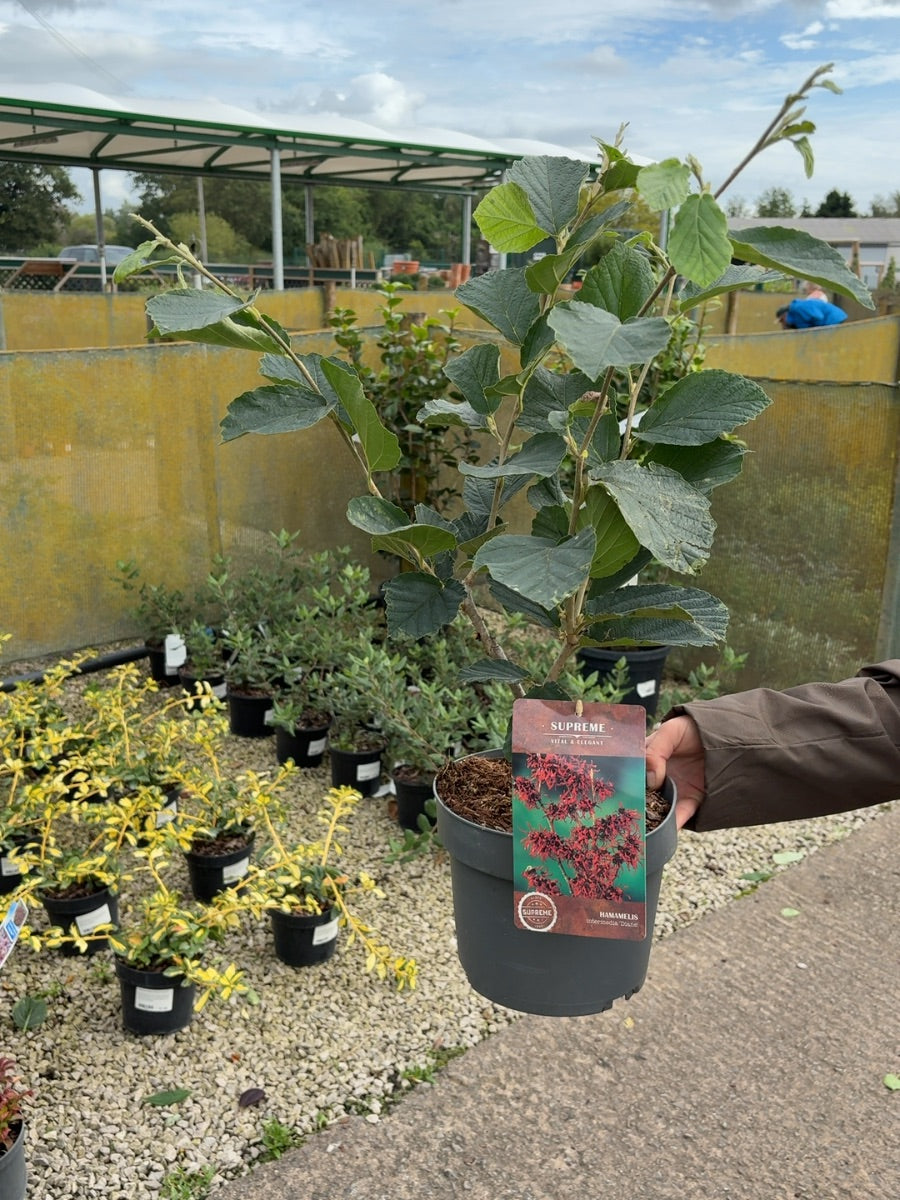

About Hamamelis int. Diane 4 Litre Pot 40-60cm Tall
Hamamelis × intermedia 'Diane' – A Blaze of Copper-Red in the Winter Garden
When the garden is at its most bare and subdued, Hamamelis × intermedia 'Diane' delivers one of the most breathtaking displays of the year. From mid-winter through to early spring, its leafless branches are adorned with clusters of spidery, ribbon-like flowers in a rich, deep copper-red – glowing like embers against a grey winter sky. A gentle, sweet fragrance accompanies the blooms, drifting on cold air and announcing the season's quiet turning.
'Diane' is a witch hazel of enduring appeal throughout the year. In summer, broad, rounded leaves provide a lush green backdrop, while autumn brings a second flourish as the foliage ignites in warm tones of amber, orange, and crimson before falling. With its graceful, spreading, vase-shaped habit, this is a shrub that earns its place in the garden across every season.
Why Grow Hamamelis × intermedia 'Diane'?
Spectacular Winter Flowers – Deep copper-red, spidery blooms light up bare branches in the coldest months.
Sweet Winter Fragrance – Delicate perfume that carries on crisp winter air.
Outstanding Autumn Colour – Foliage turns vivid shades of amber, orange, and crimson before leaf fall.
Year-Round Structure – A graceful, spreading, vase-shaped form that adds presence to the garden in every season.
Hardy & Low Maintenance – Reliable and unfussy once established, well-suited to UK conditions.
Growing Conditions
Position: 'Diane' thrives in full sun to partial shade. A sunny or lightly dappled spot will produce the most abundant flowering and the richest autumn foliage colour. Shelter from harsh, drying winds is beneficial, particularly in more exposed gardens.
Soil: This witch hazel prefers moist, well-drained soil with a slightly acidic to neutral pH. It performs best in fertile, loamy ground enriched with organic matter, though it will adapt to a range of soil types provided they do not become waterlogged. Avoid shallow, chalky soils, which can cause nutrient deficiencies and poor growth.
Hardiness: Fully hardy across the vast majority of the UK, tolerating temperatures well below freezing. Even in bloom during mid-winter, the flowers show remarkable resilience to cold snaps.
Planting & Care
Planting: Choose a permanent position carefully, as witch hazels dislike being moved once established. Dig a generous planting hole, incorporate plenty of well-rotted organic matter, and firm in well. Water thoroughly after planting and apply a mulch of bark or garden compost around the base to retain moisture and suppress weeds.
Watering: Keep the soil consistently moist, particularly during dry summers and in the first couple of seasons while the plant establishes its root system. Avoid allowing the ground to dry out completely, as prolonged drought stress can reduce flowering the following winter.
Feeding: Apply a balanced, slow-release fertiliser or a dressing of well-rotted compost in early spring to support healthy growth. An ericaceous feed can be beneficial on soils that tend toward neutral or slightly alkaline.
Pruning: Very little pruning is required and 'Diane' is best left to develop its natural form. If shaping is needed, carry out any light trimming immediately after flowering in late winter or early spring, before new leaves emerge. Remove any dead, damaged, or crossing branches at this time. Avoid heavy pruning, as witch hazels flower on mature wood and over-cutting will significantly reduce the floral display.
Mulching: An annual top-dressing of bark chip or leaf mould around the root zone helps to maintain soil moisture, moderate temperature, and gradually improve soil structure over time.
Design & Planting Ideas
Plant as a standalone specimen in a lawn or border, where its winter colour and fragrance can be fully appreciated from a path or window.
Incorporate into a winter border alongside Hellebores, Sarcococca, and Cornus for a rich tapestry of cold-season interest.
Use at the edge of a woodland garden, where the dappled shade and leafy, moisture-retentive soil mirrors its natural growing conditions.
Underplant with early spring bulbs such as snowdrops, crocus, or dwarf narcissus to complement the winter blooms and extend the season's display.
Pair with evergreen shrubs or dark-foliaged plants to create a dramatic contrast that shows off the copper-red flowers to their fullest effect.
Hamamelis × intermedia 'Diane' is a garden treasure of the highest order – a shrub that brings warmth, colour, and fragrance at the darkest time of year, then delivers again with a fiery autumn farewell. For any garden seeking genuine year-round beauty, 'Diane' is a choice you will never regret.
Plants well with
Our growers' picks to plant alongside Hamamelis int. Diane 4 Litre Pot 40-60cm Tall for a fuller, longer-lasting display.
-
Cornus Kelseyi 2 Litre Pot
Cornus sericea 'Kelseyi'Full sunDeciduousIn stockRegular price £4.60Regular price -
Daphne bholua Perfume Princess 20 Litre Pot 60-80cm
Daphne Perfume Princess ('Dapjur01')Full sunEvergreenIn stockRegular price £169.50Regular price -
Helleborus Niger Christmas Carol 12cm Pot
Helleborus niger 'Christmas Carol'Semi-evergreenIn stockRegular price £8.15Regular price


