


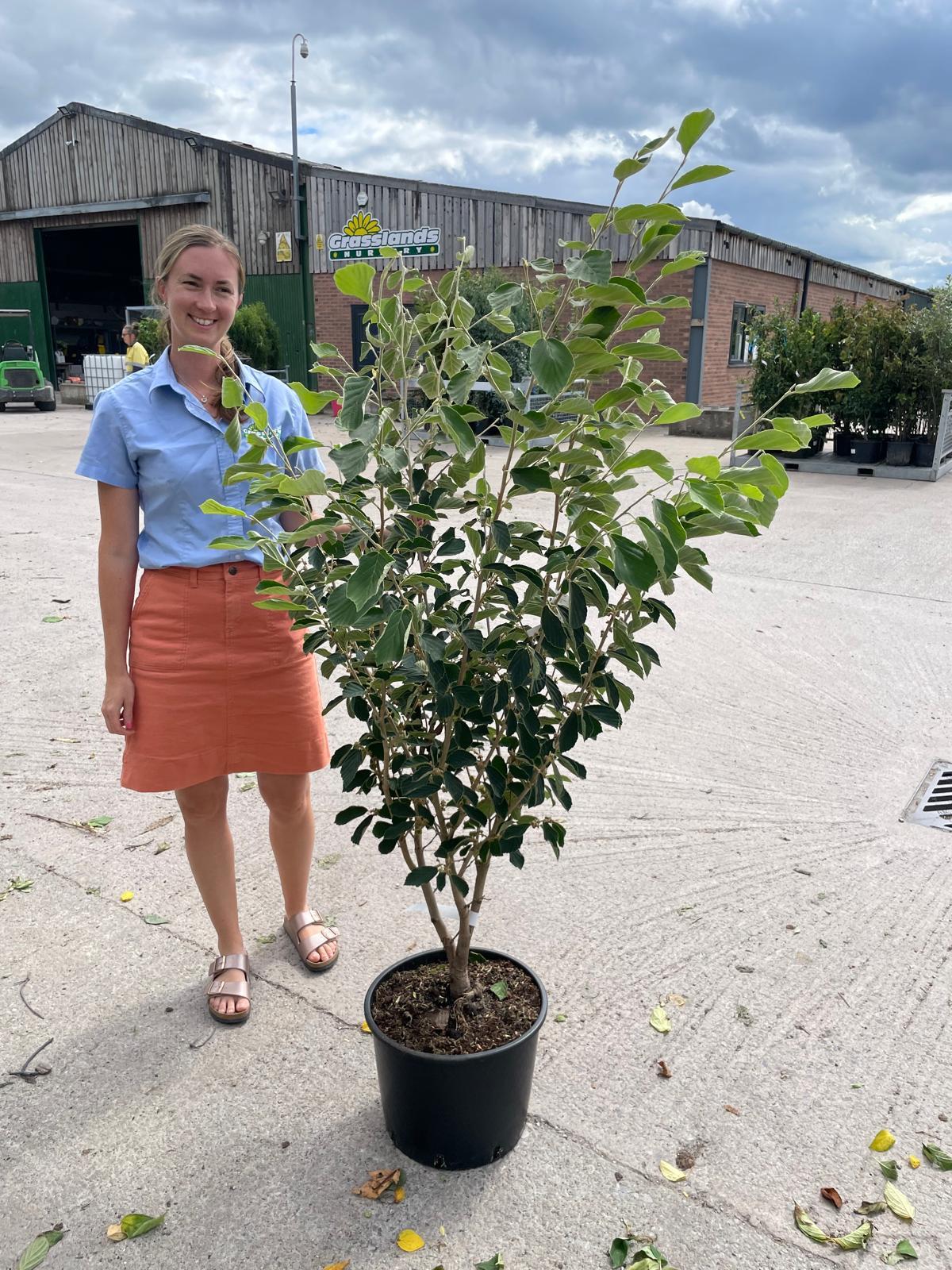

About Hamamelis Arnolds Promise 20 Litre Pot 125/150cm Tall
Hamamelis ‘Arnold’s Promise’ – Winter’s Golden Bloom with Delightful Fragrance
Hamamelis ‘Arnold’s Promise’ is a captivating deciduous shrub treasured for its early flowering period, often beginning in late winter when few other plants are in bloom. Its bright yellow, ribbon-like petals appear on bare branches, filling the garden with a subtle, sweet fragrance that heralds the arrival of spring.
The shrub’s spreading habit and rich autumn foliage, turning shades of orange, red, and yellow, provide interest throughout the year. This makes ‘Arnold’s Promise’ a valuable addition to borders, woodland gardens, or naturalistic plantings looking to brighten up the colder months.
Why Grow Hamamelis ‘Arnold’s Promise’?
-
Early Winter to Spring Blooms – Bright yellow, spidery flowers appear on leafless stems.
-
Fragrant Flowers – Offers a delicate, sweet scent that enlivens the garden.
-
Attractive Autumn Foliage – Leaves turn warm shades of orange and red before falling.
-
Compact, Spreading Habit – Ideal for borders, woodland gardens, or mixed shrubbery.
-
Low Maintenance – Hardy and adaptable to a variety of soils.
Planting & Care Guide
Position: Prefers full sun to partial shade for best flowering and foliage colour.
Soil: Thrives in moist, well-drained, acidic to neutral soil rich in organic matter.
Watering: Water regularly during dry spells, especially in summer and establishment phase.
Feeding: Apply a balanced fertiliser in early spring to encourage healthy growth and abundant flowers.
Pruning: Light pruning after flowering helps maintain shape and encourages new growth.
Design & Planting Ideas
-
Use as a standalone specimen to showcase its fragrant winter blooms.
-
Plant in woodland or naturalistic gardens for seasonal structure and interest.
-
Combine with early spring bulbs and evergreens to extend winter and spring appeal.
-
Pair with shrubs that have contrasting foliage or flower colour for dramatic effect.
Hamamelis ‘Arnold’s Promise’ brings vibrant colour and fragrance to the garden when it’s needed most, making it a delightful choice for gardeners seeking winter interest and early spring charm.
Plants well with
Our growers' picks to plant alongside Hamamelis Arnolds Promise 20 Litre Pot 125/150cm Tall for a fuller, longer-lasting display.
-
Cornus Kelseyi 2 Litre Pot
Cornus sericea 'Kelseyi'Full sunDeciduousIn stockRegular price £4.60Regular price -
Daphne bholua Perfume Princess 20 Litre Pot 60-80cm
Daphne Perfume Princess ('Dapjur01')Full sunEvergreenIn stockRegular price £169.50Regular price -
Helleborus Niger Christmas Carol 12cm Pot
Helleborus niger 'Christmas Carol'Semi-evergreenIn stockRegular price £8.15Regular price


