


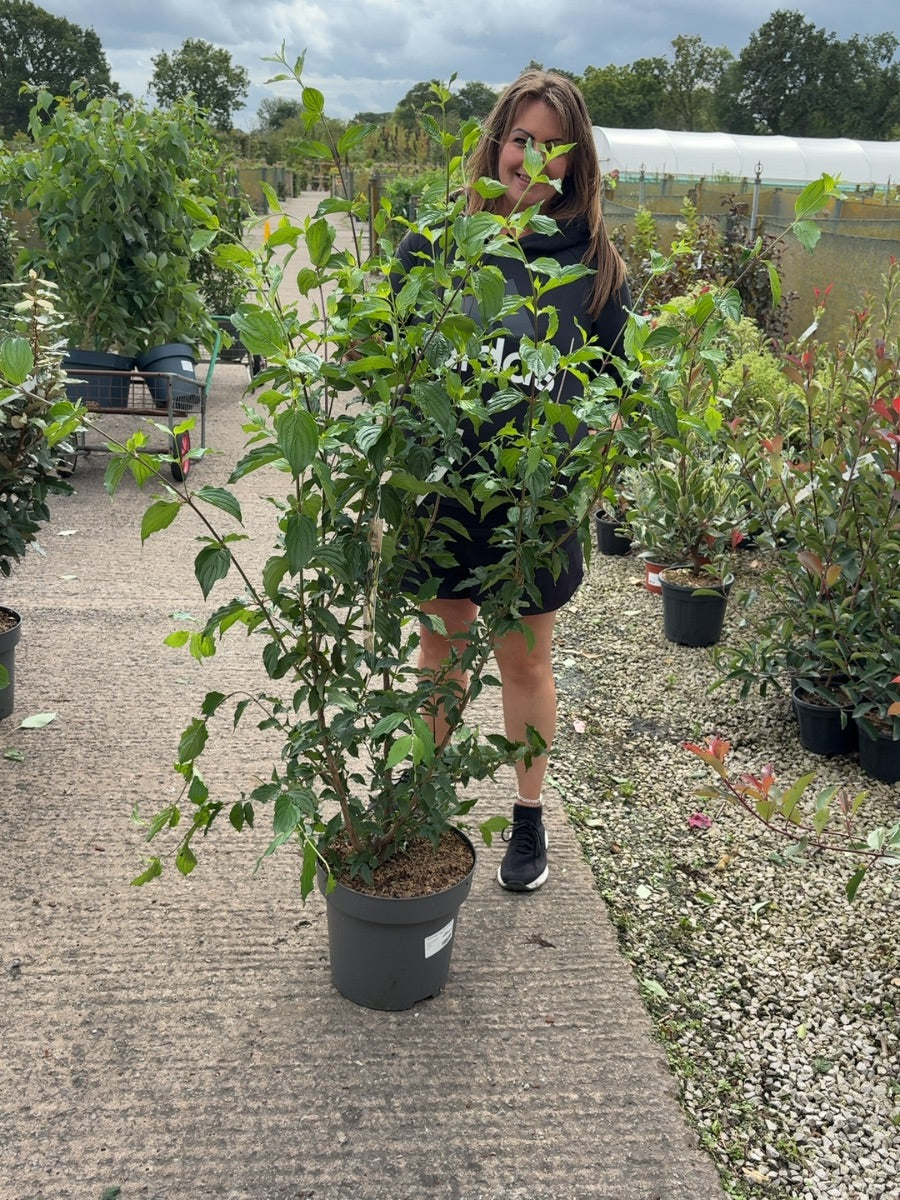

About Cornus Mas 12 Litre Pot 125-150cm Tall
Cornus mas - Cornelian Cherry
A wonderfully versatile deciduous tree offering a succession of seasonal highlights throughout the year. Cornelian cherry is one of the earliest trees to flower, producing a haze of cheerful yellow blossom in late winter before the leaves emerge, followed by attractive foliage, edible scarlet fruits in late summer, and warm autumn colour. A truly rewarding, multi-season tree suitable for a wide range of garden settings.
Seasonal Highlights
Late winter brings clusters of small but abundant bright yellow flowers borne directly on the bare branches, providing a vital early source of nectar for emerging pollinators. Fresh green leaves follow in spring and remain attractive throughout summer. By late summer and early autumn, striking deep red, cherry-like fruits ripen on the branches — edible and tart, they are traditionally used in preserves, jams and cordials. Foliage often develops rich purplish-red tints before falling in autumn.
Key Features
- Masses of yellow flowers in late winter on bare stems
- One of the earliest trees to bloom each year
- Attractive edible scarlet fruits in late summer
- Warm autumn foliage colour
- Excellent for wildlife — pollinators and birds
- Fully hardy and long-lived
- Tolerant of a range of soils and situations
Habit and Appearance
Cornus mas naturally forms a large, bushy, multi-stemmed tree or large shrub with an attractively rounded, spreading crown. It has an appealing informal character, with oval, pointed mid-green leaves and attractive flaking bark on older stems that adds further winter interest. Growth is steady rather than rapid, and the tree becomes increasingly characterful with age, making it a worthwhile long-term investment in any garden.
Growing Conditions
Position: Cornelian cherry thrives in full sun to partial shade. A sunny position will encourage the best flowering and the most prolific fruiting, though it performs reliably in shadier spots too. It is tolerant of exposed sites and urban conditions.
Soil: Adaptable to most well-drained soils, including chalk, clay, loam and sand. It tolerates alkaline conditions particularly well, making it an excellent choice for gardens on chalky or limestone soils where other trees may struggle. Avoid permanently waterlogged ground.
Care
Establishment: Water regularly during the first growing season to help the plant establish a strong root system. Once settled, Cornus mas is notably drought-tolerant and largely self-sufficient.
Pruning: Very little pruning is required. Cornus mas can be grown as a natural, unpruned specimen, or lightly shaped after flowering in early spring if needed to maintain a desired form. It can also be trained and clipped as a large informal hedge or screen. Avoid heavy pruning in late summer or autumn, which may remove the following year's flower buds.
Feeding and mulching: Apply a mulch of well-rotted organic matter around the base in spring to retain moisture and suppress weeds. Established plants rarely need feeding.
Pests and diseases: Generally trouble-free and very resilient. One of the most reliable and undemanding trees for the garden.
Perfect For
An excellent choice for mixed borders and informal gardens, where its long season of interest adds real value. Ideal as a standalone specimen tree in a lawn or as part of a wildlife garden, providing early nectar for bees and fruits enjoyed by birds. Works beautifully as an informal hedge or screen, and is particularly well suited to cottage gardens, country gardens and productive gardens where the edible fruits can be harvested and enjoyed.
Looks Great With
The late-winter flowers complement other early-season interest plants such as snowdrops, hellebores and witch hazels. In summer, the green canopy pairs well with herbaceous perennials and ornamental grasses. For autumn displays, combine with trees and shrubs offering berries and foliage colour such as viburnums and amelanchiers.
Cornelian cherry is a superb, underused tree that rewards the patient gardener with beauty and interest in every season — and the bonus of its own edible harvest.
Plants well with
Our growers' picks to plant alongside Cornus Mas 12 Litre Pot 125-150cm Tall for a fuller, longer-lasting display.
-
Hamamelis Arnolds Promise 20 Litre Pot 125/150cm Tall
Hamamelis × intermedia 'Arnold Promise'Full sunDeciduousGetting lowRegular price £165.00Regular price -
Hydrangea Arborescens Annabelle 4.5 Litre Pot
Hydrangea Arborescens AnnabelleFull sunDeciduousIn stockRegular price £21.50Regular price

