
Rootball pre-order discount ends soon
Reserve rootball hedging now at pre-order prices — dug fresh and delivered when the season starts in October.

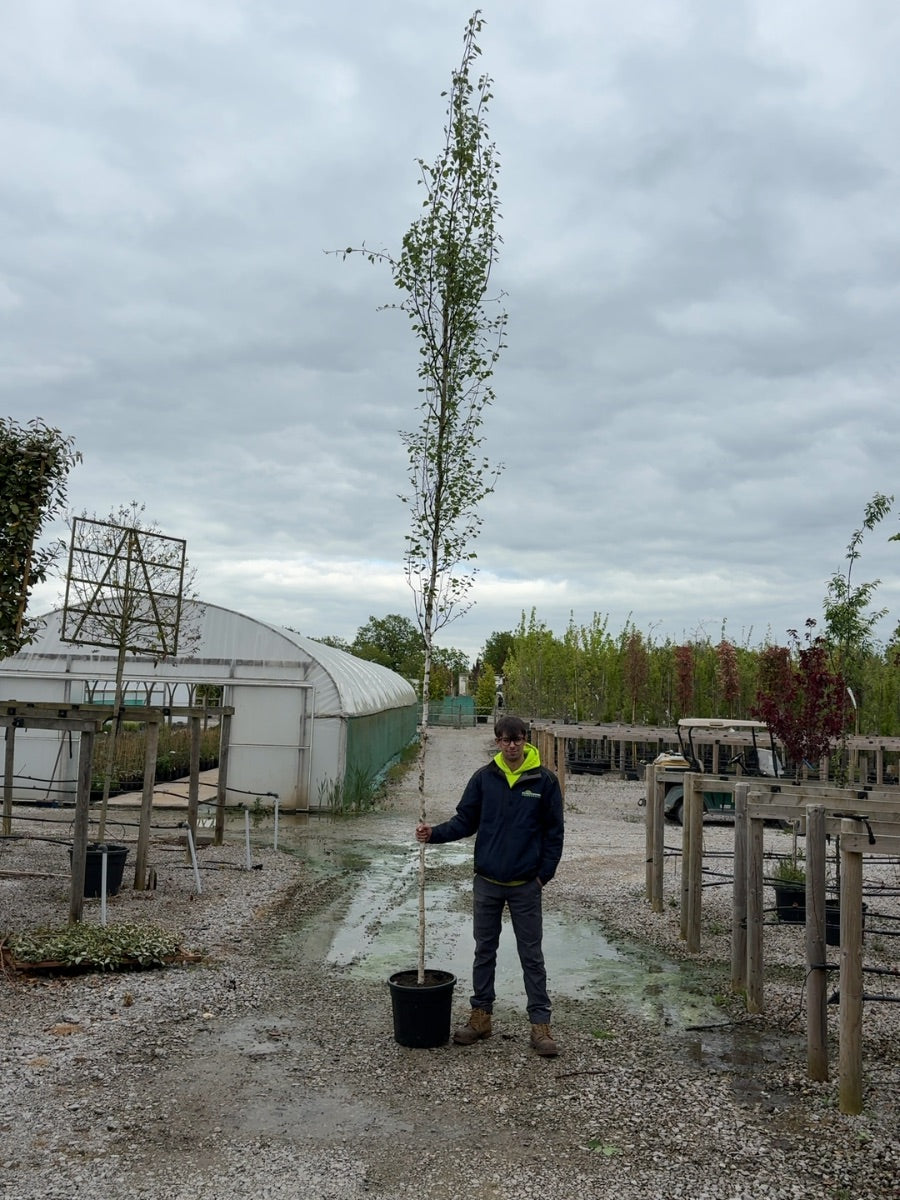

About Betula pen. Fastigiata 8/10cm Girth Root Ball Delivery November Onwards
Betula pendula 'Fastigiata' – Columnar Silver Birch with Striking White Bark & Space-Saving Elegance
Betula pendula 'Fastigiata', the fastigiate silver birch, is a distinguished ornamental tree prized for its slender, columnar habit and the classic silver-white bark that has made silver birch one of Britain's most beloved native trees. Where the species spreads wide, 'Fastigiata' reaches skyward in a neat, upright column — making it an outstanding choice for formal gardens, narrow borders, avenues, and landscapes where space is at a premium but vertical impact is everything. Fully hardy and long-lived, this is a tree that rewards year after year with seasonal colour, architectural form, and year-round garden presence.
Seasonal Beauty & Growth
- Spring: Delicate, bright green leaves emerge along tightly upswept branches, bringing the tree to life after the dormant season.
- Summer: The canopy fills with rich, fresh green foliage that shimmers in the breeze, casting elegant dappled shade.
- Autumn: Leaves turn a warm, glowing golden-yellow before falling, creating a striking seasonal display against the pale bark.
- Winter: The brilliant silver-white bark and clean upright silhouette command attention in the garden even when bare, providing exceptional structural interest through the coldest months.
Structure & Form
- Habit: Distinctly columnar and fastigiate — branches sweep upward closely rather than spreading outward, creating a tall, narrow crown unlike the weeping form of the standard silver birch.
- Bark: The hallmark bright silver-white bark, which develops attractive dark fissures toward the base with age, provides year-round visual interest and texture.
- Foliage: Small, triangular, finely serrated green leaves offer a light, airy quality to the canopy, moving gracefully in the wind.
- Catkins: Pendulous yellow-brown catkins appear in early spring, adding further seasonal charm before the leaves emerge fully.
- Mature size: Typically reaches 10–15m in height at maturity with a notably narrow spread, making it one of the most space-efficient columnar trees available.
Perfect for Various Landscapes
- Narrow Gardens & Urban Spaces – The tight columnar form makes 'Fastigiata' ideal wherever horizontal space is limited but height is desired.
- Formal Avenues & Driveways – Plant in repeating lines to create a dramatic, structured avenue with year-round elegance.
- Specimen & Focal Point – Use as a standalone statement tree where its upright form and luminous bark draw the eye from across the garden.
- Screening & Boundaries – The vertical habit provides effective, attractive screening without casting excessive shade or encroaching on neighbouring planting.
- Parks & Public Landscapes – Its neat habit and low maintenance requirements make it an excellent choice for managed public spaces and civic planting schemes.
Growing Conditions
- Position: Thrives in full sun to partial shade; best form and bark colour are achieved in an open, well-lit site.
- Soil: Prefers moist, well-drained soil with a slightly acidic to neutral pH. Tolerates a range of soil types including sandy and loamy soils; avoid waterlogged or heavy clay conditions.
- Hardiness: Fully hardy throughout the UK and across a wide range of northern European climates, tolerating hard frosts and exposed positions with ease.
- Wildlife: Like all birches, 'Fastigiata' supports a rich range of wildlife, including insects, caterpillars, and birds that feed on its seeds and invertebrates.
Care & Pruning
- Watering: Water regularly during the first growing season after planting to help establish a strong root system. Once established, the tree is largely self-sufficient in normal UK conditions.
- Pruning: Minimal pruning is required to maintain the natural columnar form. If necessary, prune only during late summer to autumn — birches bleed sap heavily if cut in late winter or spring, so avoid pruning during this period.
- Deadwood: Remove any dead, damaged, or crossing branches as needed to keep the canopy healthy and well-structured.
- Feeding: Apply a balanced general-purpose fertiliser in spring to support healthy growth, particularly in poorer soils.
- Mulching: A layer of organic mulch around the base helps retain moisture, suppress weeds, and protect the root zone — particularly beneficial in the establishment years.
Perfect Plant Combinations
- Evergreen Hedging – Contrast the pale bark and airy canopy against a dark backdrop of Taxus baccata (yew) or Fagus sylvatica hedge to create a dramatic formal planting.
- Ornamental Grasses – Underplant with Miscanthus or Deschampsia for graceful movement and texture that echoes the birch's own light, a
Plants well with
Our growers' picks to plant alongside Betula pen. Fastigiata 8/10cm Girth Root Ball Delivery November Onwards for a fuller, longer-lasting display.
-
Hamamelis Arnolds Promise 20 Litre Pot 125/150cm Tall
Hamamelis × intermedia 'Arnold Promise'Full sunDeciduousGetting lowRegular price £165.00Regular price -
Cornus Kelseyi 2 Litre Pot
Cornus sericea 'Kelseyi'Full sunDeciduousIn stockRegular price £4.60Regular price

