
-
Wisteria Sinensis 4 Litre Pot
Wisteria sinensisDeciduousIn stockRegular price £34.50Regular price -
Wisteria Sinensis 10 Litre Pot 175/200cm
Wisteria sinensisFull sunDeciduousIn stockRegular price £69.50Regular price -
Wisteria Sinensis Alba 4 Litre Pot
Wisteria sinensis 'Alba'Full sunDeciduousIn stockRegular price £29.50Regular price -
Wisteria Floribunda Rosea 4 Litre Pot
Wisteria floribunda 'Rosea'Full sunDeciduousIn stockRegular price £34.50Regular price -
Wisteria Floribunda Alba 10 Litre Pot
Wisteria floribunda 'Alba'Full sunDeciduousGetting lowRegular price £69.50Regular price -
Wisteria Floribunda Rosea 10 Litre Pot
Wisteria floribunda 'Rosea'Full sunDeciduousGetting lowRegular price £69.50Regular price -
Wisteria floribunda Caroline 10 Litre Pot
Wisteria floribunda CarolineGetting lowRegular price £69.50Regular price -
Wisteria Floribunda Caroline 4 Litre Pot
Wisteria floribunda 'Caroline'DeciduousIn stockRegular price £34.50Regular price -
Wisteria sinensis - Chinese Wisteria 2 Litre Pot
Wisteria sinensisFull sunDeciduousGetting lowRegular price £12.45Regular price -
Wisteria Sinensis Umbrella Standard 30L Pot
Wisteria SinensisDeciduousGetting lowRegular price £216.00Regular price

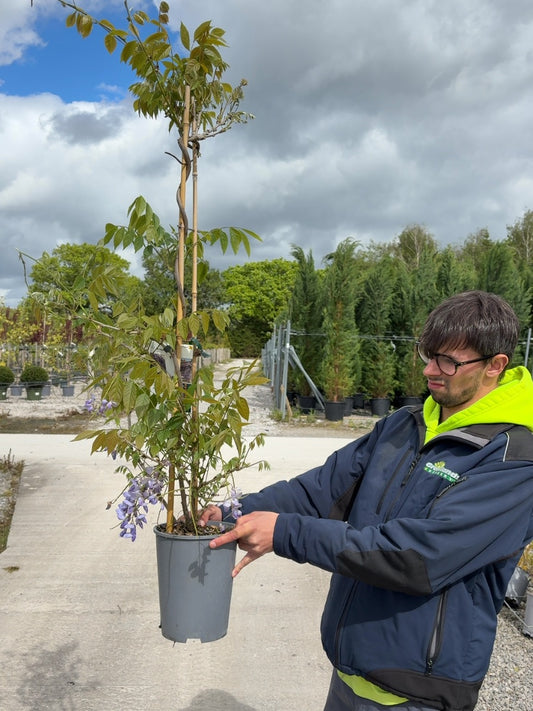

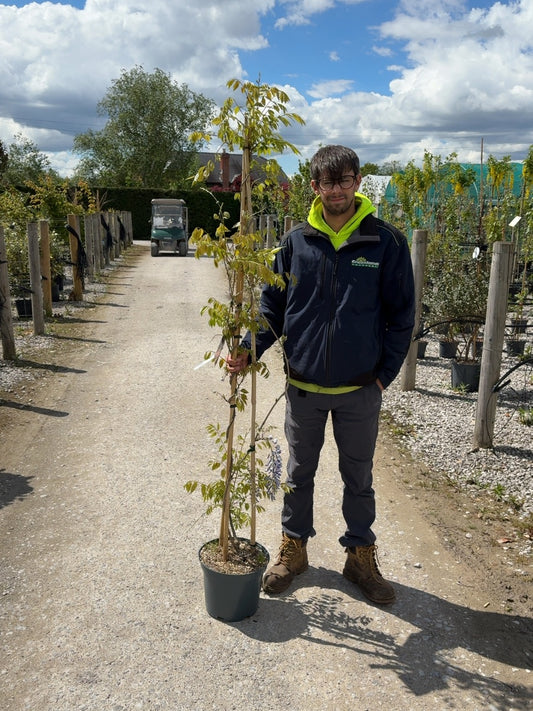

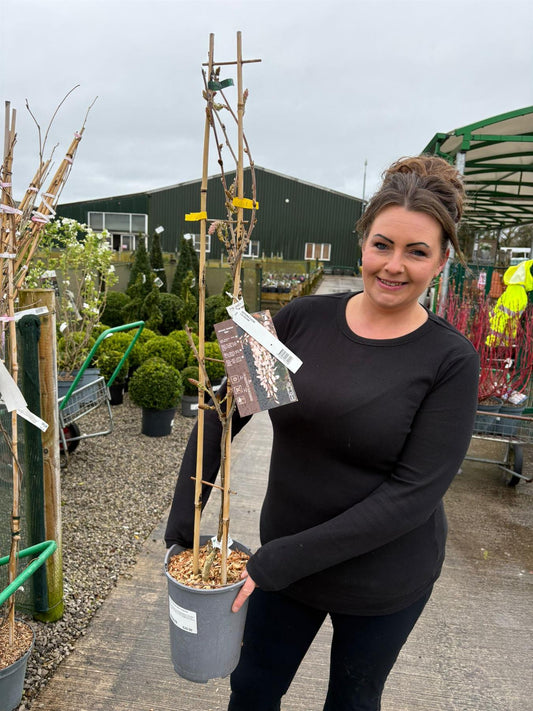

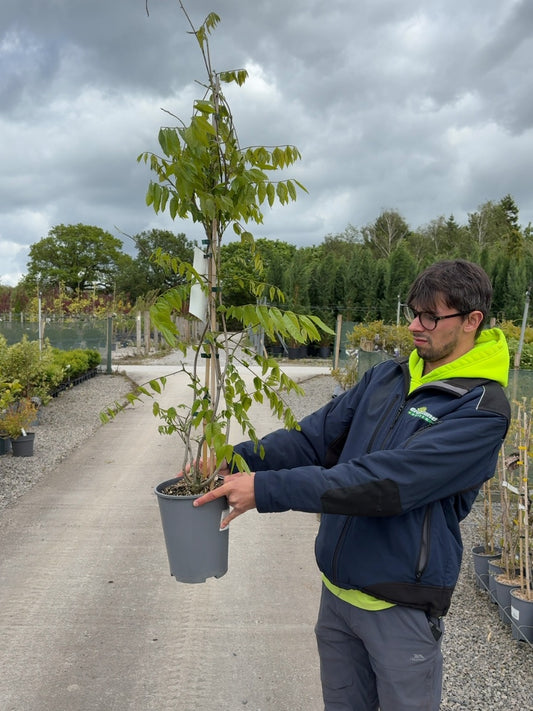

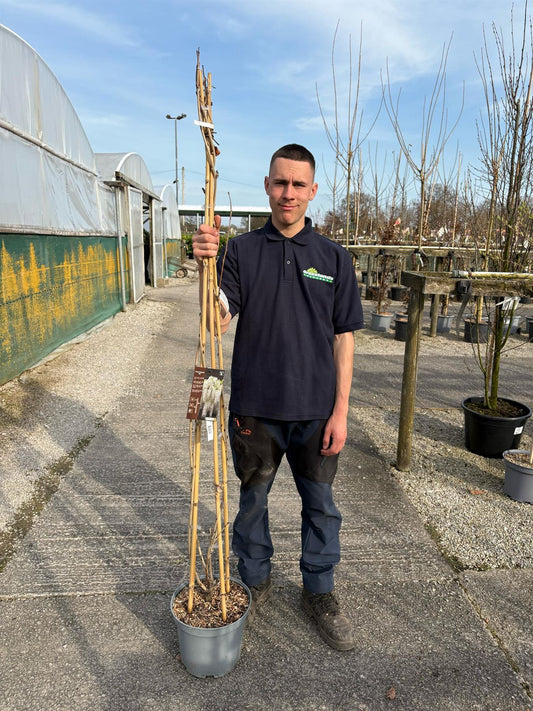

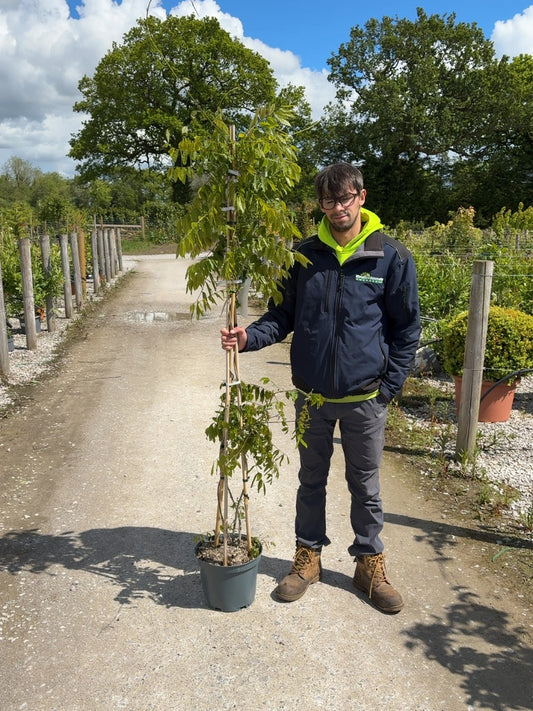

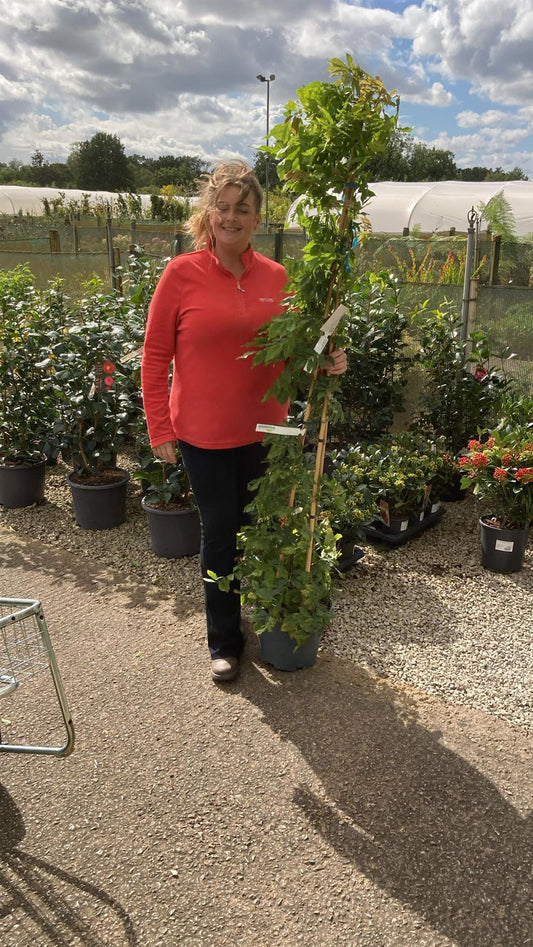




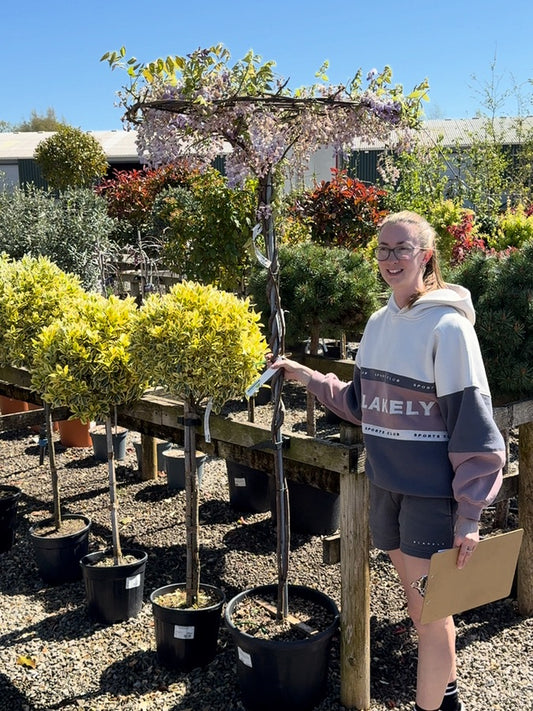
Wisteria – The Romantic Climber with Cascading, Fragrant Blooms
Wisteria is the ultimate statement climber, admired for its breathtaking cascades of scented, pea-like flowers in shades of lilac, violet, blue, or white. Flowering in late spring to early summer, with some varieties offering a second flush in late summer, wisteria transforms walls, pergolas, arches, and facades into enchanting, floral-draped features. Its graceful, twining stems and finely divided foliage create a timeless, romantic look that evokes the beauty of classic gardens, courtyards, and country estates. Long-lived, dramatic, and elegant, wisteria is an unforgettable addition to any garden design.
Why Grow Wisteria?
Spectacular Flower Clusters – Long, trailing racemes of fragrant flowers make wisteria one of the most visually stunning climbers in bloom.
Elegant Foliage & Twining Growth – Feather-like leaves and strong, sinuous stems add structure and texture even when not in flower.
Long-Lived & Architectural – A slow starter that rewards patience with decades of beauty and charm once established.
Versatile Garden Uses – Perfect for training over pergolas, arches, walls, or up large trees, where its flowers can hang dramatically overhead.
Choosing Between Wisteria sinensis & Wisteria floribunda
Wisteria sinensis (Chinese Wisteria)
Flowers before or with leaves – The blooms often appear before the foliage fully unfurls, creating a dramatic floral display.
Twines anticlockwise around supports.
Slightly shorter racemes – Typically 20–30 cm long, but densely packed with flowers.
Stronger fragrance than many floribunda types.
Best for walls or smaller pergolas where long racemes aren’t essential.
→ Top Varieties:
-
Wisteria sinensis ‘Prolific’ – Free-flowering, lilac-blue flowers with a lovely scent.
-
Wisteria sinensis ‘Alba’ – Elegant, white-flowered form with strong fragrance.
Wisteria floribunda (Japanese Wisteria)
Flowers after the leaves emerge – blooms and foliage appear together, giving a lush, leafy look.
Twines clockwise around supports.
Longer racemes – Some varieties have flower clusters up to 50 cm or more, hanging gracefully like chandeliers.
Great for pergolas and arches where flowers can cascade down dramatically.
→ Top Varieties:
-
Wisteria floribunda ‘Macrobotrys’ – Exceptional racemes up to 1 metre long in lilac shades.
-
Wisteria floribunda ‘Rosea’ – Soft pink flowers with delicate fragrance.
-
Wisteria floribunda ‘Alba’ – Stunning white flowers in very long clusters.
Which Should You Choose?
Choose Wisteria sinensis if you want:
-
Earlier flowers (before the leaves)
-
Stronger fragrance
-
A denser floral display on a wall or trellis
Choose Wisteria floribunda if you want:
-
Longer, trailing flower racemes
-
Flowers to hang beautifully from pergolas or arches
-
More colour choices (including pink and very long whites)
Planting & Care Guide
Position: Plant in full sun for the best flowering; a south- or west-facing wall or structure is ideal to ensure warmth and light.
Soil: Prefers fertile, moist but well-drained soil. Avoid very alkaline or shallow soils. Enrich with compost or well-rotted manure at planting.
Watering: Water well during establishment and in dry periods, particularly when flower buds are forming in spring.
Maintenance:
-
Pruning: Wisteria needs twice-yearly pruning to control growth and encourage flowering:
→ Summer (July/August): Cut back long, whippy growth to 5–6 leaves.
→ Winter (January/February): Shorten those same shoots again to 2–3 buds. -
Feeding: In spring, apply a balanced fertiliser or a high-potassium feed to encourage flower buds.
-
Training: Tie young shoots onto strong supports until the plant establishes its own framework.
Perfect Garden Uses & Combinations
Wisteria is stunning trained along house walls, across pergolas, or over arches, where the flowers can hang down for dramatic effect. Allow it to scramble up a mature tree for a natural, romantic look. Underplant with lavender, roses, or salvias to create a dreamy, Mediterranean-style planting. Pair with clematis or star jasmine for additional scent and layered seasonal interest.