
-
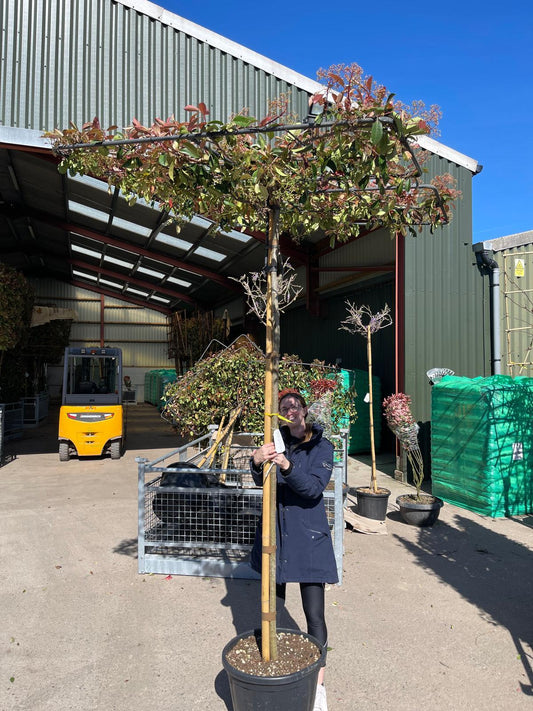
Photinia Red Robin Pleached Roof Top 240cm Stem 150cm x 150cm Frame
Photinia × fraseri 'Red Robin'Full sunEvergreenGetting lowRegular price £450.00Regular price£465.00Sale price £450.00Sale -
Wisteria Sinensis Pleached Roof 65 Litre Pot Stem 240cm
Wisteria sinensisFull sunDeciduousPre-orderRegular price £510.00Regular price


Pleached Roof Frames
Pleached Roof Frame Trees
Architectural Trees for Creating Living Canopies, Walkways, Dining Areas & Garden Rooms
Pleached Roof Frames are specially trained trees designed to create an attractive overhead living canopy. Rather than being trained vertically to form a traditional pleached screen, the branches are trained across a horizontal framework, creating a roof-like structure above the clear stems.
Also referred to as roof-form trees, roof-trained trees or living parasols, these impressive specimens are ideal for creating shaded seating areas, defining walkways and adding strong architectural structure to contemporary and formal gardens.
When several Pleached Roof Frames are planted together, their canopies can gradually be trained and maintained to create a striking continuous green ceiling, making them an excellent natural alternative to more permanent garden structures.
Why Choose Pleached Roof Frames?
Pleached Roof Frames combine the beauty of living trees with a highly architectural trained form.
Key benefits include:
- Creates a distinctive overhead canopy
- Excellent for outdoor dining and seating areas
- Provides natural summer shade
- Creates a living garden room
- Ideal for lining pathways and walkways
- Strong architectural appearance
- Makes excellent use of vertical and overhead space
- Suitable for formal and contemporary gardens
- Creates height without filling valuable ground space
- Available in a range of tree varieties
- Can be planted individually or in groups
- Provides an impressive mature look from planting
What Are Pleached Roof Frame Trees?
Pleached Roof Frame trees are specially grown and trained so that a clear stem supports a horizontal framework above head height.
Branches are carefully trained across this framework to encourage the canopy to spread outwards rather than simply growing upwards.
The result is a distinctive flat or spreading roof-shaped crown.
As the tree develops, new growth can continue to be trained across the frame and regularly trimmed to maintain the desired shape.
Create a Living Garden Canopy
One of the most impressive uses for Pleached Roof Frames is creating a living canopy above an outdoor seating or dining area.
Several trees can be positioned around or alongside a terrace so that their trained crowns create structure overhead while the clear stems keep the space underneath relatively open.
As the foliage develops, the canopy can create attractive dappled shade and a feeling of enclosure without the heaviness of a solid roof.
This makes roof-trained trees particularly effective for creating elegant outdoor rooms and entertaining spaces.
Pleached Roof Frames for Walkways
Pleached Roof Frames can also be used to create spectacular tree-lined paths and walkways.
Planting matching trees at regular intervals creates repetition and symmetry, while the horizontal canopies provide an architectural feature above.
As neighbouring trees mature, their canopies can be trained towards one another to create a more continuous avenue or tunnel effect.
This style of planting works particularly well in formal gardens, larger landscapes and impressive entrance schemes.
Pleached Roof Frames for Shade
Roof-trained trees provide a beautiful natural way to introduce summer shade into the garden.
Deciduous varieties are particularly useful around terraces and seating areas because their foliage can provide shade during the warmer months while allowing more light into the garden after the leaves fall.
The amount and density of shade will depend on the tree variety, size and maturity of the canopy.
Evergreen & Deciduous Roof Frames
Pleached Roof Frames can be produced using different types of trees, so their appearance and seasonal characteristics will vary.
Evergreen roof-trained trees can provide foliage and structure throughout the year, while deciduous varieties offer changing seasonal interest, fresh spring growth and attractive autumn colour before losing their leaves for winter.
The best choice will depend on whether your priority is year-round foliage, summer shade, seasonal colour or a particular garden style.
Where to Plant Pleached Roof Frames
These architectural trees work particularly well where their distinctive shape can become an intentional part of the garden design.
They are ideal for:
- Outdoor dining areas
- Patios and terraces
- Garden seating areas
- Walkways
- Pathways
- Courtyards
- Formal gardens
- Contemporary gardens
- Garden rooms
- Large borders
- Entrance areas
- Architectural landscaping
Before planting, consider both the position of the clear stems and the eventual width of the overhead canopy.
Pleached Roof Frames for Contemporary Gardens
The clean lines and geometric structure of Pleached Roof Frames make them particularly suited to modern and contemporary garden design.
They work beautifully alongside paving, gravel, rendered walls, raised beds and other structured landscaping.
Repeated planting can create a strong sense of symmetry, while a smaller number of carefully positioned specimens can be used to define a terrace or seating area.
Their clear stems also allow lower planting to be introduced beneath the canopy without losing the strong architectural shape.
Planting Pleached Roof Frame Trees
Careful positioning is particularly important when planting roof-trained trees.
Before planting several specimens, measure the area and determine where each trunk and canopy will sit so that the finished arrangement remains balanced.
Prepare a generous planting hole and position the tree so that the top of the rootball and natural root flare sit approximately level with the surrounding ground.
Avoid planting too deeply or adding soil around the lower trunk.
Water thoroughly after planting and provide suitable support while the tree establishes.
Supporting Pleached Roof Frames
Because Pleached Roof Frames have a relatively large canopy positioned above a clear stem, they can catch considerable wind, particularly before their roots have fully established.
Appropriate staking and support is therefore particularly important for newly planted trees.
The support system should stabilise the rootball without damaging the trunk or restricting natural development.
Trees should also be checked periodically to ensure ties and supports remain secure and are not cutting into the bark.
Watering Pleached Roof Frames
Regular watering is essential during establishment, particularly for larger specimens.
Provide a deep and thorough soak around the complete rootball, rather than small amounts of water applied only to the surface.
During warm, dry and windy weather, newly planted roof-trained trees may require particularly close attention because their elevated canopy can lose considerable moisture.
Watering bags or a suitable irrigation system can be useful where several trees have been planted together.
Maintaining the Roof Shape
Pleached Roof Frames require ongoing maintenance to preserve their distinctive architectural form.
As new shoots develop, suitable growth can be trained and tied into the framework to increase canopy coverage.
Growth extending beyond the desired outline can then be trimmed to maintain a neat roof shape.
The amount and timing of pruning will depend on the tree variety, so always consider the requirements of the individual species.
Over time, the trained branches become increasingly established and the canopy can develop a fuller, more mature appearance.
How Long Does It Take for the Canopy to Fill Out?
The time required for a Pleached Roof Frame to develop a dense canopy depends on the tree variety, initial size, growing conditions and ongoing training.
Trees supplied with an established framework provide an immediate architectural outline, while foliage and new branches gradually develop to create greater coverage.
Regular watering, appropriate feeding and careful training of new growth will help encourage healthy canopy development.
Planting Under Pleached Roof Frames
The clear stems of roof-trained trees leave valuable planting space underneath the canopy.
Depending on light levels and the tree variety, suitable companion planting can include:
- Ferns
- Heuchera
- Hellebores
- Hostas
- Geraniums
- Hydrangeas
- Ornamental grasses
- Ground-cover plants
- Shade-tolerant perennials
- Low-growing evergreen shrubs
For trees planted around patios and dining areas, simple underplanting can help emphasise the clean architectural form of the trunks and canopy.
Pleached Roof Frames vs Traditional Pleached Trees
Traditional pleached trees are normally trained onto an upright vertical frame, creating an elevated screen that is particularly useful for privacy and screening above walls and fences.
Pleached Roof Frames use the same principle of carefully trained growth but extend the canopy horizontally overhead.
This makes them particularly suited to creating living ceilings, shaded terraces, covered walkways and architectural garden features rather than vertical screening.
Buy Pleached Roof Frames Online
Our range of Pleached Roof Frame Trees for sale provides an impressive way to introduce height, structure and a distinctive living canopy into your garden.
Available in a selection of tree varieties and sizes, roof-trained trees can be used individually as architectural features or planted together to create living garden rooms, shaded dining areas, elegant walkways and striking overhead canopies.
With their clear stems and carefully trained horizontal crowns, Pleached Roof Frames offer a sophisticated alternative to traditional garden structures while retaining the natural beauty and seasonal interest of living trees.
Shop our range of Pleached Roof Frames online and create a spectacular living canopy for your garden, terrace or outdoor entertaining space.