

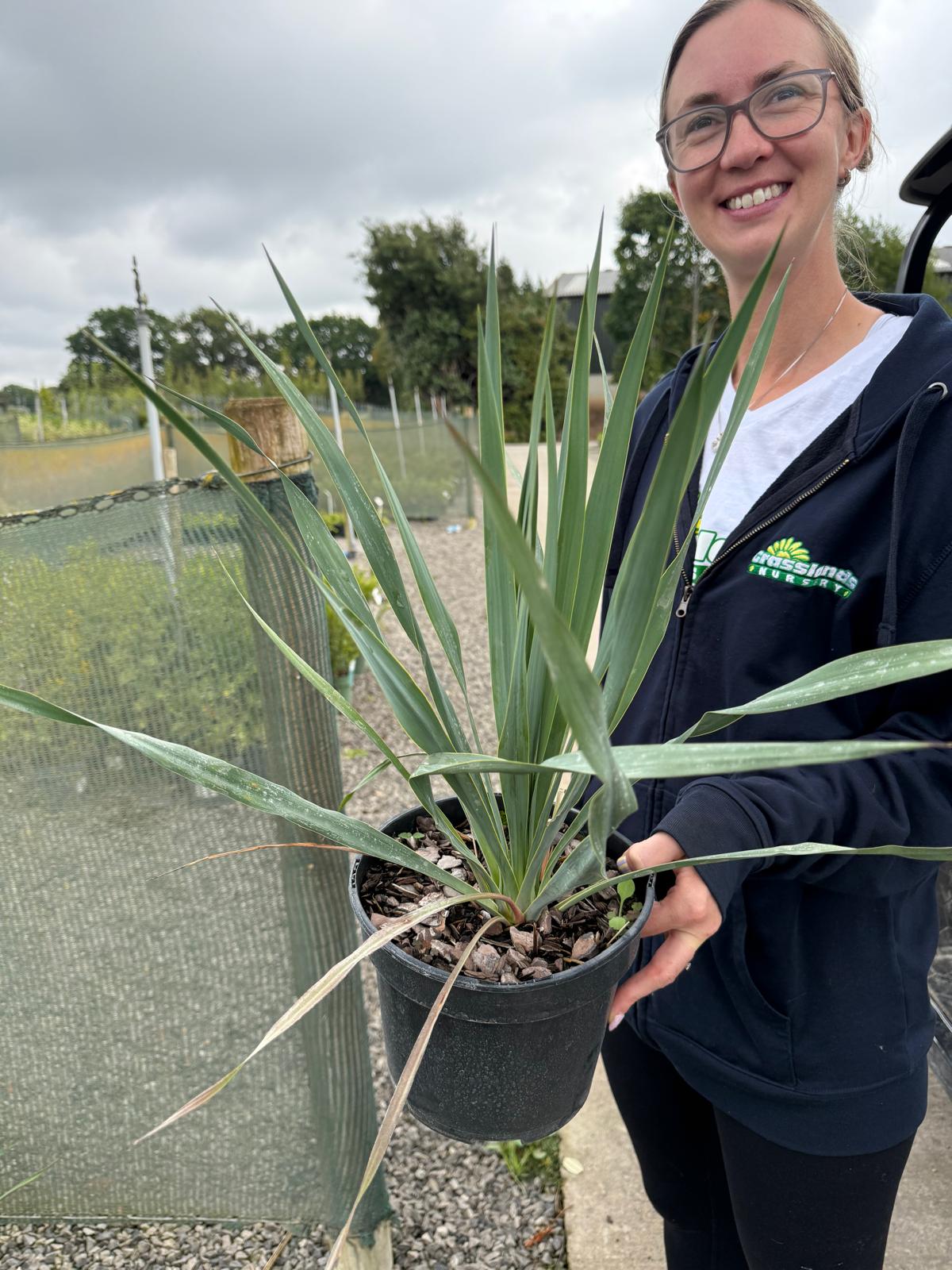

About Yucca French Flag 3 Litre Pot
Yucca filamentosa 'French Flag' –
This bold, architectural yucca brings instant structure and a strong, contemporary feel to the garden, with a rounded head of broad, glaucous blue-grey leaves that look exotic without being sharp or spiky. As it matures, the dense spherical crown is carried on a sturdy, pale trunk, creating a striking silhouette that works brilliantly as a focal point in sunny borders, gravel gardens, or large containers. Yucca 'French Flag' thrives in full sun and really comes into its own in free-draining, gritty or stony soil, making it well suited to raised beds or pots if garden ground tends to stay wet. Despite its dramatic looks, it’s tougher than it appears, coping well with UK winters when drainage is right, and occasionally rewarding patience with tall flower stems topped with creamy white, lightly scented blooms. High impact, and full of character, it’s a great choice if you want year-round presence with very little fuss.How to care for Yucca French Flag (PBR):
Plant in full sun in very free-draining, gritty soil, ideally with added gravel or sharp sand, as cultivated varieties of Yucca rostrata is sensitive to wet winter ground conditions. Water sparingly during the growing season, allowing the compost or soil to dry between waterings, and feed lightly once or twice in summer only if growth looks weak. In winter, keep watering to an absolute minimum and prioritise dry conditions at the crown, using a rain shelter in wet areas rather than mulch. Remove spent flower spikes once they finish and tidy only fully dead leaves, as healthy foliage helps protect the growing point.Plants well with
Our growers' picks to plant alongside Yucca French Flag 3 Litre Pot for a fuller, longer-lasting display.
-
Phormium ten. Purpureum 5 Litre Pot
Phormium tenax Purpureum GroupFull sunIn stockRegular price £17.50Regular price -
Cordyline australis - Cabbage Palm 3 Litre Pot
Cordyline australisFull sunEvergreenIn stockRegular price £7.95Regular price -
Agapanthus Poppin Purple 4.5 Litre Pot
Agapanthus Poppin' Purple ('Pm003')Full sunEvergreenGetting lowRegular price £23.00Regular price -
Stipa Arundinacea 2 Litre Pot
Stipa arundinaceaFull sunSemi-evergreenIn stockRegular price £4.75Regular price


