

Yew Hedging 200-210 Root Ball
Yew Hedging 200-210 Root Ball
Couldn't load pickup availability
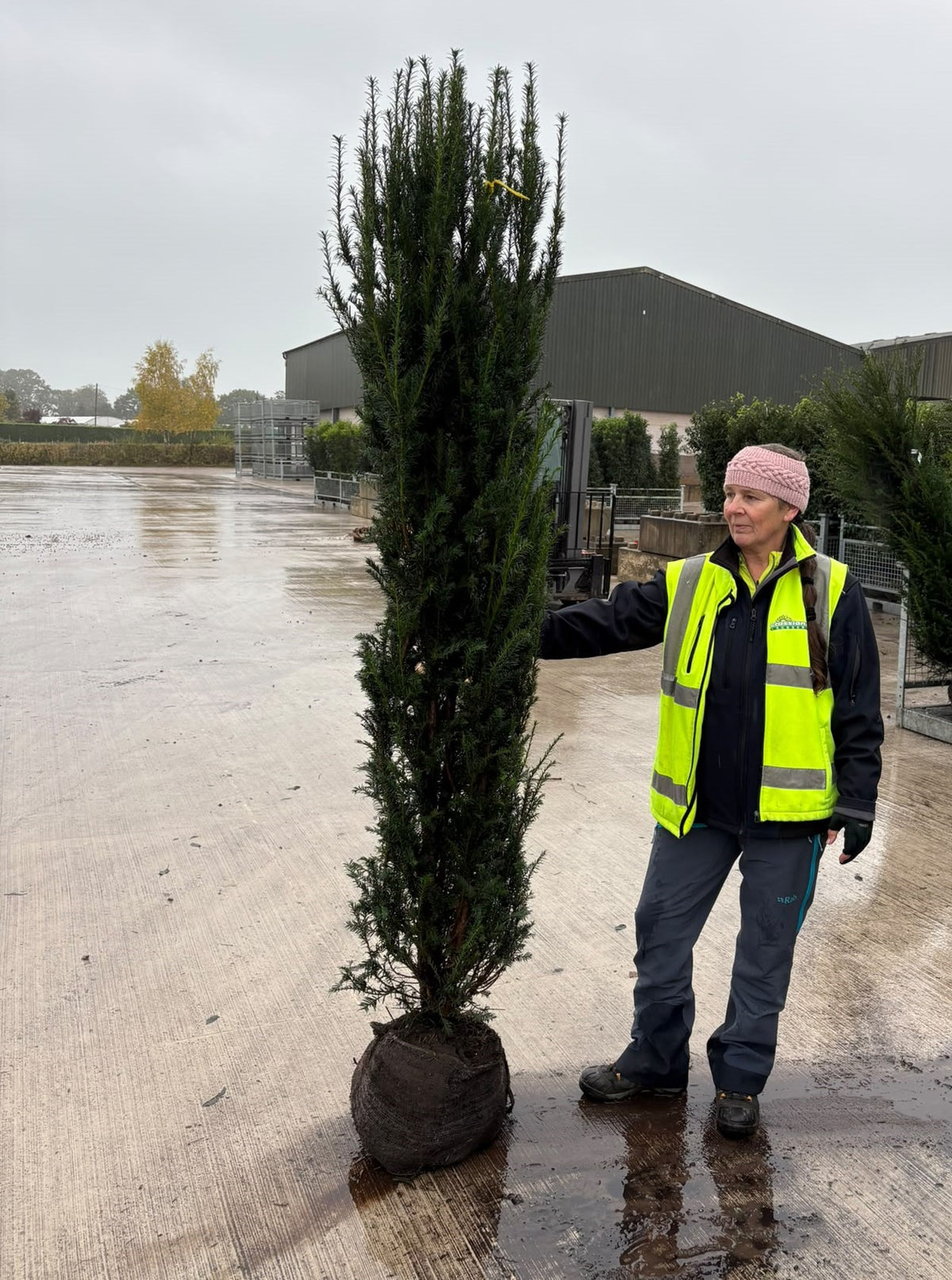

About Yew Hedging 200-210 Root Ball
Yew Hedging (Taxus baccata)
Yew (Taxus baccata) is a classic evergreen hedging plant, renowned for its dense growth, longevity, and versatility. It is one of the most popular choices for hedging in the U.K., celebrated for its ability to provide privacy, structure, and year-round greenery. Yew thrives, making it a perfect choice for both formal and informal gardens.
Key Features of Yew Hedging
- Evergreen Foliage: The needle-like dark green leaves provide year-round coverage and a luxurious appearance.
- Growth Rate: Moderate growth of about 20-30 cm (8-12 inches) per year, allowing for easy maintenance and shaping.
- Longevity: Yew is extremely long-lived, often thriving for hundreds of years, making it a sustainable and enduring choice.
- Adaptability: Thrives in various soil types, including chalky, sandy, or clay soils, and can grow in sun, partial shade, or full shade.
- Height and Width: Yew hedges can be grown to a variety of heights, from low borders of 1 meter (3 feet) to tall privacy screens of 3 meters (10 feet) or more.
Why Choose Yew Hedging?
- Privacy and Screening: Its dense foliage creates an effective barrier for privacy and wind protection.
- Formal and Informal Gardens: Yew’s ability to be closely clipped makes it ideal for formal gardens, topiary, and shaped hedges.
- Wildlife Friendly: Provides habitat for birds and small mammals, and the red berries are a winter food source (although toxic to humans).
- Low Maintenance: Requires only one or two trims per year to maintain shape and size.
- Shade Tolerance: One of the few hedging plants that thrives in full shade, making it versatile for various garden aspects.
How to Plant and Care for Yew Hedging
Planting
- Soil Preparation: Ensure well-drained soil. Amend heavy clay or sandy soils with organic matter for best results.
- Spacing: For a dense hedge, plant 3-5 plants per meter (depending on root type: bare-root, potted, or root-balled).
- Planting Season: Best planted in autumn or early spring for bare-root and root-ball varieties. Container-grown plants can be planted year-round.
Watering
- Water regularly during the first year of establishment, particularly during dry spells. Mature yew is drought-tolerant.
Pruning
- Trim in late summer or early autumn for formal shapes or in spring for light tidying.
- Avoid cutting into old wood as this can slow regrowth.
Feeding
- Use a balanced fertilizer in spring to promote healthy growth and vibrant foliage.
Pest and Disease Resistance
- Yew is generally pest-resistant but can occasionally be affected by scale insects or honey fungus.
Landscaping Uses
- Boundary Planting: Ideal for defining garden boundaries with an elegant, traditional look.
- Garden Dividers: Can be used to separate sections of the garden for a structured appearance.
- Topiary: Yew’s ability to hold its shape makes it a favorite for creating intricate designs.
- Formal Avenues: Perfect for creating grand, symmetrical pathways or driveways.
Yew hedging is a timeless choice, offering beauty, functionality, and enduring value. Its adaptability, elegant foliage, and suitability for formal pruning make it a top choice for gardeners seeking a long-lasting, versatile hedge. Whether you're creating a grand entrance, a wildlife-friendly space, or a secluded garden retreat, yew is a reliable and sophisticated option.
Plants well with
Our growers' picks to plant alongside Yew Hedging 200-210 Root Ball for a fuller, longer-lasting display.
-
Carpinus betulus Fastigiata - Hornbeam Tree 5 Litre Pot
Carpinus betulusFull sunDeciduousIn stockRegular price £12.00Regular price
