

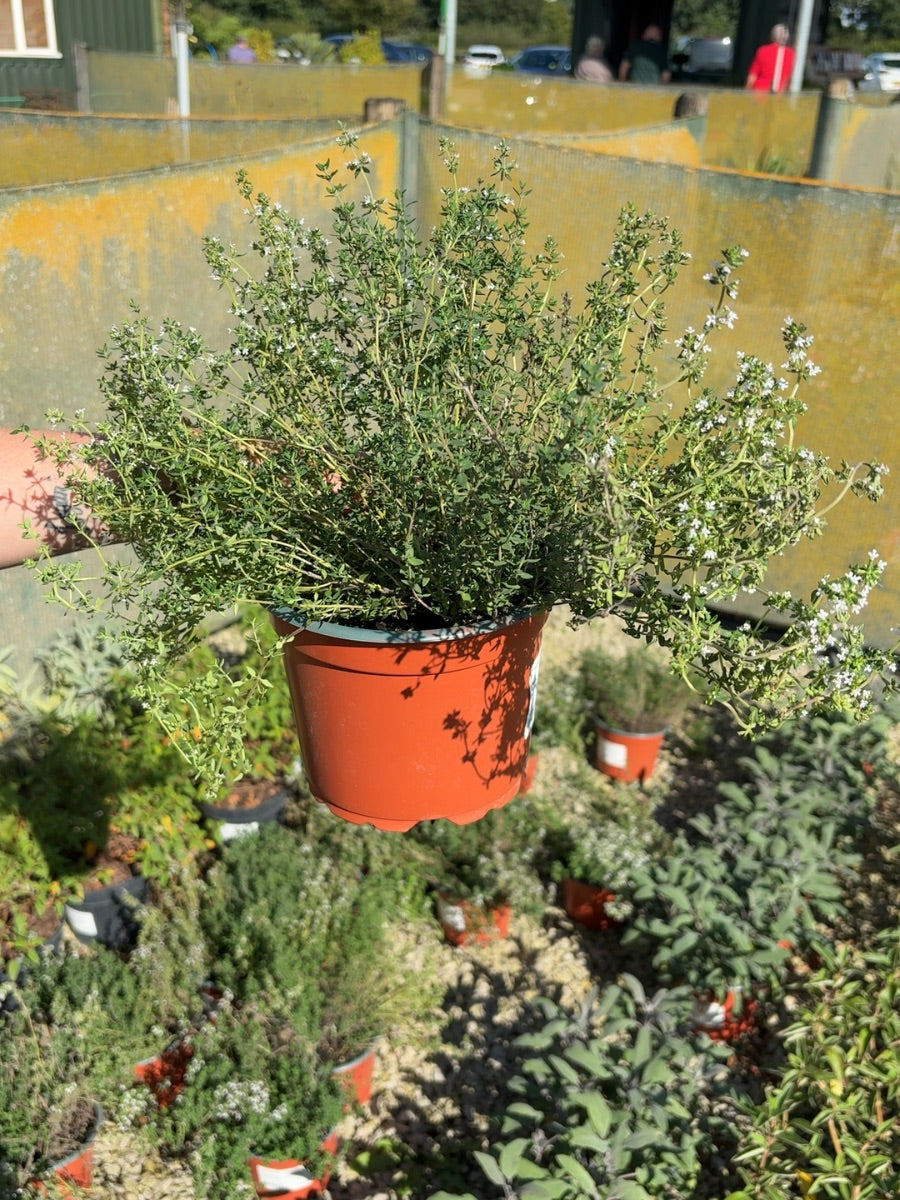
About Thymus Vulgaris 2 Litre Pot
A classic herb of the Mediterranean, Thymus vulgaris (Common Thyme) is a compact, woody-stemmed shrub prized equally for its culinary usefulness and its ornamental charm. Smothered in tiny lilac-pink flowers through late spring and early summer, and clothed in small, intensely aromatic grey-green leaves year round, it brings fragrance, structure, and pollinator appeal to any sunny spot in the garden or container display.
Habit & Appearance
A low-growing, semi-evergreen shrub with a naturally mounded, bushy habit, Common Thyme forms a dense mat of slender, woody stems lined with small, oval, highly fragrant leaves. From late spring into summer, masses of tiny two-lipped flowers in soft lilac to pale pink attract bees and other pollinators in abundance. The aromatic foliage persists through winter, giving year-round structure and scent to borders, rockeries, and herb gardens alike.
Growing Conditions
Best suited to a warm, sunny, open position, Common Thyme thrives in full sun and will perform poorly in shade or overly sheltered spots. It is perfectly at home in the classic Mediterranean conditions it originates from — well-drained, even poor or stony soil suits it well. Heavy, wet, or waterlogged ground should be avoided, as thyme is highly susceptible to root rot in poorly drained situations. It is an excellent choice for raised beds, rockeries, gravel gardens, patio containers, and the front of a sunny border.
Care
Thyme is a low-maintenance plant once established, requiring very little in the way of feeding or watering. Once settled in, it is notably drought tolerant and benefits from only occasional watering during prolonged dry spells. Avoid overwatering or feeding too richly, as this can produce soft, lax growth and reduce the concentration of aromatic oils in the foliage. A light trim after flowering helps maintain a neat, compact shape and prevents the plant from becoming too woody and straggly at the base. Every few years, if the plant becomes very woody or bare at the centre, it is best replaced with a fresh young plant to keep growth vigorous.
Harvesting & Culinary Use
One of the most indispensable herbs in the kitchen, Common Thyme can be harvested throughout the growing season simply by snipping sprigs of leafy stem as needed. Regular picking actually encourages bushier, more compact growth and helps extend the productive life of the plant. The aromatic leaves are a staple in soups, stews, roasted meats, and classic bouquet garni blends, retaining much of their flavour when dried as well as when used fresh.