


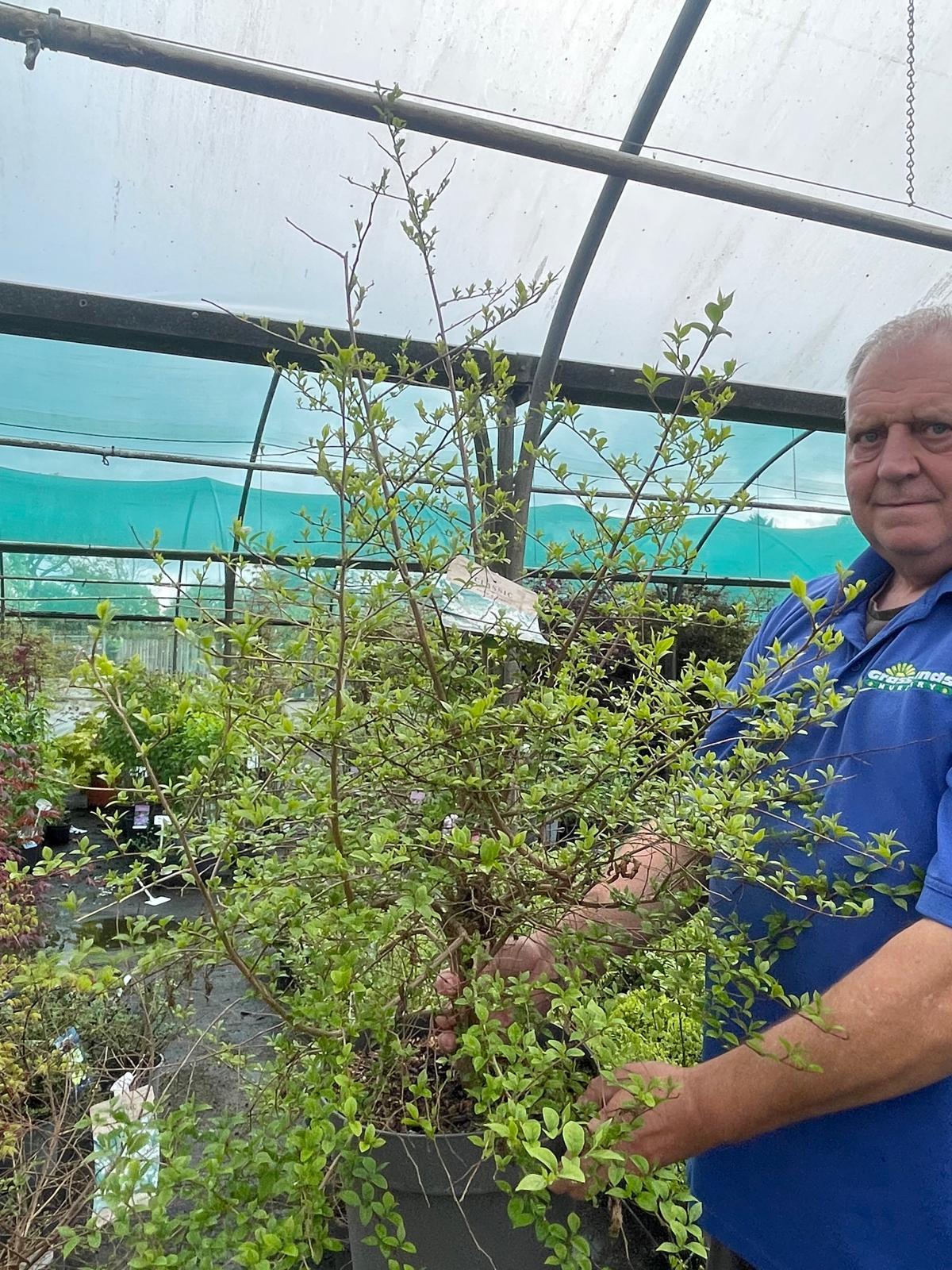
About Styrax Japonicus 12 Litre Pot 80/100cm
Styrax Japonicus commonly known as Japanese Snowbell, is a graceful deciduous tree that is cherished for its elegant form, delicate bell-shaped flowers, and subtle fragrance. Is popular in UK gardens due to its beauty and relatively compact size, making it suitable for smaller gardens as well.
- Leaves: The leaves of Styrax japonicus are oval to elliptic in shape, dark green, and have a glossy texture. In autumn, they turn a warm yellow, offering seasonal interest before they drop.
- Growth Habit: The tree has a spreading, somewhat horizontal branching pattern that creates an attractive, layered structure. Its compact, rounded crown gives it an elegant silhouette.
- Bloom Time: Styrax japonicus blooms in late spring to early summer (May to June).
- Flower Appearance: The tree produces clusters of small, pendant, bell-shaped white flowers that dangle gracefully from the branches. Each flower is about 2 cm across, with yellow stamens, and looks like little snowbells, hence the common name.
- Fragrance: The flowers are subtly fragrant, adding a sensory dimension to the garden.
- Flower Arrangement: The flowers bloom in small clusters along the branches, often below the leaves, which makes them appear to be suspended in the air when the tree is in full bloom.
- Appearance: After flowering, Styrax japonicus produces small, greenish-brown, dry, drupe-like fruit that persists into the autumn. The fruit is not particularly showy, but it does add some textural interest.
- Height and Spread: Styrax japonicus is a medium-sized tree, reaching a height of around 6 to 9 meters with a spread of 4.5 to 6 meters, making it ideal for smaller gardens or as a feature in larger ones.
The tree prefers well-drained, humus-rich, and slightly acidic soil, though it can tolerate a variety of soil types as long as they are well-drained. Performs best in full sun to light shade. In hotter regions, it benefits from some afternoon shade to protect the delicate flowers and foliage. This variety is hardy making it suitable for much of the UK climate. It can tolerate cold winters but may require some protection from strong, drying winds. Generally requires little pruning. Prune only to remove dead, damaged, or crossing branches, or to shape the tree. Pruning is best done in late winter or early spring before new growth begins.