

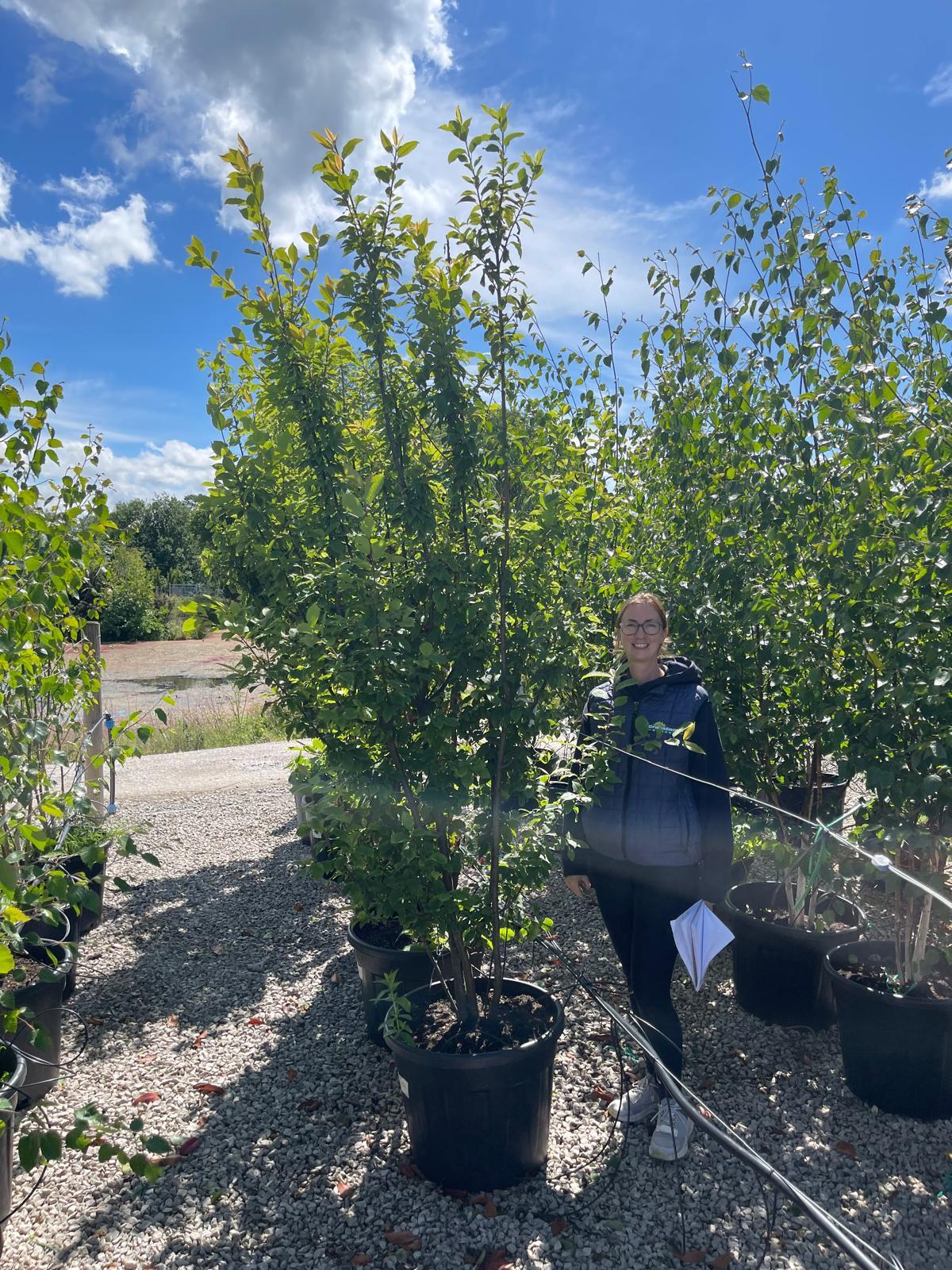
About Prunus Padus Multi Stem 150/175cm Rootballed
Prunus padus, commonly known as Bird Cherry is an excellent choice for gardens, particularly those with a focus on wildlife, naturalistic planting, or damp soils. Its profusion of fragrant white flowers in spring, followed by black berries and golden autumn foliage, provides interest throughout the year. This hardy, fast-growing, and low-maintenance tree is ideal for creating shade, screening, or enhancing biodiversity in larger gardens, parklands, or near water features. With its historical roots and significant environmental benefits, Prunus padus brings both beauty and ecological value to any landscape. Prunus padus fits well in more naturalistic or informal planting schemes, such as woodland gardens, where its graceful, slightly weeping form can enhance the landscape. Its ability to thrive in semi-shade and moist soils makes it a great choice for woodland edges or near water features. Height 7/12m
- In late spring (April to May), Prunus padus produces masses of small, fragrant, white flowers arranged in long, pendulous racemes (flower clusters). These flowers create a spectacular display that brightens up the garden with a delicate, cloud-like appearance.
- The blossoms are not only beautiful but also highly fragrant, with a sweet almond-like scent that perfumes the air during spring. This makes it a popular choice for sensory gardens and near outdoor seating areas where the scent can be enjoyed.
- The flowers of Prunus padus are highly attractive to pollinators, particularly bees and butterflies. The nectar-rich blooms provide an important food source during spring, supporting local biodiversity and encouraging a healthy ecosystem in your garden.
- After flowering, Prunus padus produces small black berries, known as drupes, in mid to late summer. While the berries are too bitter for human consumption, they are a valuable food source for birds, particularly in autumn when other food sources may be scarce.
- The leaves of Prunus padus are oval, mid-green, and form a dense canopy. In summer, they provide a lush, verdant backdrop, making the tree an attractive feature in the landscape.
- In autumn, the leaves turn a warm golden-yellow, offering a striking seasonal display. The vibrant color shift adds to the tree’s year-round appeal, particularly in autumn when it brightens up gardens and landscapes.
Prunus padus is extremely hardy, thriving in the UK climate. It can withstand cold winters, late frosts, and fluctuating temperatures, making it a reliable performer across the UK. Prunus padus is adaptable to a wide range of soil types, including clay, loam, and sandy soils. It prefers moist, well-drained conditions but can tolerate poorer soils, including slightly acidic or alkaline soils. One of the key advantages of Prunus padus is its tolerance of wet and even waterlogged soils, making it an excellent choice for planting near ponds, streams, or in damp areas of the garden where other trees might struggle. This tree thrives in full sun but is also tolerant of partial shade, making it a versatile option for different garden settings. It will grow well in both open spaces and woodland gardens where light conditions might be more variable.