

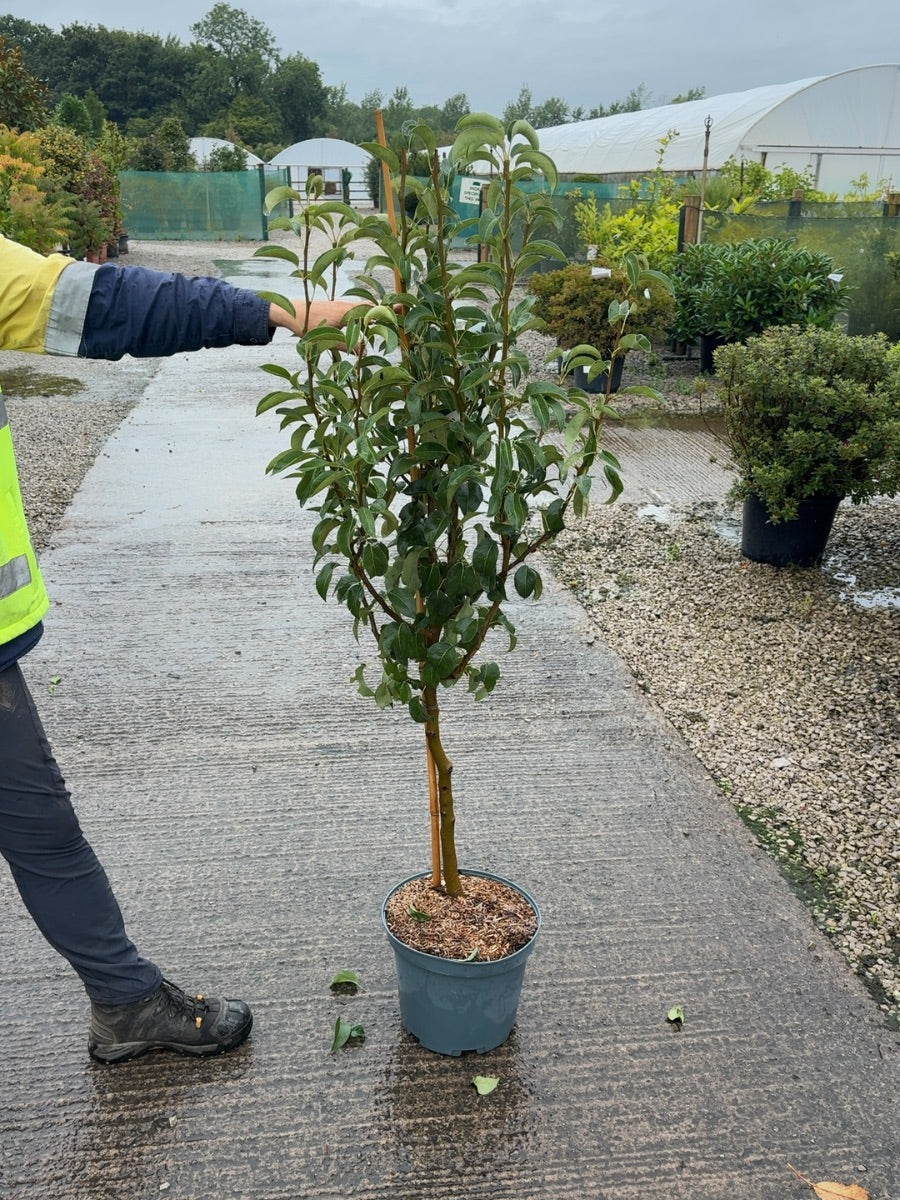

About Pear Doyenne Du Comice 10 Litre Pot Goblet
Pyrus communis 'Doyenné du Comice' – Premium Dessert Pear Tree with Exceptional Flavour
Pyrus communis 'Doyenné du Comice' is widely regarded as one of the finest dessert pears ever raised, celebrated by growers and food lovers alike for its exceptionally sweet, melting flesh and rich, honeyed flavour. Originating in France in the mid-nineteenth century, 'Comice' has earned a reputation as the benchmark against which all other pears are measured, and it remains a firm favourite for those who prize quality above all else.
A deciduous, upright-spreading tree, it delivers a generous display of delicate white blossom each spring before developing its characteristic large, rounded fruits — pale green flushed with gold and a warm russet blush at harvest. Whether planted in a traditional orchard, trained against a warm wall, or grown as a productive garden specimen, 'Doyenné du Comice' rewards patient cultivation with a harvest of outstanding pears that are simply unmatched for eating fresh.
Why Grow Pyrus communis 'Doyenné du Comice'?
Unrivalled fruit quality. 'Comice' is consistently rated among the very best dessert pears for flavour. The flesh is cream-white, smooth, and buttery, with a fragrant sweetness that makes it the pear of choice for gift boxes and fine dining alike.
Beautiful spring blossom. Clusters of white flowers smother the bare branches in early-to-mid spring, providing an early nectar source for bees and pollinators while adding considerable ornamental value to the garden.
Attractive autumn fruit display. The large, shapely fruits develop through summer, ripening to a golden-yellow with a distinctive russet and rosy flush in mid-autumn, making the tree as visually appealing as it is productive.
Versatile training options. 'Comice' responds well to a range of forms — standard, half-standard, bush, or fan and espalier — making it suitable for gardens of many sizes and styles.
Fully hardy across the UK. Robust and adaptable, it tolerates typical British winters with ease and, once well established, proves a long-lived, reliable fruiting tree.
Growing Conditions
Position: Plant in a sheltered, sunny spot receiving at least six to eight hours of direct sunlight daily. Full sun is particularly important for 'Comice', as it encourages the sugars to develop fully within the fruit and improves skin colour and flavour. A south- or south-west-facing wall is ideal, providing additional warmth and protection from late spring frosts that can damage the early blossom.
Soil: Thrives in deep, fertile, moisture-retentive but well-drained soil. A loamy or clay-loam soil with a slightly acidic to neutral pH (6.0–7.0) is preferred. Enrich poor or sandy soils with well-rotted organic matter before planting to improve both moisture retention and fertility. Avoid sites prone to waterlogging, as standing water around the roots will weaken the tree and may lead to root disease.
Frost protection: Because 'Comice' flowers relatively early, blossom can occasionally be caught by late frosts in exposed gardens. Choose a sheltered planting position or be prepared to protect flowers with horticultural fleece during cold snaps to safeguard the crop.
Care
Watering: Water regularly during the first two to three seasons after planting to help the tree establish a strong root system. Once settled, mature trees show reasonable drought tolerance, but consistent moisture during the critical period of fruit swelling in midsummer significantly improves fruit size and quality. Apply water at the base rather than overhead to reduce the risk of fungal issues.
Feeding: Apply a balanced general-purpose fertiliser or a specialist fruit tree feed in early spring as growth begins. A top-dressing of well-rotted garden compost or manure around the base each autumn will maintain long-term soil health and fertility.
Mulching: Maintain a generous mulch of composted bark or well-rotted organic matter around the base of the tree each year, keeping it clear of the trunk. Mulching conserves soil moisture, suppresses weeds, and moderates soil temperature.
Pruning: Prune during the dormant season — late winter is ideal — to establish and maintain a well-balanced, open framework that allows light and air to circulate freely through the canopy. Remove any dead, damaged, or crossing branches cleanly. Once fruiting is established, a light summer tidy in late July or August — shortening lateral shoots back to four or five leaves — helps maintain shape, encourages fruit spur development, and improves air circulation, reducing the risk of fungal disease.
Pollination: 'Doyenné du Comice' is in pollination group 4 and requires a compatible pollinator nearby for a reliable crop. Suitable partners include Pyrus communis 'Conference', 'Beurre Hardy', or 'Concorde'. Where garden space is limited, consider planting a self-fertile companion or choosing a site where neighbouring gardens contain pear or crab apple trees.
Pest and disease management: Monitor regularly for common pear pests including aphids, pear leaf blister mite, and codling moth. Good garden hygiene — clearing fallen fruit and leaves promptly — helps reduce overwintering pest populations. 'Comice' can be susceptible to scab in wet seasons; selecting an open, airy site and pruning to improve canopy airflow will help minimise this risk.
Hardiness: Fully