


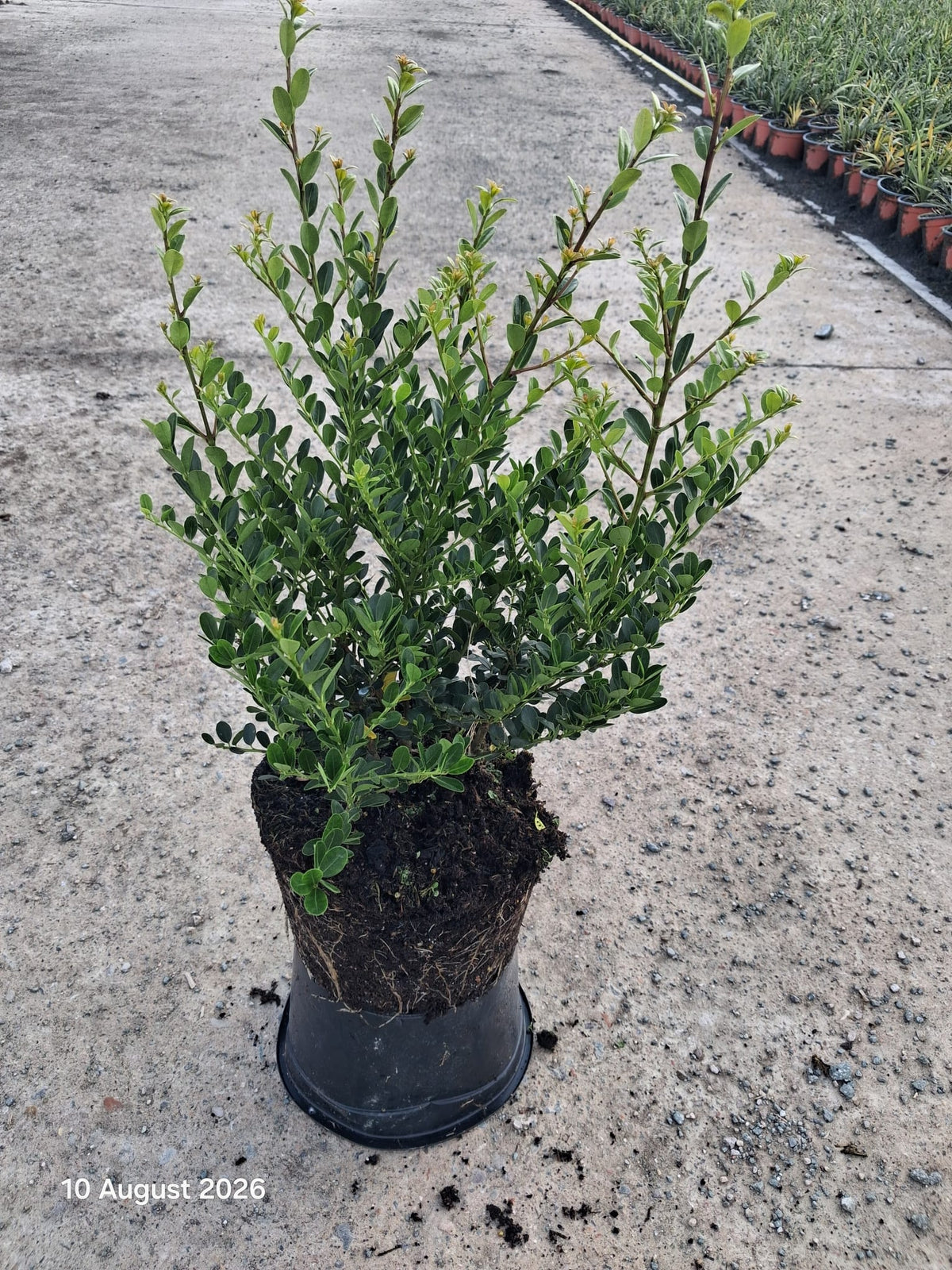

About Ilex Crenata Green Hedge 5 Litre Pot
Ilex crenata, commonly known as Japanese Holly, is a versatile and elegant evergreen shrub prized for its fine-textured, glossy dark green foliage and naturally dense, compact habit. A popular alternative to Box (Buxus), it offers excellent resistance to box blight and is widely used for formal hedging, topiary and structured garden design. Small, inconspicuous white flowers appear in spring, followed by tiny black berries that provide seasonal interest and attract wildlife.
Growing conditions
Aspect and position: Japanese Holly thrives in full sun to partial shade, making it a highly adaptable choice for a wide range of garden settings. It performs well in both open beds and more sheltered positions, and is well suited to container growing where its tidy habit can be showcased on patios and entranceways.
Soil: Best grown in moist, well-drained, slightly acidic to neutral soil. It dislikes waterlogged or highly alkaline conditions. Incorporating organic matter into the planting site will help retain moisture and promote healthy establishment. When planting into containers, use an ericaceous or general-purpose potting mix.
Hardiness: Ilex crenata is fully hardy across most of the UK and Ireland, tolerating cold winters with ease once established. Young plants benefit from some protection during prolonged hard frosts, particularly in exposed or northern locations.
Habit and appearance
Form: Japanese Holly forms a dense, upright to rounded shrub with a naturally neat, bushy habit. Its small, oval, finely toothed leaves are a rich, lustrous dark green and closely resemble those of Box, making it an ideal substitute in formal planting schemes. Growth is steady and manageable, lending itself well to clipping and shaping.
Ornamental value: The refined evergreen foliage provides year-round structure and colour, making it invaluable in both traditional and contemporary garden designs. It works beautifully as a low hedge, specimen topiary, edging plant or as part of a mixed evergreen border.
Care
Watering: Water regularly during the first growing season to encourage strong root establishment. Once settled, Ilex crenata has moderate drought tolerance, though it benefits from consistent moisture during dry spells, particularly container-grown plants which will require more frequent watering.
Feeding: Apply a balanced slow-release fertiliser in spring to support healthy growth and maintain the rich green colour of the foliage. Container plants will benefit from a liquid feed through the growing season.
Pruning: Prune or clip to shape in late spring or early summer after any new growth has hardened off, and again lightly in late summer if needed to maintain a crisp, formal outline. Japanese Holly responds well to regular trimming and can be shaped into balls, cones, cubes or low hedges with ease. Avoid heavy pruning in autumn, as this can leave new growth vulnerable to frost damage.
Pests and diseases: One of the key advantages of Ilex crenata over Buxus is its resistance to box blight and box tree moth. It is generally a trouble-free plant, though it may occasionally be affected by vine weevil, particularly in containers. Check regularly and treat as necessary.