


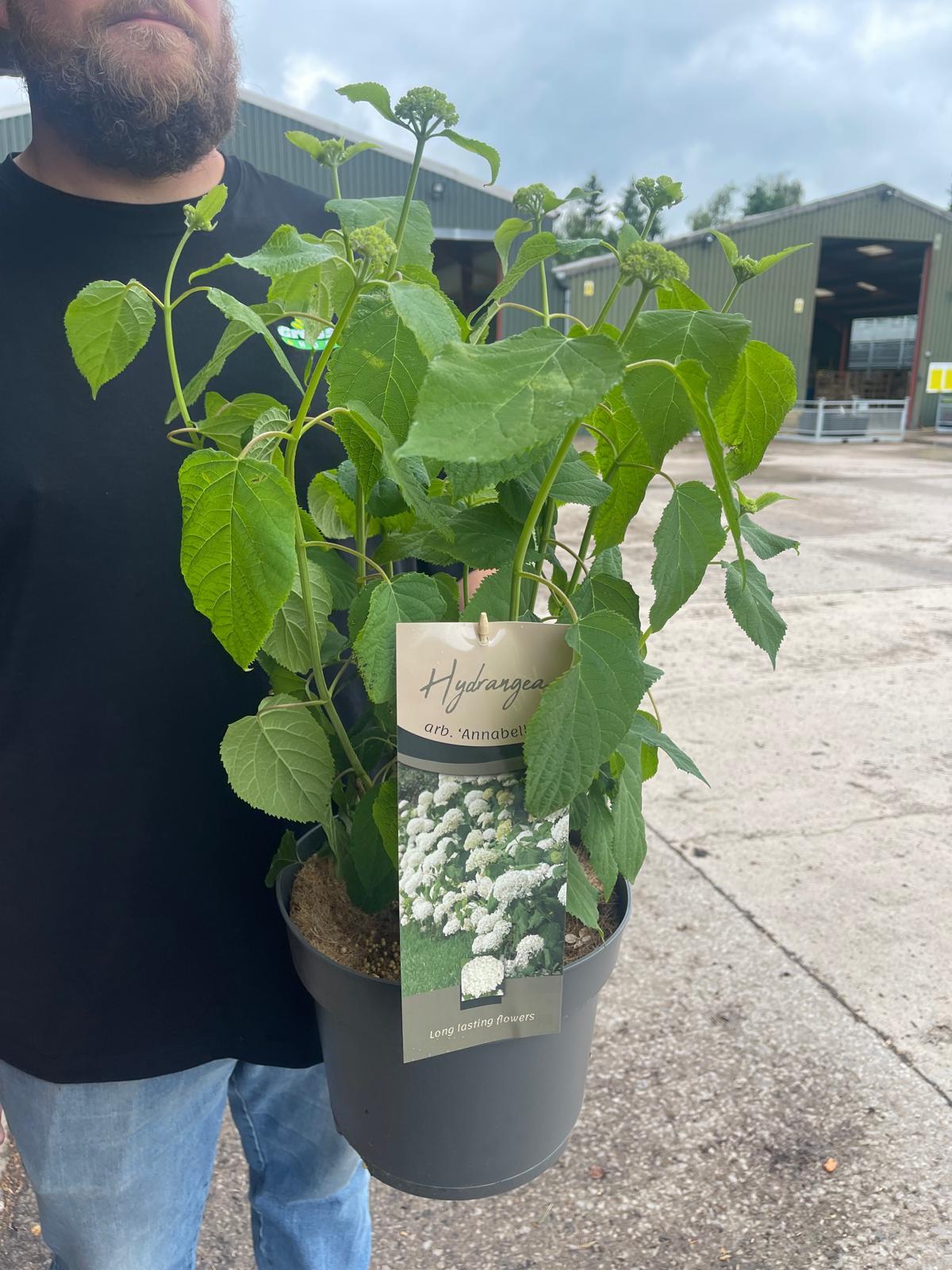

About Hydrangea arborescens Annabelle 5 Litre Pot
Hydrangea arborescens 'Annabelle' – A Classic, Showy Hydrangea with Large White Blooms
Hydrangea arborescens 'Annabelle' is a popular, deciduous shrub known for its impressive display of large, white flowers that bloom in abundance throughout the summer. With its soft, rounded form and striking flower heads, 'Annabelle' adds elegance and drama to any garden. This low-maintenance hydrangea is perfect for borders, woodland gardens, or as a specimen plant, thriving in both sun and partial shade while offering stunning blooms that last from summer into fall.
Why Grow Hydrangea arborescens 'Annabelle'?
- Large, Showy Blooms – Produces massive, round clusters of white flowers that create a dramatic visual impact.
- Long-Lasting Flowers – Blooms persist through summer and into fall, providing extended color.
- Compact & Rounded Form – Naturally grows into a dense, rounded shrub that requires little maintenance.
- Low Maintenance & Hardy – Extremely hardy and adaptable, it thrives in various soil types and garden conditions.
- Attracts Pollinators – Flowers are highly attractive to bees, butterflies, and other pollinators.
Height of Plant Hydrangea arborescens 'Annabelle' typically grows to a height of 90–120 cm (3–4 feet) with a similar spread over 10 years, making it perfect for smaller garden spaces, borders, or containers.
Where to Site Your Hydrangea arborescens 'Annabelle' This versatile hydrangea prefers well-drained, fertile soil and can thrive in both sun and partial shade. It's ideal for:
- Garden borders and foundation plantings
- Woodland or shaded gardens
- Mixed borders or mass plantings
- Container plantings on patios or terraces
How to Grow and Care for Your Hydrangea arborescens 'Annabelle'
- Soil – Prefers moist, well-drained soil that is rich in organic matter. It tolerates a variety of soil types, but it thrives best in slightly acidic to neutral soil.
- Light – Thrives in full sun to partial shade; more shade can reduce bloom size, but too much sun may cause the plant to dry out.
- Watering – Keep soil consistently moist, especially during dry spells, but ensure good drainage to avoid root rot.
-
Maintenance:
- Pruning – Prune back 'Annabelle' in early spring to encourage strong, healthy growth and maintain its shape. It blooms on new wood, so cutting back old stems won’t affect its flowering.
- Mulching – Apply a layer of mulch to retain moisture and keep roots cool.
- Pest & Disease Resistance – Generally pest-free but be mindful of mildew in very humid conditions. Regular air circulation helps prevent disease.
Perfect Plant Combinations Hydrangea arborescens 'Annabelle' pairs beautifully with other shade-loving plants such as hostas, astilbes, and ferns. It contrasts well with the deep greens of evergreens or the vibrant blooms of other hydrangeas, creating a soothing yet dynamic display. Its white flowers also make it a stunning focal point in mixed borders, and it works wonderfully with ornamental grasses or low-growing perennials like daylilies.
With its impressive flowers, compact size, and easy care, Hydrangea arborescens 'Annabelle' is an outstanding choice for any garden. Whether used for borders, woodland gardens, or containers, this hydrangea adds timeless beauty and lush blooms that will brighten your space from summer into fall.
Plants well with
Our growers' picks to plant alongside Hydrangea arborescens Annabelle 5 Litre Pot for a fuller, longer-lasting display.
-
Hosta Sieboldiana Elegans 2 Litre Pot
Hosta sieboldiana var. elegansPartial shadeDeciduousIn stockRegular price £5.45Regular price -
Fatsia Spiders Web 12 Litre Pot
Fatsia japonica 'Spider's Web'Full sunEvergreenGetting lowRegular price £54.00Regular price

