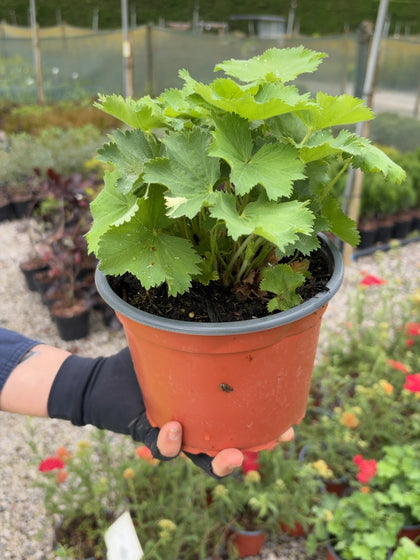
Galium Odoratum 2 Litre Pot
Fragrant white flowers over lush whorled foliage
| Next band £300 3% off | £500 5% off | £1000 10% off | £2500 15% off |
|---|---|---|---|
| £4.80 each | £4.70 each | £4.45 each | £4.20 each |
Fragrant white flowers over lush whorled foliage
| Next band £300 3% off | £500 5% off | £1000 10% off | £2500 15% off |
|---|---|---|---|
| £4.80 each | £4.70 each | £4.45 each | £4.20 each |
Sweet woodruff (Galium odoratum) is a delightful, low-growing perennial groundcover prized for its whorls of bright green, star-shaped leaves and dainty clusters of tiny white flowers in late spring and early summer. Wonderfully easy to grow, it spreads gently to form a lush, fragrant carpet that is particularly at home beneath trees and shrubs, making it one of the most useful and charming solutions for tricky shaded spots in the garden.
Delicate but determined. Sweet woodruff forms a neat, spreading mat of slender stems clothed in attractive whorls of lance-shaped, rich green leaves. In late spring it produces a profusion of small, pure white, star-shaped flowers held just above the foliage, creating a light, airy effect. The leaves carry a distinctive sweet, hay-like fragrance — especially noticeable when brushed or dried — adding a sensory dimension well beyond its modest stature. It dies back in winter and re-emerges reliably each spring.
Perfect for shade and dappled light. Galium odoratum thrives in partial to full shade, making it an excellent choice for woodland gardens, shaded borders, and the dry ground beneath established trees and hedges where little else will grow. It prefers a reasonably fertile, humus-rich soil that retains some moisture, though it is surprisingly tolerant of dry shade once established. It performs well in most soil types, including slightly alkaline conditions, provided the ground does not become waterlogged.
A low-maintenance groundcover that largely looks after itself. Once established, sweet woodruff requires very little attention. Water regularly during the first growing season to help roots settle in, then it will manage well with natural rainfall in most situations. Top-dress with leaf mould or garden compost in autumn or early spring to enrich the soil and retain moisture. As it spreads by underground runners, simply lift and divide any sections that outgrow their allotted space — divisions transplant readily and can be used to extend coverage elsewhere in the garden.
Cut back after flowering to keep it fresh and tidy. After the flowers have faded, trim the whole plant back lightly with shears or a strimmer to encourage a fresh flush of foliage and maintain a compact, even mat. This also helps prevent the plant from becoming straggly. In late autumn, the dying foliage can be left in place to provide a little ground-level winter protection, then cleared away as new growth emerges in spring.