


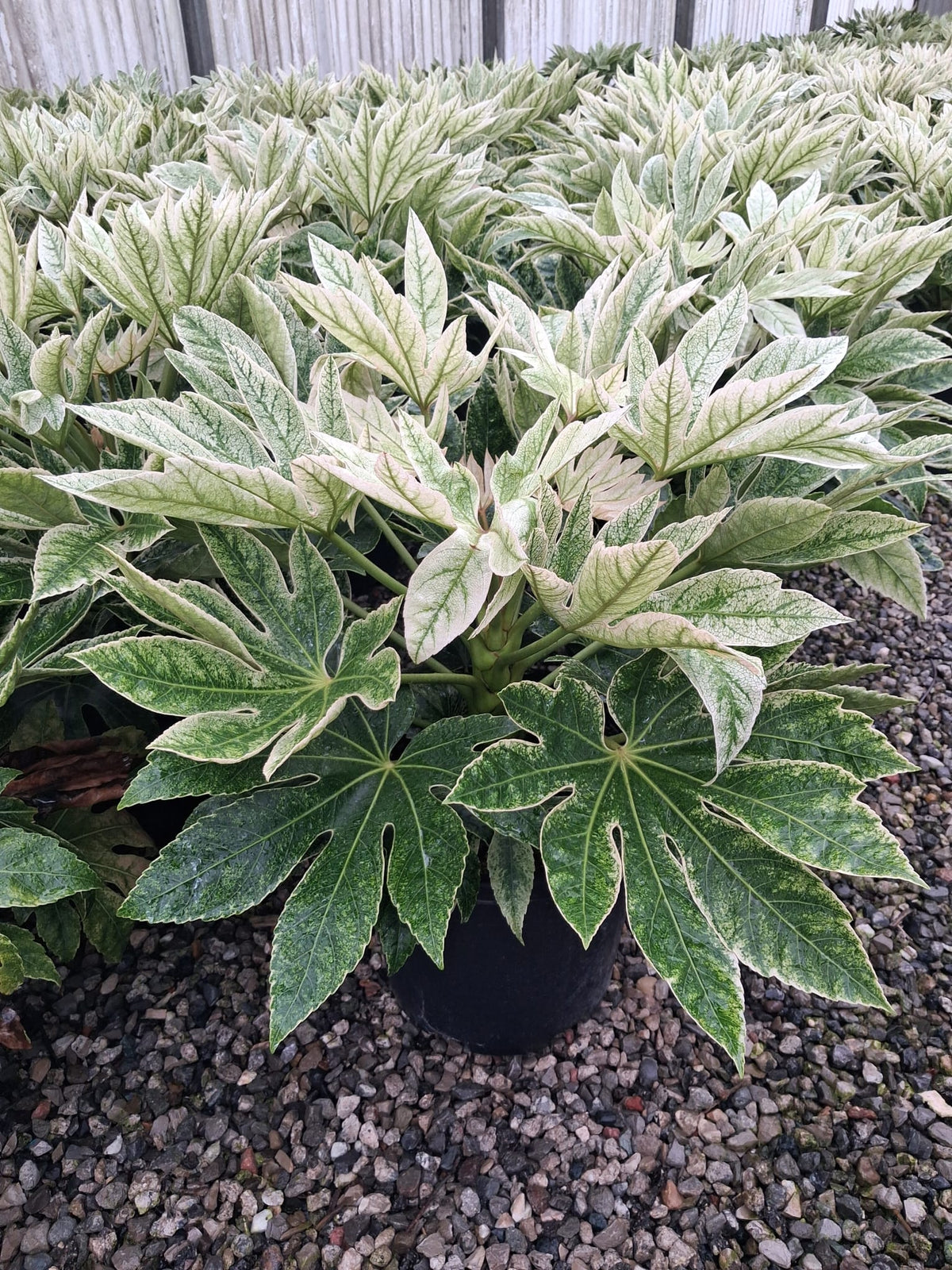

About Fatsia Spiders Web 12 Litre Pot
Fatsia japonica 'Spider's Web' – Variegated False Castor Oil Plant
Fatsia japonica 'Spider's Web' is a showstopping variegated evergreen shrub, bringing luminous drama and bold architectural presence to shaded corners where few plants truly excel. Its large, hand-shaped leaves are dramatically splashed, speckled, and streaked with creamy white, creating a striking two-tone effect that brightens even the darkest garden spaces with an almost luminescent quality.
Habit and Appearance
Bold, architectural foliage with year-round impact. The broad, palmate leaves of 'Spider's Web' are deeply lobed and generously marked with irregular white variegation — the effect resembling delicate webbing across the glossy green surface. This gives the plant an exotic, almost tropical appearance that commands attention in any planting scheme.
Evergreen structure through every season. As an evergreen shrub, 'Spider's Web' maintains its dramatic foliage presence throughout the year, providing reliable structure and interest even in the depths of winter. In autumn, mature plants produce branching clusters of small creamy-white flowers held in rounded, spherical heads, attracting late-season pollinators. These are followed by clusters of small black berries that persist into winter, adding further seasonal interest.
Growing Conditions
Position. Best suited to partial or full shade, making it an outstanding choice for north-facing borders, sheltered courtyards, and beneath tree canopies. Direct, harsh sun — particularly afternoon sun — should be avoided, as this can scorch and bleach the delicate variegated leaves. A sheltered position, away from cold, drying winds, will keep the foliage at its finest.
Soil. Plant in moist, well-drained soil enriched with organic matter. 'Spider's Web' performs well in a range of soil types provided drainage is adequate and the roots are not left waterlogged. It is well suited to urban and coastal gardens, tolerating pollution and sheltered seaside conditions with ease. It also grows well in containers filled with a good-quality, peat-free compost.
Care
Watering and feeding. Water regularly during the first growing season until the plant is well established. Once settled, it is relatively drought tolerant, though consistent moisture through dry periods will keep the foliage looking lush. An annual mulch of well-rotted compost or bark applied around the base helps retain moisture, suppress weeds, and protect the roots during colder months.
Pruning. 'Spider's Web' requires very little pruning. Remove any damaged, discoloured, or frost-affected leaves in spring to keep the plant tidy. Crucially, any all-green shoots that revert to plain Fatsia japonica foliage should be removed promptly at the base to preserve the distinctive variegation. Light shaping can be carried out in spring if needed, but hard pruning is rarely necessary.
Winter care. Hardy in most parts of the UK, though in exposed or colder sites some protection may be beneficial during severe frosts. A thick mulch around the base and fleece covering for young or container-grown plants will provide sufficient protection in most conditions.
Seasonal Highlights
Spring: Fresh variegated leaves emerge, brightening borders and containers.
Summer: Bold, white-splashed foliage creates tropical drama in shaded spaces.
Autumn: Creamy-white flower clusters attract late pollinators.
Winter: Evergreen structure and black berries maintain year-round interest.
Key Features
Dramatic white variegation – Striking, webbed foliage markings.
Evergreen – Year-round structure and interest.
Shade tolerant – Excels in dark and north-facing positions.
Autumn flowers – Nectar-rich blooms for late pollinators.
Urban tolerant – Performs well in sheltered, polluted, or coastal gardens.
Perfect For
Shaded borders – Brings brightness to dark and difficult spots.
Architectural planting – Bold focal point in any scheme.
Courtyards and enclosed spaces – Thrives in sheltered urban settings.
Containers – Striking specimen for patios and entranceways.
Woodland gardens – Complements naturalistic, layered planting.
Looks Great With
Ferns such as Polystichum setiferum – Soft, feathery contrast in shade.
Hosta – Complementary bold foliage in cooler tones.
Heuchera – Rich colour contrast against the white variegation.
Ophiopogon planiscapus 'Nigrescens' – Striking dark-leaved contrast.
Anemone × hybrida – Delicate flowers alongside bold foliage.
Plants well with
Our growers' picks to plant alongside Fatsia Spiders Web 12 Litre Pot for a fuller, longer-lasting display.
-
Tetrapanax Papyrifer Rex- Rice Paper Plant 10 Litre Pot
Tetrapanax papyrifer 'Rex'Full sunSemi-evergreenGetting lowRegular price £52.00Regular price -
Hosta Sieboldiana Elegans 2 Litre Pot
Hosta sieboldiana var. elegansPartial shadeDeciduousIn stockRegular price £5.45Regular price

