

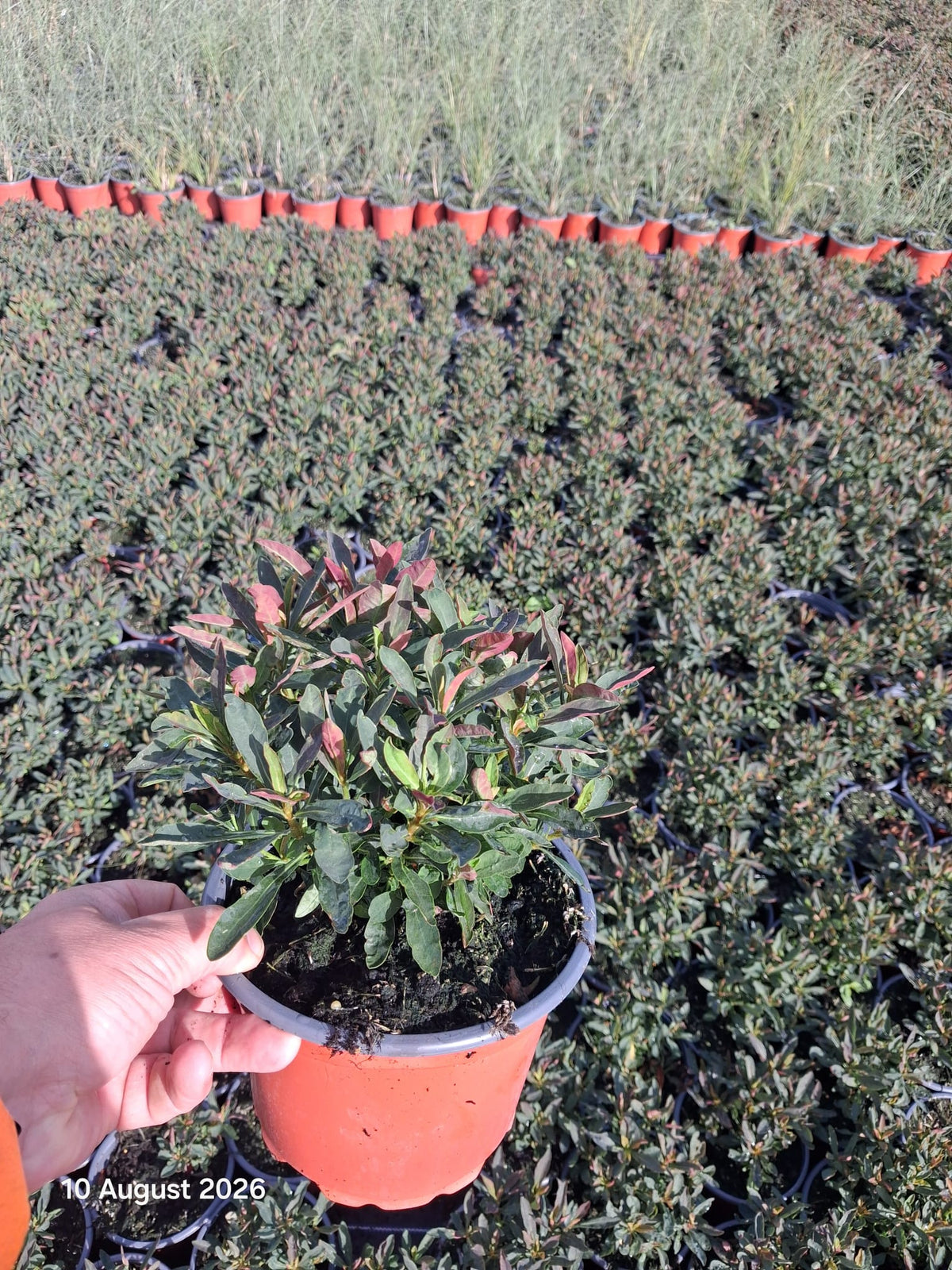
About Euphorbia Purpurea 2 Litre Pot
Euphorbia amygdaloides 'Purpurea' – Richly Coloured Wood Spurge for Shaded Borders
Euphorbia amygdaloides 'Purpurea', commonly known as Purple Wood Spurge, is a handsome evergreen perennial and groundcover plant prized for its deep, brooding foliage and vivid spring flowerheads. Dark burgundy-purple stems and leaves hold their rich colour throughout the year, providing a striking backdrop for the clusters of lime-yellow bracts that emerge from early spring onwards. Naturally at home beneath the dappled canopy of woodland edges, this tough and adaptable spurge brings year-round structure and seasonal drama to shaded borders, naturalistic plantings and any garden where bold foliage is valued alongside reliable groundcover.
Why Grow Euphorbia amygdaloides 'Purpurea'?
Exceptional Foliage Colour – The narrow, elliptic leaves are a deep, glossy burgundy-purple throughout the year, providing some of the richest dark foliage tones available in an evergreen perennial.
Vivid Spring Flowers – From late winter through to late spring, upright stems are crowned with clusters of chartreuse lime-yellow bracts that create a striking and beautiful contrast against the dark foliage beneath.
Effective Groundcover – 'Purpurea' spreads steadily to form a dense, weed-suppressing carpet, making it highly practical as well as ornamental in borders and woodland-style plantings.
Shade Tolerant – Unlike many ornamental perennials, Purple Wood Spurge positively thrives in partial to full shade, making it one of relatively few colourful options for darker corners of the garden.
Deer & Rabbit Resistant – The plant's milky sap makes it highly unappealing to deer and rabbits, offering dependable performance even in gardens where browsing wildlife is a persistent problem.
Pollinator Friendly – The nectar-rich spring flowerheads are a valuable early-season food source for bees, hoverflies and other emerging pollinating insects.
Where to Site Purple Wood Spurge
Aspect & Position – Euphorbia amygdaloides 'Purpurea' performs best in partial shade to full shade, making it an excellent choice for north-facing borders, the skirts of trees and shrubs, and woodland garden settings. It will tolerate a degree of sun in cooler, moister conditions, though the richest foliage colour and most vigorous growth are typically achieved in dappled or filtered light. Avoid hot, dry, exposed positions in full sun, where the foliage may scorch or bleach.
Soil – This plant is adaptable to most reasonably fertile, moisture-retentive soils. It performs particularly well in humus-rich, leafy woodland-type soils, and is equally at home in loam, clay or chalk provided drainage is not extreme. Unlike some other euphorbias, 'Purpurea' appreciates a degree of consistent moisture and will not thrive in very dry or free-draining sandy ground. Incorporating well-rotted compost or leaf mould at planting time will improve both fertility and moisture retention.
Garden Style – Purple Wood Spurge is a natural companion for shade-loving woodland perennials. It combines beautifully with Helleborus, Pulmonaria, Geranium, Epimedium and spring bulbs such as bluebells and anemones. The dark foliage provides a superb foil for silver-leaved or pale-flowered plants, and works equally well in contemporary planting schemes where bold, contrasting leaf colour is a key design element.
How to Grow and Care for Euphorbia amygdaloides 'Purpurea'
Watering – Water thoroughly at planting and continue to water regularly during the first growing season while the plant establishes. Once settled in, 'Purpurea' is reasonably self-sufficient in a suitable position, though it will benefit from supplementary watering during extended dry spells, particularly in summer. Unlike drought-tolerant euphorbias, this woodland species does not appreciate prolonged dryness at the roots.
Feeding – Apply a balanced slow-release fertiliser or a generous top-dressing of well-rotted compost or leaf mould in spring. This encourages healthy, vigorous growth and maintains the deep foliage colour. Avoid overfeeding with high-nitrogen fertilisers, which can promote soft, weak growth at the expense of the characteristic dark colouring.
Mulching – An annual mulch of leaf mould or garden compost applied in autumn or spring is highly beneficial, replicating the natural woodland floor conditions this plant enjoys. Mulching helps conserve moisture, suppress weeds and feed the soil as it breaks down, keeping the root zone cool and moist through summer.
Pruning and Maintenance
Pruning After Flowering – Each stem of Euphorbia amygdaloides 'Purpurea' flowers in its second year. Once the flowerheads begin to fade in late spring or early summer, cut these older flowering stems back to the base. This encourages strong new growth from the base that will carry the following year's flowers and refreshes the overall appearance of the plant. Take care to leave the young, non-flowering shoots untouched, as these are next season's stems.
Managing Spread – Purple Wood Spurge spreads gradually by short rhizomes to form an expanding clump. It can also self-seed modestly in favourable conditions.
Plants well with
Our growers' picks to plant alongside Euphorbia Purpurea 2 Litre Pot for a fuller, longer-lasting display.
-
Stipa Tenuissima Pony Tails 2 Litre Pot
Stipa tenuissima 'Pony Tails'Full sunDeciduousIn stockRegular price £4.75Regular price -
Salvia Officinalis 2 Litre Pot
Salvia OfficinalisFull sunEvergreenGetting lowRegular price £4.35Regular price -
Bergenia cordifolia Purpurea 2 Litre Pot
Bergenia cordifolia 'Purpurea'EvergreenIn stockRegular price £4.25Regular price


