

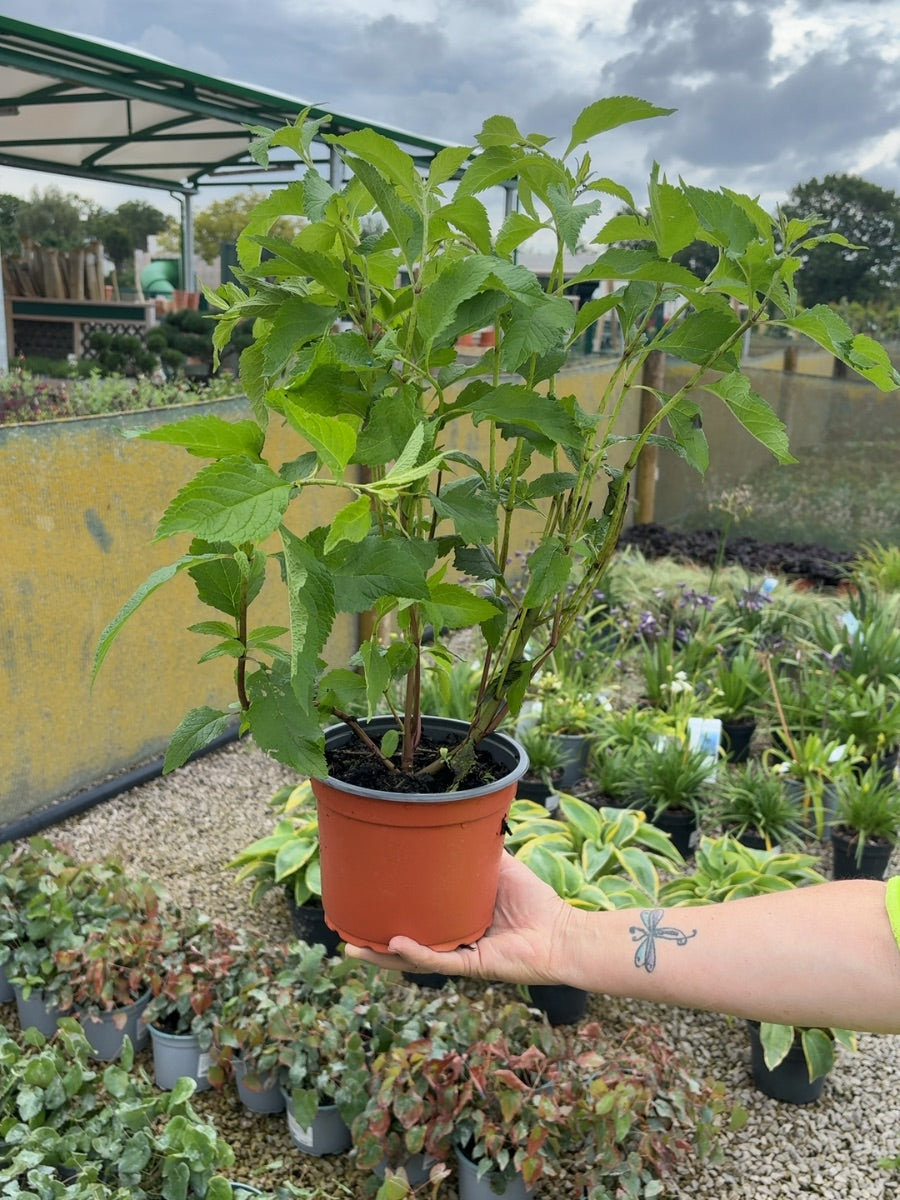

About Eupatorium Purpurea 2 Litre Pot
A bold and beautiful native perennial, Eupatorium purpureum (Joe Pye weed) brings statuesque presence and late-summer colour to borders and wildlife gardens alike. Beloved by butterflies and bees, its towering stems are crowned with domed clusters of soft purple-pink blooms from mid-summer through to early autumn, making it one of the most rewarding plants for a naturalistic or cottage-style planting scheme.
Habit & Appearance
An impressive, upright perennial, Joe Pye weed develops strong, often purple-flushed stems clothed in whorls of large, lance-shaped leaves with a faintly vanilla-scented quality when crushed. As the season peaks, the plant is topped with broad, domed flowerheads composed of masses of tiny mauve-pink florets that attract an extraordinary range of pollinators. As summer fades into autumn the seedheads retain decorative interest and provide food for seed-eating birds, extending the plant's value well beyond its flowering season.
Growing Conditions
Best planted in a sunny or lightly shaded position, Eupatorium purpureum thrives in moist, reasonably fertile soil and is particularly well suited to sites that retain some moisture through summer. It tolerates heavier clay soils admirably, making it a useful choice where drainage is less than perfect. A position sheltered from strong winds is beneficial given the plant's considerable height at maturity. It naturalises beautifully alongside ponds, streams, or in wilder, meadow-inspired planting schemes.
Care
Once established, Joe Pye weed is a robust and largely unfussy plant that requires little in the way of regular attention. Water well during dry spells in the first season to help the plant settle in. An annual mulch of garden compost or well-rotted manure applied in spring will help retain soil moisture and feed the plant as it comes into growth. Cut the stems back to near ground level in late autumn or early winter once the foliage has died back, or leave them standing through the colder months to provide winter structure and wildlife habitat before tidying in early spring. Clumps can be lifted and divided every few years to maintain vigour.