

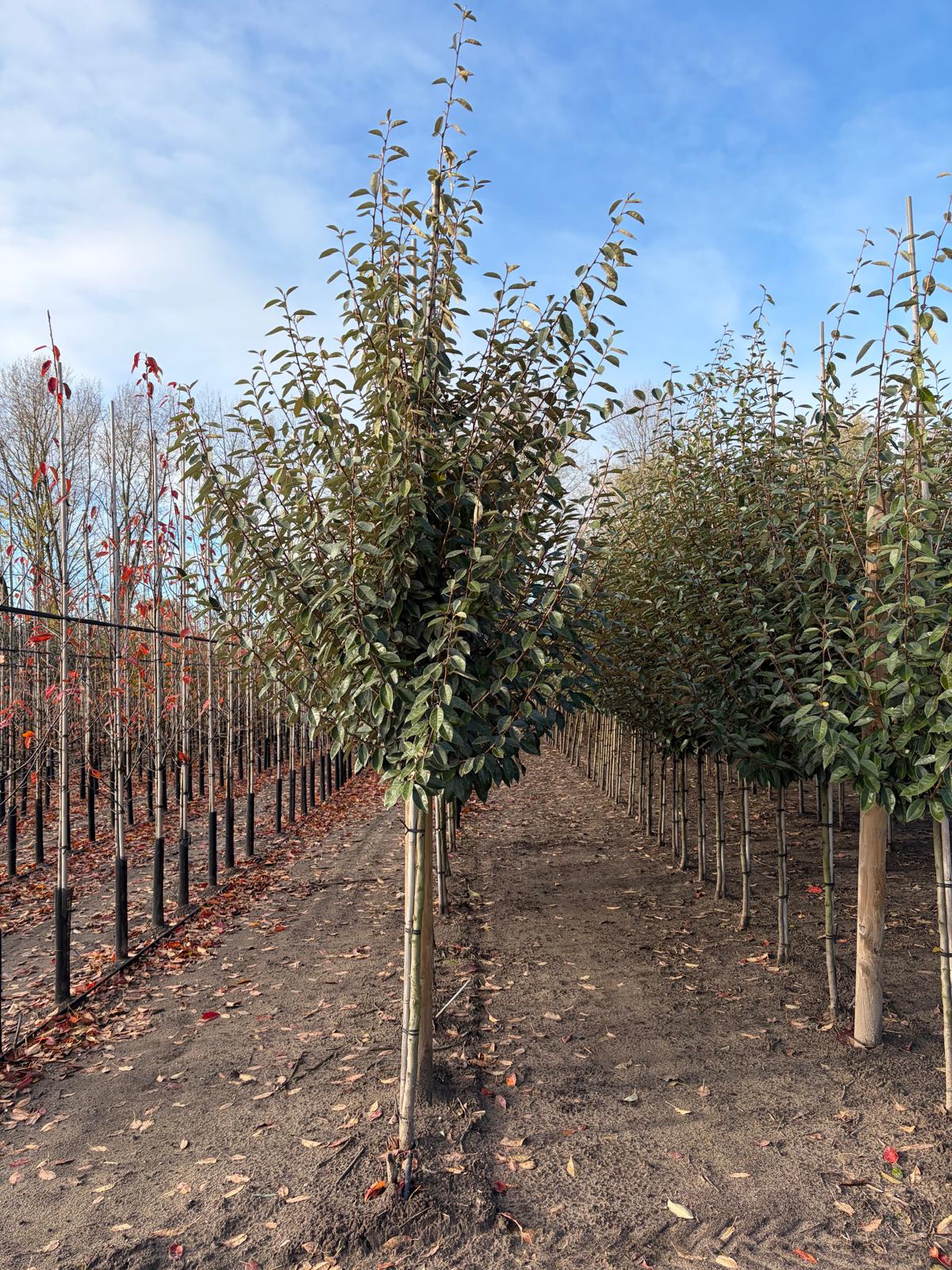
Elaeagnus Ebbingei 100cm Half Standard 6-8cm Girth Root Ball
Elaeagnus Ebbingei 100cm Half Standard 6-8cm Girth Root Ball
Couldn't load pickup availability

About Elaeagnus Ebbingei 100cm Half Standard 6-8cm Girth Root Ball
Elaeagnus × ebbingei (Ebbinge's Silverberry) is a robust, fast-growing evergreen shrub valued for its handsome silvery-green foliage, sweetly fragrant autumn flowers, and outstanding tolerance of tough growing conditions. Whether planted as a specimen, clipped into a formal hedge, or used as a windbreak, it delivers reliable year-round structure and interest with minimal fuss — making it one of the most practical and rewarding shrubs available for UK gardens.
Habit & Appearance
Foliage and form. Elaeagnus × ebbingei produces large, oval to elliptic leaves with a glossy, grey-green upper surface and a distinctive silvery, scaly underside that catches the light and creates a shimmering, two-tone effect as the branches move in the breeze. The shrub builds a dense, rounded to broadly spreading canopy over time, making it exceptionally effective as a screening plant or windbreak.
Flowers and fruit. In mid to late autumn, clusters of small, tubular, creamy-white flowers appear, largely hidden among the foliage but unmistakable from their powerful, honeyed fragrance — one of the finest scents in the autumn garden. These are followed in spring by small, oval fruits that ripen from silver-speckled green to orange-red, adding a further note of seasonal interest.
Growing Conditions
Position. Thrives in full sun or partial shade. It is exceptionally tolerant of exposed, windy sites and performs particularly well in coastal gardens where salt-laden winds would damage less resilient shrubs. It is equally at home in sheltered urban or inland gardens.
Soil. Remarkably adaptable, Elaeagnus × ebbingei establishes readily in most well-drained soils, including sandy, chalky, and poor or dry conditions. It tolerates a wide pH range from mildly acidic to moderately alkaline. Like other members of the Elaeagnus family, it has the ability to fix atmospheric nitrogen, which helps it thrive even in low-fertility soils. Avoid waterlogged or persistently boggy ground.
Hardiness. Fully hardy throughout the UK, tolerating cold winters, exposed positions, and periods of summer drought once established.
Care & Pruning
Establishment. Water regularly during the first growing season to help the root system establish, particularly in free-draining soils. Once settled, Elaeagnus × ebbingei is a drought-tolerant and largely self-sufficient shrub requiring little ongoing intervention.
Pruning. When grown as an informal shrub, little pruning is needed beyond removing any damaged, dead, or congested growth. For hedging or formal screening, clip once or twice a year — ideally in late spring after new growth has hardened, and again in late summer if a second cut is needed to keep the shape tidy. Avoid pruning in autumn to preserve the fragrant flowers. If the shrub becomes overgrown, it responds well to hard renovation pruning in spring.
General maintenance. Watch for any shoots that revert to plain green foliage on variegated selections and remove them promptly at the base to prevent them from dominating. Elaeagnus × ebbingei is generally resistant to pests and diseases, though it can occasionally be affected by elaeagnus leaf spot or coral spot on weakened wood; removing affected stems promptly keeps plants healthy.