


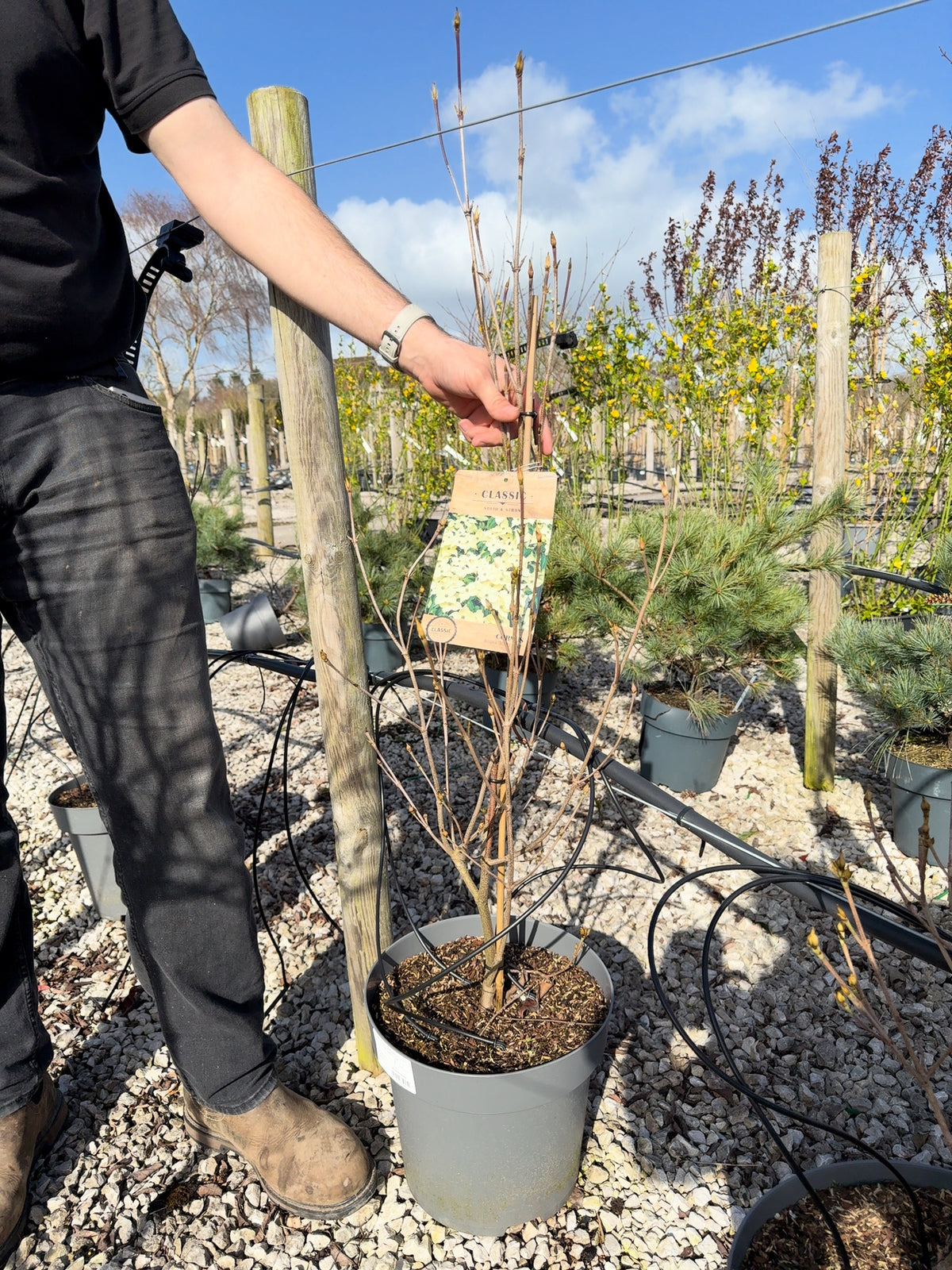

About Cornus Kousa Satomi 12 Litre Pot 60-80cm Tall
Cornus kousa 'Satomi' – Kousa 'Miss Satomi'
One of the most breathtaking ornamental trees available, Cornus kousa 'Satomi' is a compact, deciduous tree renowned for its spectacular display of deep rose-pink flower bracts that smother the branches in early summer. With outstanding autumn colour and attractive strawberry-like fruits, it delivers exceptional multi-season interest and makes a truly memorable focal point in any garden.
Seasonal Highlights
In late spring to early summer, the branches are covered in large, four-pointed flower bracts in a rich, deep rose-pink – a display that persists for several weeks. Through summer, the neat, dark green foliage provides a handsome backdrop, before turning to vivid shades of crimson, scarlet and burgundy in autumn. Decorative, fleshy red fruits resembling strawberries follow the flowers and add further interest into the autumn months.
Key Features
- Stunning deep rose-pink flower bracts in early summer
- Outstanding crimson and scarlet autumn foliage colour
- Decorative strawberry-like fruits in autumn
- Compact, layered branching habit
- Multi-season garden interest
- Fully hardy and reliable
Perfect For
An ideal specimen tree for smaller gardens, lawn focal points, and mixed borders where year-round impact is required. Well suited to woodland-edge planting schemes and elegant formal settings alike. An excellent choice for gardens designed around seasonal colour and structure, and a wonderful addition to wildlife-friendly planting where the fruits attract birds in autumn.
Growing Tips
Position: Plant in full sun or dappled partial shade. A sunny position will produce the richest bract colour and the most vivid autumn tints, while some shelter from cold, drying winds will help the tree establish well.
Soil: Prefers fertile, humus-rich, moist but well-drained, neutral to slightly acidic soil. Avoid shallow, chalky or waterlogged ground. Incorporating generous amounts of organic matter at planting will greatly benefit establishment and long-term performance.
Watering: Water regularly during the first two growing seasons to encourage a strong root system. Once established, the tree is reasonably drought tolerant, though watering during prolonged dry spells will maintain vigour.
Feeding and mulching: Apply a balanced fertiliser in early spring and mulch annually with well-rotted compost or leaf mould to retain moisture and suppress weeds.
Pruning: Minimal pruning is required. Remove any dead, damaged or crossing branches in late autumn or early winter when the tree is fully dormant. Avoid pruning in late winter or early spring when sap is rising, as wounds may bleed excessively. Allow the tree to develop its naturally elegant, layered habit with minimal interference.
Looks Great With
Combines beautifully with other acid-loving woodland plants such as rhododendrons, azaleas and pieris for a cohesive spring and early summer display. Underplanting with shade-tolerant perennials like hostas and ferns complements the layered habit of the tree. Pairs elegantly with white-flowered shrubs and silver-foliaged plants that help to highlight the rich pink of the bracts.
An exceptional ornamental tree that rewards the gardener with something special in every season, from its glorious summer floral display to its fiery autumn transformation – a true garden treasure.
Plants well with
Our growers' picks to plant alongside Cornus Kousa Satomi 12 Litre Pot 60-80cm Tall for a fuller, longer-lasting display.
-
Hamamelis Arnolds Promise 20 Litre Pot 125/150cm Tall
Hamamelis × intermedia 'Arnold Promise'Full sunDeciduousGetting lowRegular price £165.00Regular price -
Hydrangea Arborescens Annabelle 4.5 Litre Pot
Hydrangea Arborescens AnnabelleFull sunDeciduousIn stockRegular price £21.50Regular price

