

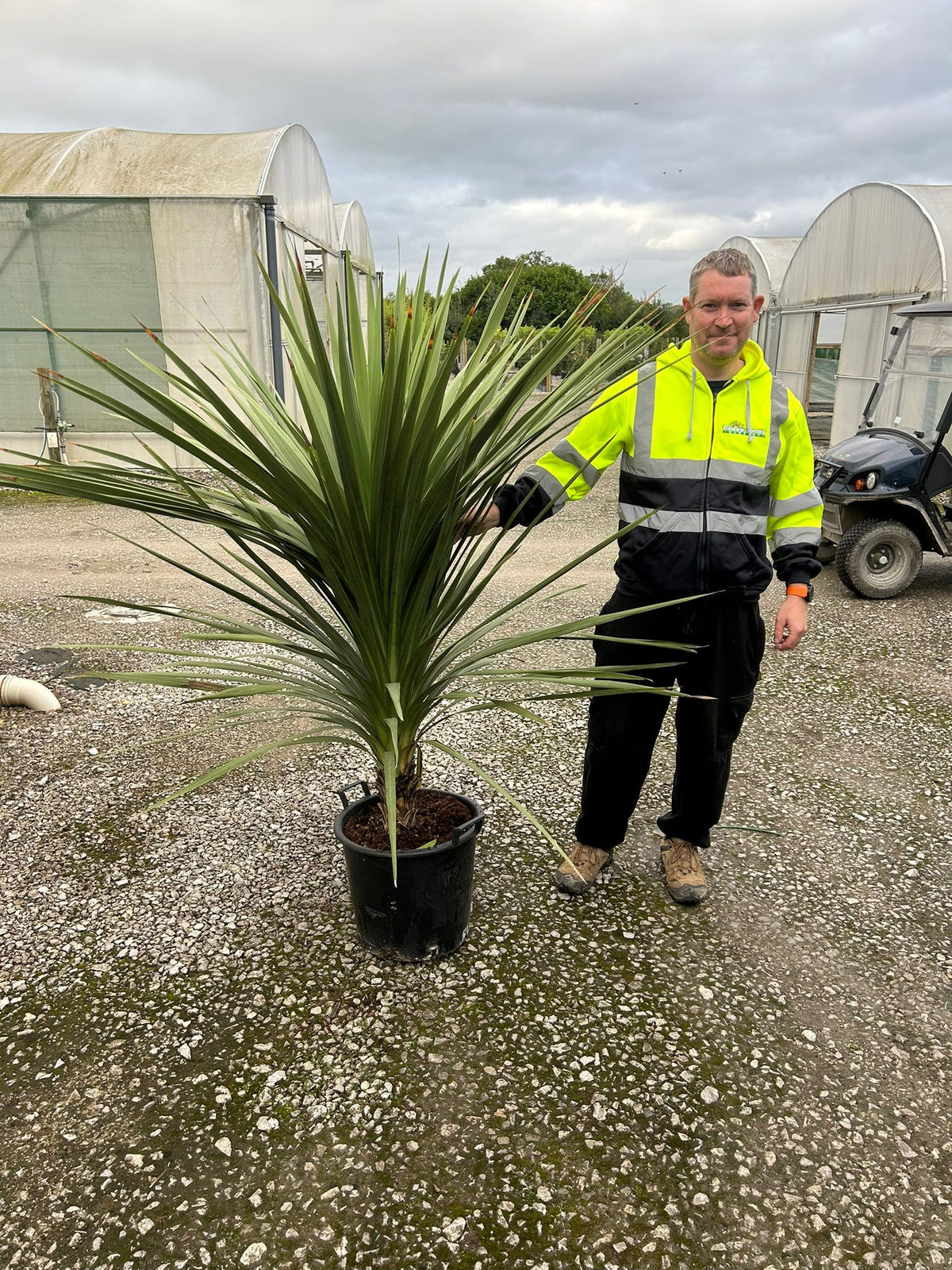

About Cordyline Australis 30 Litre Pot Trunk 125/150cm
Cordyline australis
A truly iconic architectural evergreen, the Cabbage palm is one of the most recognisable and versatile plants for British gardens. With its bold, fountain-like rosette of long, sword-shaped green leaves and strikingly upright form, it delivers year-round structure and a touch of the exotic to any planting scheme. Native to New Zealand, it is surprisingly hardy and remarkably adaptable, earning its place as a garden classic.
Seasonal Highlights
The evergreen foliage provides bold structure and interest throughout every season. As the plant matures, it develops a distinctive woody trunk topped with arching sprays of narrow, strappy leaves. In early summer, mature specimens produce magnificent plumes of small, fragrant creamy-white flowers that are irresistible to bees and other pollinators, followed by small pale berries. With age, lower trunks may branch to create dramatic multi-headed specimens.
Key Features
- Bold architectural form with fountain-like foliage rosette
- Evergreen, providing year-round structure and interest
- Fragrant creamy-white flowers on mature plants in summer
- Excellent coastal and wind tolerance
- Surprisingly hardy and adaptable
- Develops a handsome trunk with age
Perfect For
Perfect as a striking focal point in contemporary, coastal, tropical or Mediterranean-style gardens. Excellent in large containers on patios, terraces and balconies where its architectural form can be fully appreciated. Ideal for adding height and drama to mixed borders and gravel gardens. A superb choice for exposed coastal sites where it tolerates salt-laden winds with ease.
Growing Tips
Position: Plant in full sun to light shade in a sheltered or open position. Full sun encourages the most vigorous growth and the best chance of flowering on mature plants. Well-drained soil is essential, as the Cabbage palm will not tolerate prolonged waterlogging at the roots.
Soil: Tolerant of most soil types including poor, sandy or chalky soils, provided drainage is good. When planting in containers, use a loam-based compost mixed with grit to ensure free drainage.
Watering: Water regularly during the establishment period. Once established in the ground, the Cabbage palm is remarkably drought tolerant and requires little supplementary watering. Container-grown plants will need more regular watering, particularly during dry spells.
Feeding: Apply a balanced general-purpose fertiliser in spring to encourage healthy, vigorous growth. Container plants benefit from regular liquid feeding throughout the growing season.
Pruning: Little pruning is required. Simply remove dead, brown or tatty lower leaves by pulling them downward sharply against the trunk, or cutting cleanly with secateurs, to keep the plant looking tidy. Avoid cutting into healthy green foliage unnecessarily.
Winter care: Established plants in the ground are generally hardy across most of the UK, but in colder inland areas it is advisable to protect the crown over winter by tying the leaves loosely together over the growing point and wrapping with horticultural fleece. Container plants can be moved to a sheltered spot or unheated greenhouse during prolonged severe frost.
Looks Great With
The Cabbage palm makes a superb centrepiece surrounded by lower-growing architectural companions. Pair it with phormiums, ornamental grasses and agapanthus for a bold, contemporary look. It contrasts beautifully with silver and grey-leaved plants such as artemisia and stachys. For a coastal or tropical feel, underplant with osteospermum, echeveria or low-growing succulents. Combine with other bold foliage plants such as melianthus or fatsia for a lush, exotic border planting.
A timeless architectural classic that brings effortless style, structure and a sense of drama to gardens of all sizes and styles, season after season.