

Cherry Napoleon 15 Litre Pot Half Standard
Cherry Napoleon 15 Litre Pot Half Standard
Couldn't load pickup availability
Order now to reserve your plants at today's price. We'll email you with a delivery date as soon as they're ready to dispatch.

About Cherry Napoleon 15 Litre Pot Half Standard
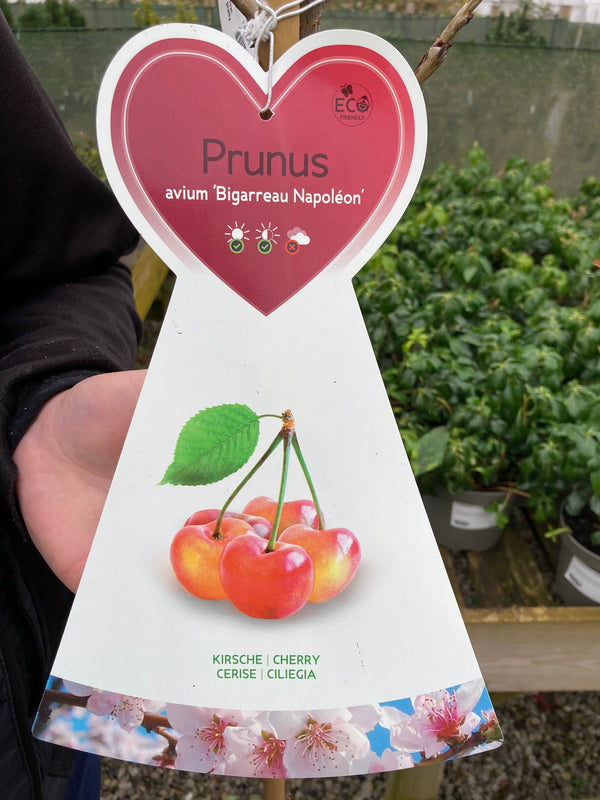
Napoleon Cherry (Prunus avium 'Napoleon') – A Classic Fruiting Cherry Tree with Outstanding Ornamental Appeal
Prunus avium 'Napoleon', commonly known as the Napoleon Cherry, is one of the most celebrated and long-established sweet cherry varieties, prized equally for its generous crops of delicious fruit and its spectacular ornamental display. A tree of genuine four-season interest, it earns its place in any garden with a breathtaking flush of pure white blossom in spring, attractive summer foliage, richly coloured autumn tints, and a handsome branching structure that remains striking through the winter months.
The fruit itself is the variety's crowning glory — large, firm, and glossy, ripening to a beautiful pale yellow flushed with deep rose-red. Sweet, juicy, and full of flavour, Napoleon cherries are regarded as a premium dessert variety, excellent for eating fresh from the tree and well suited to preserving and cooking. A tried-and-tested cultivar that has stood the test of time, it remains a firm favourite with both domestic gardeners and orchard growers alike.
Key Features
Spectacular white blossom in spring — one of the finest ornamental displays of any fruiting tree
Large, firm, premium-quality sweet cherries — pale yellow with a rose-red flush
Outstanding autumn foliage colour — rich amber, orange, and red tones
Attractive upright-spreading habit with handsome winter structure
Reliable and long-lived — a classic variety with proven garden and orchard performance
Growing Conditions
Position: Prunus avium 'Napoleon' performs best in a sheltered, sunny position — full sun is ideal for ripening the fruit to its best quality and encouraging a strong blossom set. Avoid exposed, frost-prone sites where possible, as late spring frosts can damage the flowers and reduce the crop. A south- or west-facing aspect is particularly well suited, and the tree will also grow well against a warm wall where shelter is limited.
Soil: Best suited to a fertile, moisture-retentive but well-drained soil. It performs well on loam and sandy loam and will tolerate a range of soil types, including moderately chalky ground, provided drainage is adequate. Avoid heavy, waterlogged clay or compacted soils, which can lead to root problems and reduced vigour. A slightly alkaline to neutral pH is preferred.
Hardiness: Fully hardy throughout the UK, tolerating typical winter cold without difficulty. The main vulnerability is late spring frosts coinciding with flowering — in frost-prone gardens, some protection during blossom time can help safeguard the crop.
Habit & Appearance
Form: Napoleon Cherry develops into a vigorous, upright-spreading deciduous tree with a well-defined, open crown that becomes increasingly characterful with age. The branch framework is strong and attractive, with smooth, polished bark marked by the horizontal lenticels typical of the cherry family — a handsome feature in the winter garden.
Blossom: In mid to late spring, the bare branches are smothered in clusters of pure white, cup-shaped flowers, creating one of the most striking ornamental displays of the season. The blossom appears before or alongside the emerging leaves, maximising its visual impact and providing an early nectar source for bees and other pollinators.
Fruit: The cherries ripen in midsummer, developing into large, firm, glossy fruits with a pale creamy-yellow skin generously flushed with rose and crimson. The flesh is sweet, crisp, and juicy, with excellent flavour — a premium dessert cherry well suited to eating fresh, as well as bottling, preserving, and culinary use.
Foliage & Autumn Colour: The broad, oval leaves are mid-green through summer, turning to warm shades of amber, burnt orange, and deep red in autumn — an ornamental quality that is often underappreciated in fruiting trees but genuinely impressive in a well-grown specimen.
Pollination: 'Napoleon' is partially self-fertile but crops significantly more heavily when grown alongside a compatible pollination partner in the same flowering group. It is a reliable pollinator itself and pairs well with a number of other sweet cherry varieties. Checking pollination group compatibility is recommended for best cropping results.
Care & Pruning
Watering: Water regularly and thoroughly during the first growing season to support strong root establishment. Once settled, Napoleon Cherry is reasonably drought-tolerant in typical UK conditions, though consistent moisture during the fruit development period in early to midsummer will improve both fruit size and quality. Deep watering during dry spells is preferable to frequent shallow irrigation.
Feeding: Apply a balanced general-purpose or fruit-specific fertiliser in early spring to promote healthy growth and a good fruit set. An annual mulch of well-rotted compost or manure around the base — kept clear of the trunk — will help retain moisture, suppress weeds, and gradually enrich the soil. Avoid over-feeding with high-nitrogen products, which can encourage excessive leafy growth at the expense of fruit.
Pruning: Cherry trees should always be pruned during the growing season — in late spring or summer rather than in autumn or winter, when the risk of silver leaf disease and other fungal infections is significantly higher. For a young tree, early formative pruning to establish a clear