
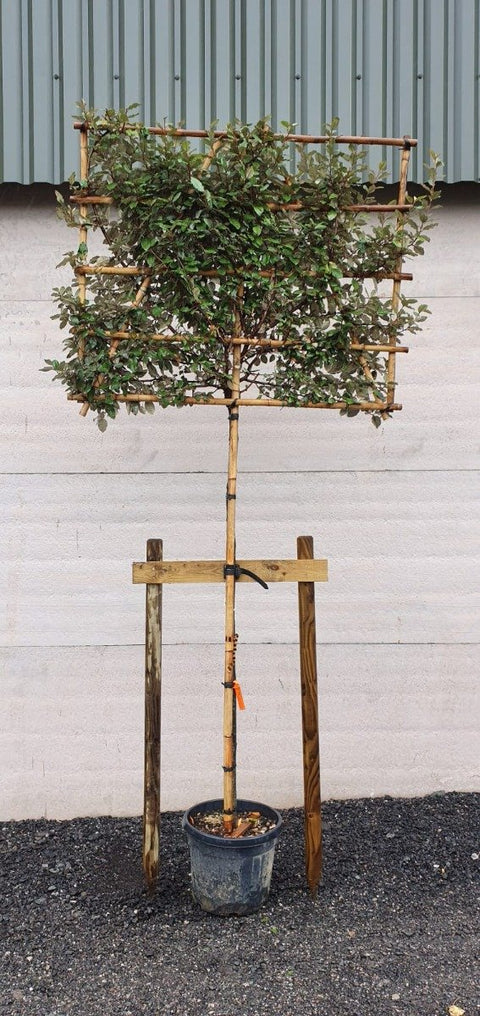
Cherry Giant Hedelfingen 15 Litre Pot Half Standard
Cherry Giant Hedelfingen 15 Litre Pot Half Standard
Couldn't load pickup availability
About Cherry Giant Hedelfingen 15 Litre Pot Half Standard
Cherry 'Hedelfingen' (Prunus avium 'Hedelfingen') – A Classic, Heavy-Cropping Sweet Cherry for Garden & Orchard
Prunus avium 'Hedelfingen' is one of the most highly regarded and widely grown sweet cherries available, celebrated for its reliable, generous crops of large, richly flavoured fruit and its handsome ornamental qualities throughout the seasons. A traditional German variety with a long and distinguished history, 'Hedelfingen' produces dark red to near-black cherries of outstanding quality — firm, juicy, and sweet — that ripen in mid to late summer, making it a favourite with both amateur and professional growers alike.
Beyond its culinary merits, this is a genuinely attractive garden tree. In spring it puts on a spectacular display of pure white blossom before a single leaf has appeared, transforming the bare branches into something truly breathtaking. The foliage that follows is bold and fresh, turning to warm amber and orange tints in autumn before falling. Vigorous and self-fertile, 'Hedelfingen' is an excellent standalone choice, though yields are further improved when grown alongside other compatible sweet cherry varieties.
Key Features
Heavy-cropping sweet cherry producing large, dark red to near-black fruit of excellent flavour
Spectacular white blossom in spring — one of the finest ornamental displays of any fruiting tree
Partially self-fertile — crops well alone, but benefits from a compatible pollination partner nearby
Good resistance to cracking, making it more reliable than many other sweet cherry varieties in wet summers
Attractive autumn foliage in warm amber and orange tones
Growing Conditions
Position: Prunus avium 'Hedelfingen' performs best in a warm, sheltered, sunny position — full sun is ideal and will encourage the sweetest, most flavoursome fruit. Avoid frost pockets where possible, as late spring frosts can damage the blossom and reduce fruit set. A south- or west-facing aspect is particularly well suited, and planting against a warm wall in cooler regions will extend the season and improve ripening.
Soil: Best in a deep, fertile, well-drained loam, though it will grow well in a range of soil types provided drainage is adequate. It will tolerate some clay, but dislikes sitting in waterlogged or poorly drained ground, which can cause root problems and increase susceptibility to disease. Slightly alkaline to neutral soils are preferred; highly acidic conditions are best avoided.
Hardiness: Fully hardy throughout the UK and well suited to temperate climates. The blossom, produced early in the season, can be vulnerable to late frosts — choosing a sheltered spot and avoiding exposed or low-lying ground will help protect the flowers and safeguard the crop.
Habit & Appearance
Form & Foliage: 'Hedelfingen' develops into a vigorous, upright to broadly spreading deciduous tree with an open, well-structured crown. The leaves are large, oval, and a fresh mid-green through summer, turning to attractive warm shades of orange and amber in autumn before falling cleanly. The overall habit is handsome and architectural, giving the tree strong seasonal presence throughout the year even when not in fruit or flower.
Flowers: In early to mid-spring, the bare branches are smothered in clusters of pure white, five-petalled flowers — a truly stunning display that rivals any purely ornamental cherry. The blossom is also of great value to early-season pollinators, particularly bees, making this tree a welcome addition to any wildlife-friendly garden.
Fruit: The cherries ripen in mid to late summer and are notably large, with a deep red to dark mahogany skin and firm, juicy flesh. The flavour is rich, sweet, and well-balanced. The variety shows good resistance to fruit cracking — a common problem with sweet cherries after heavy rain — making it more dependable than many alternatives in typical British summers.
Ultimate Size: On a standard rootstock, 'Hedelfingen' will develop into a substantial tree over time. Growth and ultimate size can be managed significantly through rootstock selection — semi-dwarfing and dwarfing rootstocks are widely available and make the tree far more practical for smaller gardens, as well as making pruning and harvesting considerably easier.
Care & Pruning
Watering: Water regularly and thoroughly during the first growing season to encourage strong, deep root establishment. Once settled, the tree becomes considerably more self-sufficient, though supplementary watering during prolonged dry spells — particularly as the fruit is swelling and developing — will support a good crop and reduce the risk of split fruit.
Feeding: Apply a balanced general-purpose fertiliser or a dedicated fruit tree feed in early spring as growth resumes. An annual mulch of well-rotted organic matter around the base of the tree — kept clear of the trunk — will help retain moisture, suppress competing weeds, and gradually enrich the soil. Avoid overfeeding with high-nitrogen feeds, which will encourage excessive leafy growth at the expense of fruiting.
Pruning: Sweet cherries should always be pruned during the active growing season — from late spring through to early autumn — rather than in winter or early spring, when wounds are slow to heal and the risk of disease entry, particularly silver leaf and bacterial canker, is at its highest. Aim to establish a clear, open framework of well-spaced main branches in the early
Plants well with
Our growers' picks to plant alongside Cherry Giant Hedelfingen 15 Litre Pot Half Standard for a fuller, longer-lasting display.
-
Amelanchier aln. Obelisk 12 Litre Pot 100/125cm
Amelanchier alnifolia 'Obelisk'Full sunDeciduousGetting lowRegular price £55.50Regular price -
Magnolia Black Tulip 20 Litre Pot 150/175cm
Magnolia Black Tulip ('Jurmag1')Full sunDeciduousGetting lowRegular price £193.50Regular price

