

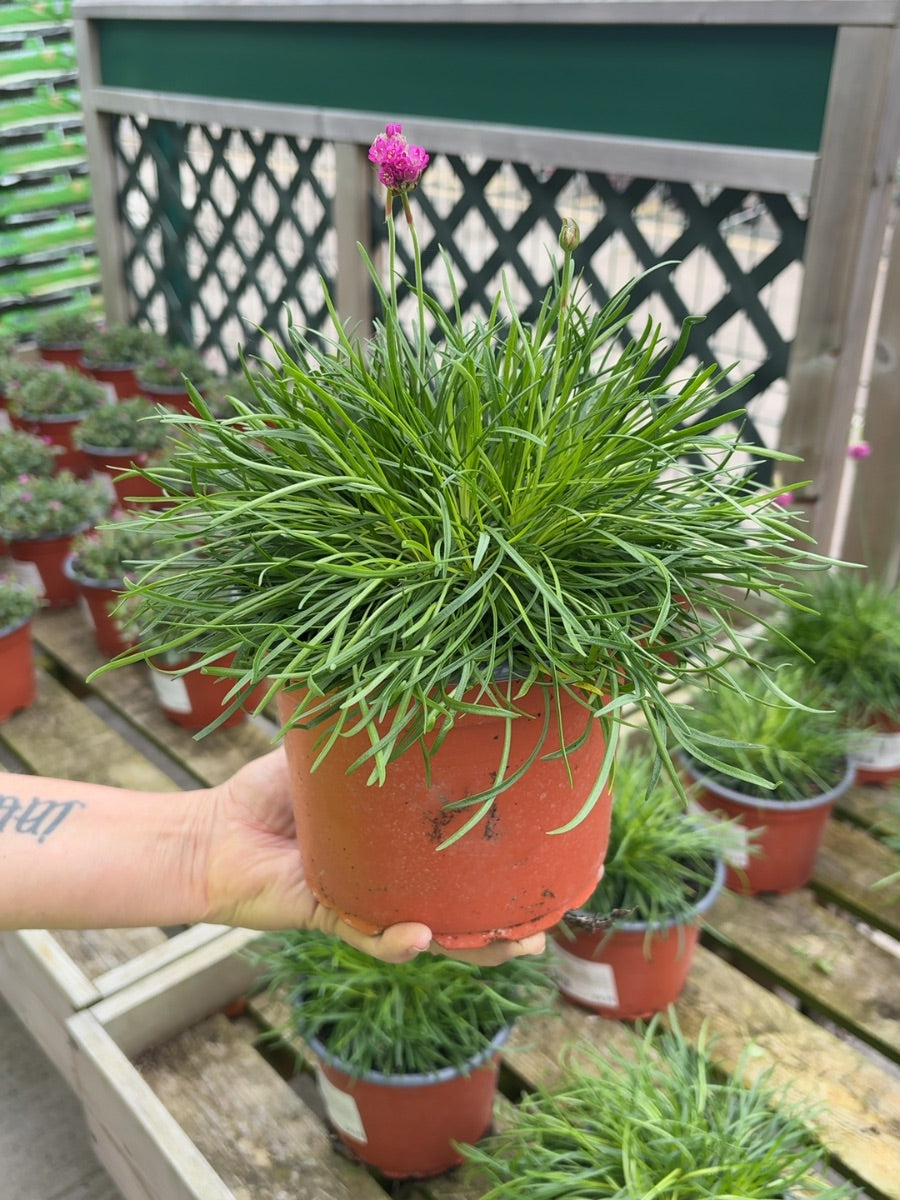
About Armeria Splendens 2 Litre Pot
Armeria maritima 'Splendens' – A Vivid Sea Thrift with Bold, Rosy-Red Blooms
Armeria maritima 'Splendens', commonly known as Thrift or Sea Thrift, is a compact, evergreen perennial prized for its rich, deep rose-pink to rosy-red spherical flower heads that glow above dense cushions of fine, grassy foliage. Flowering prolifically from late spring through early summer, and often continuing to produce blooms intermittently thereafter, 'Splendens' offers a more intense depth of colour than the straight species, making it a standout choice wherever a vivid yet neat planting display is desired.
With its tidy, cushion-forming habit, exceptional hardiness, and striking floral colour, Armeria maritima 'Splendens' is an outstanding choice for rock gardens, border edging, coastal schemes, and container planting alike.
Why Grow Armeria maritima 'Splendens'?
Vivid Rosy-Red Flowers – Intense, deep rose-pink blooms well above the foliage for a bold seasonal display.
Evergreen Cushion Foliage – Neat, grassy tufts provide attractive structure and ground coverage year-round.
Compact and Tidy Habit – Perfectly suited to edging, rockeries, and small garden spaces.
Coastal and Wind Hardy – Highly tolerant of salt-laden air and exposed conditions.
Drought Tolerant – Once established, thrives in dry, free-draining conditions with minimal intervention.
Wildlife Friendly – Flowers are attractive to bees, butterflies, and other pollinating insects.
Height and Spread
Typically reaches 20–30cm (8–12in) in height when in flower, with a spread of 20–30cm (8–12in), forming a neat, rounded cushion of evergreen foliage.
Where to Site Your Armeria maritima 'Splendens'
-
Rock Gardens: Thrives in the free-draining, open conditions of a rockery or alpine bed
-
Border Edging: Ideal for defining the front of sunny borders and pathway edges
-
Coastal Gardens: Exceptional tolerance of salt spray, wind, and exposed seaside sites
-
Gravel Gardens: Well suited to dry, low-nutrient, free-draining gravel planting schemes
-
Containers and Troughs: An excellent choice for alpine troughs, patio pots, and raised beds
-
Green Roofs: Naturally adapted to shallow, well-drained substrates and exposed rooftop environments
How to Grow and Care for Armeria maritima 'Splendens'
Position – Plant in a bright, open site in full sun. 'Splendens' flowers most freely and maintains its compact, healthy habit when given maximum light exposure. Avoid shaded or overly sheltered positions.
Soil – Prefers well-drained to sharply drained, sandy or gritty soil of low to moderate fertility. Armeria is particularly well adapted to poor soils and will struggle in heavy, waterlogged, or overly rich conditions, which can cause the cushions to rot at the centre. Improve drainage with the addition of horticultural grit if necessary when planting.
Watering – Water regularly during the establishment period to help the plant settle in. Once established, 'Splendens' is notably drought tolerant and requires only occasional watering during prolonged dry spells. Avoid overwatering or allowing roots to sit in persistently damp soil.
Feeding – Little to no feeding is required. Armeria thrives in poor soils, and excess nutrients can lead to lush, loose growth at the expense of flowers. If desired, a light application of a low-nitrogen fertiliser in early spring is sufficient.
Maintenance and Pruning
Deadheading – Remove spent flower stems promptly by cutting or pulling them away cleanly at the base. This encourages further flushes of bloom and keeps the plant looking neat throughout the season.
Tidying – In late summer or early autumn, lightly tidy the foliage cushion by removing any dead or browning leaves from the centre of the clump. Avoid cutting hard into the woody base, as Armeria can be slow to recover from severe pruning.
Division – Plants can be divided in spring or early autumn every few years to reinvigorate older clumps that have begun to die out in the centre. Each division should retain a healthy portion of roots and foliage before replanting.
Pests and Diseases – Generally very robust and trouble-free. The principal concern is root rot in poorly drained or excessively wet conditions; ensuring good drainage at planting is the best preventative measure.
Perfect Plant Combinations
Plants well with
Our growers' picks to plant alongside Armeria Splendens 2 Litre Pot for a fuller, longer-lasting display.
-
Festuca Elijah Blue 2 Litre Pot
Festuca glauca 'Elijah Blue'Full sunEvergreenIn stockRegular price £4.95Regular price -
Stipa Arundinacea 2 Litre Pot
Stipa arundinaceaFull sunSemi-evergreenIn stockRegular price £4.75Regular price

