

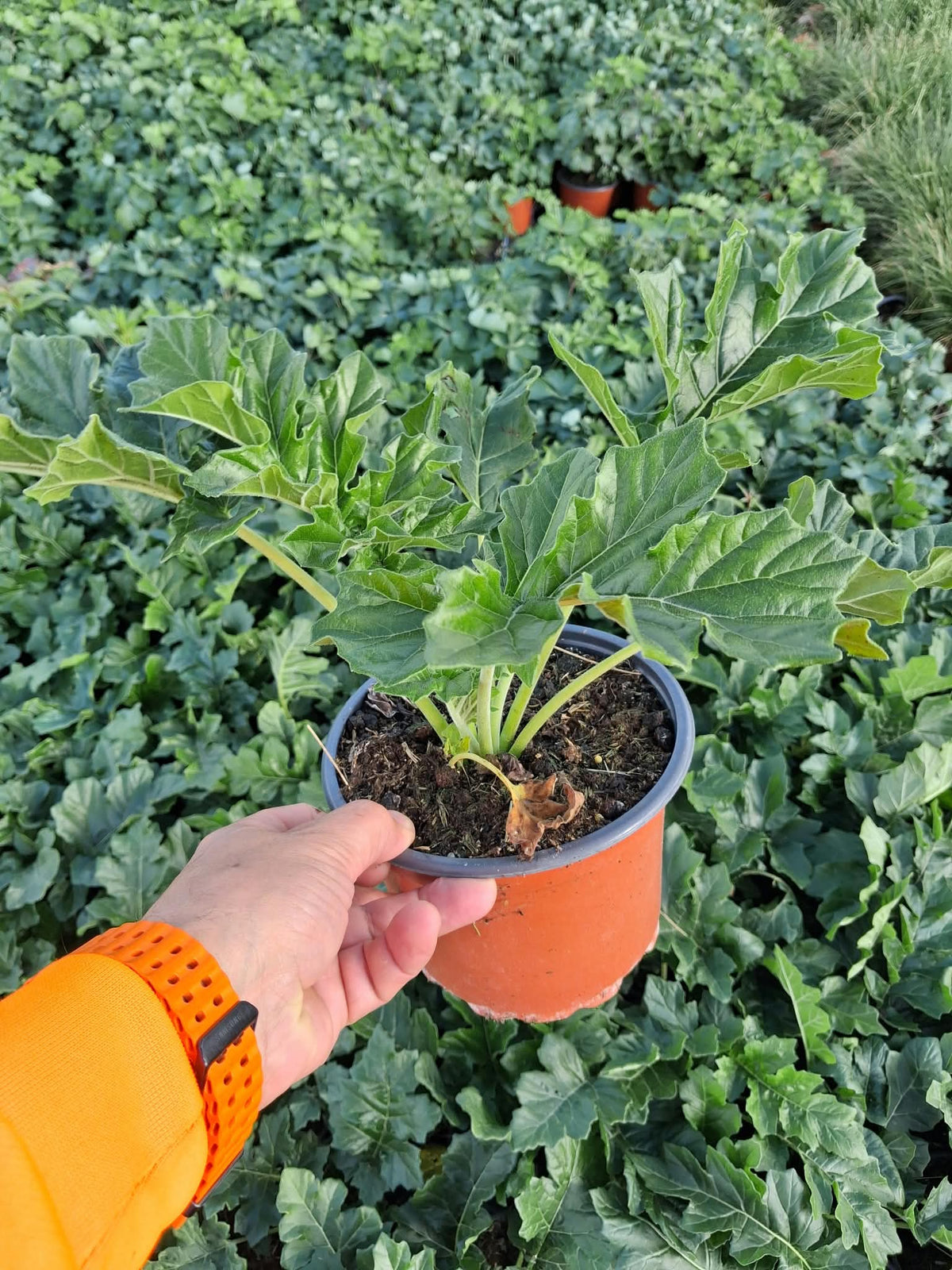

About Acanthus Mollis 2 Litre Pot
Acanthus mollis (Bear's Breeches) – A Bold, Architectural Perennial with Iconic Foliage and Dramatic Flower Spikes
Acanthus mollis is one of the most striking and instantly recognisable perennials in cultivation, celebrated for its deeply lobed, glossy dark green leaves that have inspired decorative motifs in art and architecture for centuries — most famously the carved capitals of Corinthian columns. This robust, clump-forming plant brings bold, sculptural presence to borders, woodland edges, and Mediterranean-style plantings alike. In summer, tall, imposing flower spikes emerge well above the foliage, bearing hooded blooms in soft purple and white that add vertical drama and an almost exotic quality to the garden. Hardy, long-lived, and surprisingly unfussy once established, Bear's breeches is a plant that earns its place year after year with minimal effort.
Growing conditions
Position. Acanthus mollis thrives in full sun to partial shade. In warmer or drier gardens, a position with some afternoon shade will help keep the foliage looking its best through summer. It is an excellent choice for difficult dry spots under trees or along sunny walls, and its architectural stature makes it a natural focal point in mixed borders, gravel gardens, or alongside paths where its bold leaves can be appreciated up close.
Soil. This species is adaptable to a wide range of soil types, performing well in average, moderately fertile, and even poor soils, provided drainage is reasonable. It prefers a well-drained to free-draining soil and is notably drought-tolerant once established. Avoid waterlogged or very heavy clay conditions, which can cause the fleshy roots to rot over winter. Slightly alkaline to neutral pH suits it well, though it will tolerate mildly acidic soils without complaint.
Habit and appearance
Foliage. The large, deeply lobed and sinuate leaves of Acanthus mollis are its defining feature — glossy, rich green, and impressively bold in scale. They form a spreading, low rosette of foliage that creates excellent ground cover and weed suppression once the plant is well established. The leaves offer substantial textural contrast when planted alongside finer-leaved perennials or grasses.
Flowers. From late spring through midsummer, stout, upright flower spikes rise dramatically above the foliage. Each spike is densely packed with hooded, two-lipped flowers in creamy white with soft mauve-purple bracts, creating a striking and long-lasting display. The flower spikes are also highly attractive to bumblebees, adding wildlife value to their ornamental appeal. Once the blooms fade, the architectural seed heads remain decorative and can be cut for dried arrangements.
Care
Watering. Water regularly during the first growing season to help the plant establish a deep root system. Once settled in, Acanthus mollis is remarkably drought-tolerant and will require little supplementary watering except during prolonged dry spells. Avoid overwatering, particularly on heavier soils, as the roots dislike sitting in excess moisture.
Feeding. This is not a hungry plant — in most garden soils, little or no feeding is necessary. If growth appears weak, a balanced slow-release fertiliser applied in early spring will provide a gentle boost to encourage healthy foliage and flowering.
Pruning and maintenance. Cut back old or tatty foliage in late winter or early spring before new growth emerges. Spent flower spikes can be removed once flowering is complete, or left in place if the seed heads are desired for ornamental or wildlife interest. Be aware that Acanthus mollis has deep, fleshy roots and spreads readily — any root disturbance or digging around the plant can result in new shoots emerging from root fragments, so site it with care and divide clumps in spring if it begins to outgrow its allotted space.
Winter care. Acanthus mollis is fully hardy in most of the UK and will die back to ground level in colder winters before resprouting vigorously in spring. In exposed or very cold gardens, a generous layer of mulch applied over the crown in late autumn will offer additional root protection. In milder regions, some foliage may persist through winter, giving a degree of year-round interest.
Plant combinations
Garden pairings. The bold, glossy foliage of Acanthus mollis pairs beautifully with ornamental grasses such as Stipa gigantea or Miscanthus, whose fine, airy texture provides elegant contrast to its broad leaves. It also combines well with other Mediterranean-style planting partners including Verbascum, Eryngium, and Salvia, or alongside the softer hues of Geranium and Nepeta for a more relaxed border feel. Its tolerance of dry shade makes it a valuable companion for Hellebores, Epimedium, and Cyclamen in more challenging spots beneath trees or along the shady base of a wall.