
-
Yew Ball Taxus Media Greenland 6 Litre Pot 25cm
Taxus baccataFull sunEvergreenIn stockRegular price £38.50Regular price -
Yew Ball - Taxus Baccata 7.5 Litre Pot 30cm
Taxus baccataFull sunEvergreenIn stockRegular price £52.00Regular price -
Yew Ball 10 Litre Pot 35-40cm
Taxus baccataFull sunEvergreenIn stockRegular price £72.00Regular price -
Yew Ball 20 Litre Pot 50cm
Taxus baccataFull sunEvergreenGetting lowRegular price £187.00Regular price -
Yew Or Taxus Baccata Ball 60-65cm
Taxus BaccataFull sunEvergreenGetting lowRegular price £230.00Regular price£254.50Sale price £230.00Sale -
Taxus Baccata Golden Carol - Yew Ball 45 Litre Pot 60-65cm
Taxus baccataFull sunEvergreenGetting lowRegular price £266.00Regular price -
Yew Or Taxus Baccata Ball 95/100cm
Taxus BaccataFull sunEvergreenGetting lowRegular price £522.00Regular price

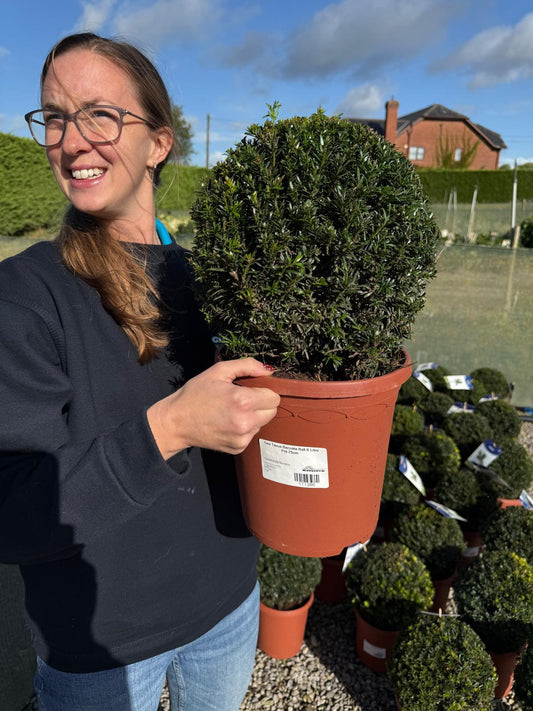


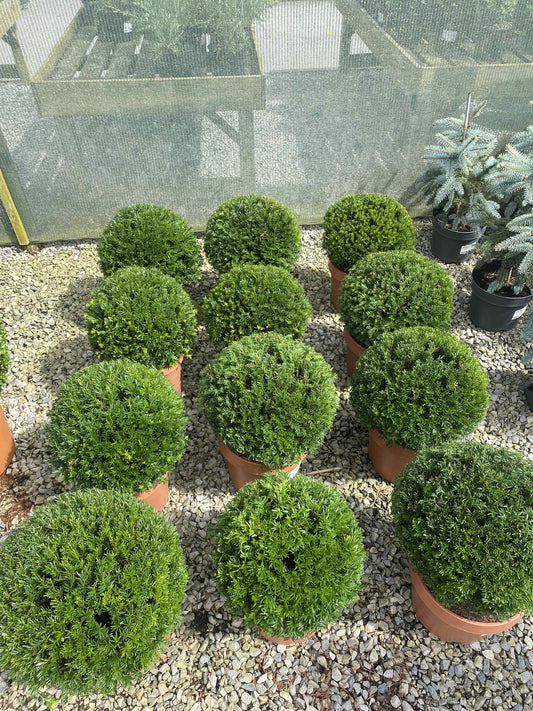


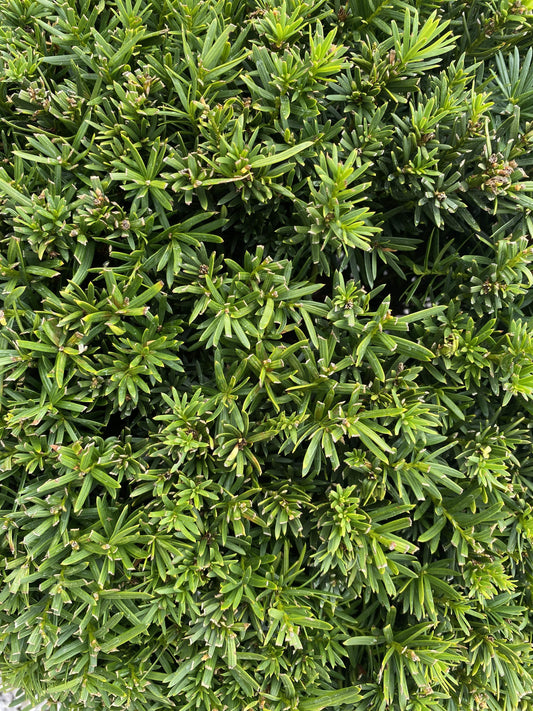


Taxus, commonly known as Yew, is a highly versatile, evergreen conifer well-suited for hedging, topiary, and adding structure to gardens. It is cherished for its deep green, needle-like foliage, resilience, and adaptability to both formal and informal landscapes. Taxus grows slowly but can be maintained easily in various shapes, making it a classic choice for hedging, topiary, and focal points in garden design.
- Foliage: Dark green, flat, needle-like leaves arranged in two rows along branches, giving a lush and dense appearance.
- Growth: Slow-growing but long-lived, Yew can reach considerable heights if untrimmed, though it is often kept much smaller through regular pruning.
- Berries: Female plants produce small, red, berry-like fruit in autumn, adding seasonal color and interest. The berries are toxic if ingested.
Growing Conditions:
- Soil: Thrives in well-drained soil, tolerating a range of pH levels from acidic to alkaline. Taxus is one of the few conifers that can grow in heavier clay soils as long as there’s good drainage.
- Light: Adapts to full sun and partial shade, and even does well in shady spots, unlike many other evergreen plants.
- Watering: Generally drought-tolerant once established, but young plants need regular watering until their roots are well-developed.
Planting and Care Tips:
- Pruning: Prune annually in late summer or early autumn to maintain shape and encourage dense growth. Use sharp tools to prevent tearing, as Taxus responds well to precise cuts.
- Feeding: Yew benefits from an annual feed with a balanced, slow-release fertilizer in spring to support healthy, vigorous growth.
- Mulching: A layer of mulch around the base helps retain moisture and control weeds, but avoid piling it against the stem to prevent rot.