Collection: Field Maple Hedging
-
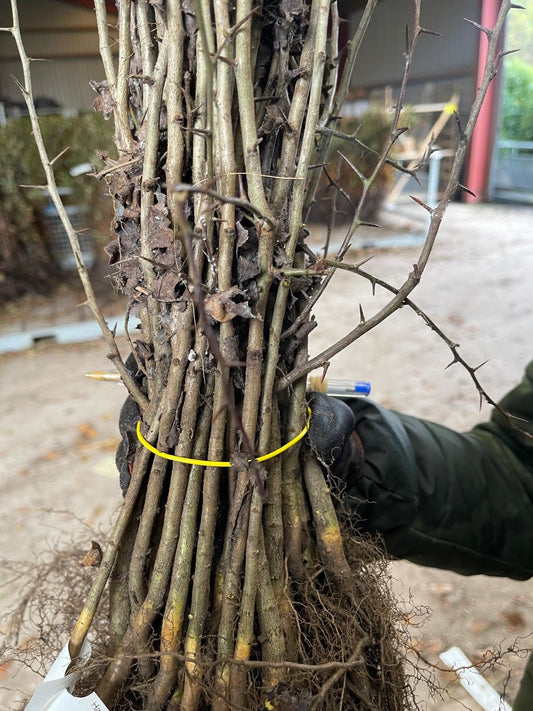
Field Maple Hedging Bare Root 40/60 cm Delivery from November
Acer campestreFull sunDeciduousIn stockRegular price £1.75Regular price£2.10Sale price £1.75Sale -
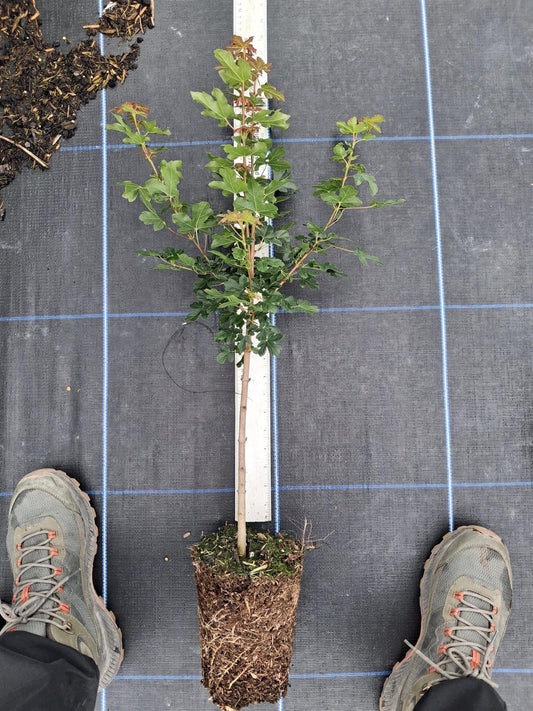
Field Maple Hedging 2 Litre Pot 60-80cm
Acer campestreFull sunDeciduousIn stockRegular price £3.95Regular priceSale price £3.95 -
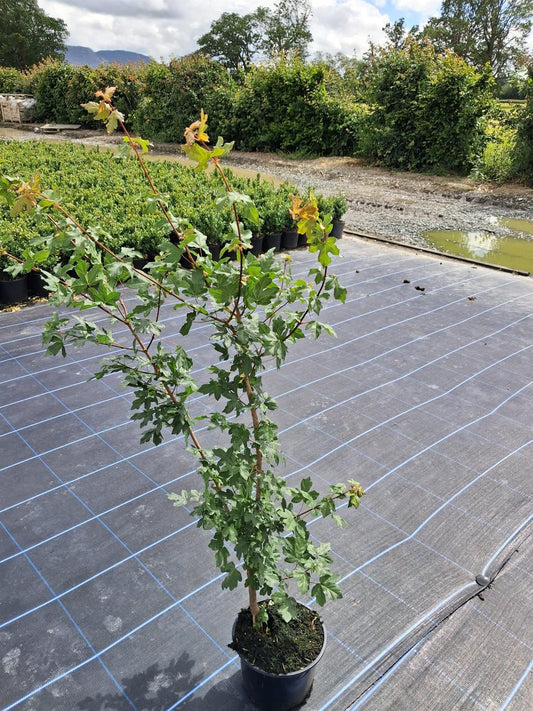
Field Maple Hedging 5 Litre Pot 100-120cm
Acer campestreFull sunDeciduousIn stockRegular price £12.95Regular priceSale price £12.95
Field Maple Hedging
Field Maple Hedging (Acer campestre)
Traditional Native Hedging for Wildlife, Country Gardens & Mixed Native Hedges
Field Maple, botanically known as Acer campestre, is a hardy native deciduous hedging plant valued for its attractive lobed foliage, dense branching habit and beautiful autumn colour. Naturally found throughout British hedgerows and woodland edges, it is an excellent choice for creating traditional country hedges, wildlife-friendly boundaries and mixed native planting schemes.
Fresh green foliage appears in spring and develops into a dense leafy screen throughout summer before turning attractive shades of yellow and golden yellow in autumn.
Tough, adaptable and easy to maintain, Field Maple can be planted as a single-species hedge or combined with other native plants to create a varied and natural-looking country hedge.
Why Choose Field Maple Hedging?
Field Maple is an excellent all-round native hedging plant, combining practical screening with seasonal interest.
Key benefits include:
- Native British hedging plant
- Attractive lobed foliage
- Beautiful yellow and golden autumn colour
- Dense, bushy growth
- Excellent for mixed native hedging
- Valuable for wildlife
- Hardy and adaptable
- Suitable for rural and exposed locations
- Responds well to regular pruning
- Ideal for longer boundaries
- Excellent for naturalistic planting
- Suitable for larger landscaping projects
Field Maple for Native Hedging
Field Maple is a traditional component of British native hedgerows and is particularly effective when combined with other native species.
Its attractive foliage and bushy growth provide a softer contrast to thornier hedging plants such as Hawthorn and Blackthorn.
Field Maple works particularly well alongside:
- Hawthorn
- Blackthorn
- Hazel
- Dogwood
- Spindle
- Guelder Rose
- Dog Rose
- Holly
Using a combination of native species creates a varied hedge with changing foliage, flowers, berries and autumn colour throughout the seasons.
Field Maple for Wildlife
Field Maple is an excellent addition to a wildlife-friendly hedge.
Its dense foliage and branching structure provide valuable shelter and cover for birds and other wildlife, while its flowers can also attract visiting insects.
When incorporated into a mixed native hedge, Field Maple helps create a varied habitat with different foliage types, heights and seasonal features.
Beautiful Autumn Colour
One of the greatest attractions of Field Maple is its autumn foliage.
Throughout spring and summer, the distinctive lobed leaves provide fresh green colour. As temperatures begin to fall, they develop beautiful shades of yellow and gold before dropping for winter.
This makes Field Maple an excellent choice for bringing additional seasonal colour to native and countryside planting schemes.
Where to Plant Field Maple Hedging
Field Maple is highly versatile and works particularly well in informal and naturalistic settings.
It is ideal for:
- Native hedges
- Mixed country hedges
- Rural boundaries
- Wildlife gardens
- Field boundaries
- Country gardens
- Larger gardens
- Naturalistic planting
- Woodland edges
- Larger landscaping projects
Its natural appearance makes it particularly suitable where a traditional countryside-style boundary is preferred over a highly formal hedge.
Growing Conditions
Field Maple is a tough and adaptable native plant that performs well in a wide range of conditions.
It generally grows successfully in sun or partial shade and is suitable for many ordinary garden soils.
For best results, plant in soil with reasonable drainage and provide sufficient moisture while the plants establish.
Once established, Field Maple is a robust hedging choice capable of coping with a range of typical British garden conditions.
How to Plant Field Maple Hedging
Good preparation will help a new Field Maple hedge establish successfully.
Before planting, remove weeds and loosen the surrounding soil thoroughly.
When planting:
- Prepare a suitable trench or individual planting holes
- Allow sufficient room for the roots or rootball
- Position plants at the correct planting depth
- Avoid burying the lower stems too deeply
- Backfill carefully with soil
- Gently firm around the plants
- Water thoroughly after planting
A layer of mulch can help conserve moisture and reduce competition from weeds, but avoid piling mulch directly against the stems.
Watering Newly Planted Field Maple
Newly planted Field Maple requires regular watering while establishing.
Provide a deep and thorough soak, ensuring water reaches the complete root system rather than simply wetting the soil surface.
Continue to monitor moisture levels throughout the first growing season, particularly during warm, dry and windy conditions.
Once established, Field Maple becomes considerably more resilient, although additional watering can still be beneficial during prolonged periods of drought.
How Far Apart Should I Plant Field Maple?
Planting distance will depend on the size of the plants supplied and how quickly you want to create a dense hedge.
Field Maple can be planted in a single row or staggered double row and is particularly effective when incorporated amongst other native hedging species.
Always check the recommended spacing for the particular size of plants being purchased.
How Quickly Does Field Maple Hedging Grow?
Field Maple establishes well and develops into a dense, bushy hedge with appropriate care.
Its growth rate will be influenced by soil conditions, available moisture, position and maintenance.
Pruning young plants can encourage additional branching lower down, helping to create a fuller hedge from the base upwards.
Pruning Field Maple Hedging
Field Maple responds well to pruning and can be maintained as either a relatively neat hedge or a softer, more informal countryside boundary.
Regular trimming encourages dense branching and allows the height and width of the hedge to be controlled.
For a more naturalistic or wildlife-friendly appearance, lighter pruning can be used to retain a less formal shape.
When pruning established hedges, always be mindful of nesting birds.
Is Field Maple Evergreen?
No. Field Maple is deciduous, meaning it naturally loses its leaves during autumn.
Before falling, the foliage usually develops attractive yellow and golden tones, providing an excellent final display of colour.
During winter, the network of stems and branches continues to provide structure before fresh green foliage returns in spring.
If some year-round foliage is required, Field Maple can be incorporated into a mixed hedge alongside evergreen native plants such as Holly.
Field Maple for Mixed Native Hedges
Field Maple is particularly valuable in a mixed native hedge.
Its broad, lobed foliage contrasts beautifully with smaller-leaved and thornier native species, while its autumn colour adds another season of interest.
Combining Field Maple with Hawthorn, Blackthorn, Hazel, Dogwood, Spindle and other native plants can create a diverse hedge that looks natural within both rural and garden settings.
Buy Field Maple Hedging Online
Our Field Maple Hedging is ideal for creating traditional native hedges, wildlife-friendly boundaries and mixed countryside planting schemes.
With its attractive lobed foliage, naturally bushy growth and beautiful golden autumn colour, Acer campestre is an excellent choice for both single-species and mixed native hedges.
Whether you're creating a garden boundary, wildlife hedge or larger countryside planting scheme, Field Maple provides a hardy and attractive solution with excellent seasonal interest.
Shop our range of Field Maple Hedging online and create a beautiful, natural-looking native hedge for your garden or landscape.
View More Skimmias
-
Skimmia Japonica Rubella 1.5 Litre Pot
Skimmia Japonica RubellaEvergreenIn stockRegular price £18.20Regular priceSale price £18.20 -
Skimmia Japonica Rubella 5 Litre Pot
Skimmia japonica 'Rubella'Partial shadeEvergreenIn stockRegular price £38.50Regular priceSale price £38.50 -
Skimmia Japonica Rubella 10 Litre Pot
Skimmia japonica 'Rubella'Partial shadeEvergreenIn stockRegular price £82.50Regular priceSale price £82.50 -
Skimmia Japonica Rubella 20 Litre Pot Super Sized
Skimmia japonica 'Rubella'Partial shadeEvergreenGetting lowRegular price £165.00Regular priceSale price £165.00 -
Skimmia Japonica Finchy 2 Litre Pot
Skimmia japonica 'Finchy'Partial shadeEvergreenIn stockRegular price £21.00Regular priceSale price £21.00 -
Skimmia Japonica Finchy 5 Litre Pot
Skimmia FinchyEvergreenIn stockRegular price £39.50Regular priceSale price £39.50 -
Skimmia Japonica Veitchii 3 Litre Pot
Skimmia japonica 'Veitchii'Partial shadeEvergreenIn stockRegular price £54.50Regular priceSale price £54.50 -
Skimmia Japonica Perosa 7.5 Litre Pot
Skimmia japonica 'Perosa'Partial shadeEvergreenIn stockRegular price £63.00Regular priceSale price £63.00 -
Skimmia Japonica Pabella 10 Litre Pot
Skimmia japonica 'Pabella'Partial shadeEvergreenGetting lowRegular price £122.50Regular priceSale price £122.50 -
Skimmia Japonica White Globe 20 Litre Pot Super Sized
Skimmia japonica 'White Globe'Partial shadeEvergreenGetting lowRegular price £165.00Regular priceSale price £165.00 -
Skimmia Kew Green 2 Litre Pot
Skimmia × confusa 'Kew Green'Partial shadeEvergreenIn stockRegular price £8.95Regular priceSale price £8.95