


-
Hazel Hedging Bare Root 100-120 cm Delivery from November
Corylus avellanaFull sunDeciduousIn stockRegular price £1.57Regular price£1.75Sale price £1.57Sale -
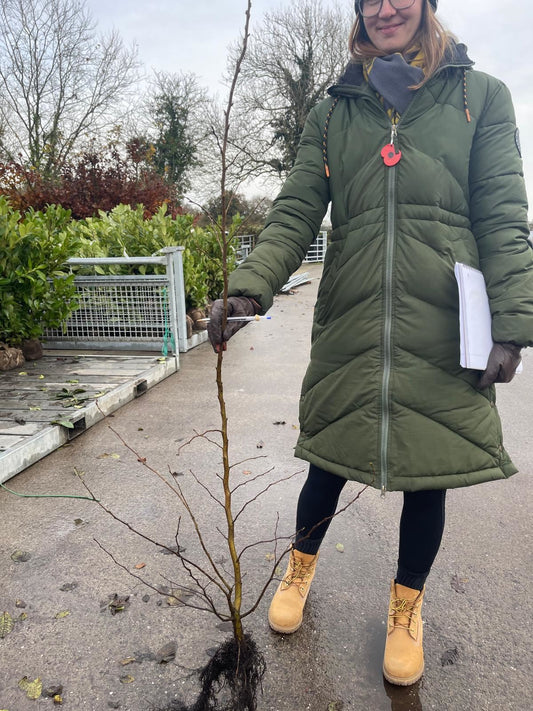
Hornbeam Hedging 100/120cm Bare Root Delivery from November
Carpinus betulusFull sunDeciduousIn stockRegular price £2.00Regular price£2.30Sale price £2.00Sale -
Hornbeam Hedging 125/150cm Bare Root Delivery from November
Carpinus betulusFull sunDeciduousIn stockRegular price £3.00Regular price£3.35Sale price £3.00Sale -
Hornbeam Hedging 150/175cm Bare Root Delivery from November
Carpinus betulusFull sunDeciduousIn stockRegular price £4.45Regular price£4.95Sale price £4.45Sale -
Ilex Aquifolium Hedging 40/60cm Bare Root Delivery from November
Ilex aquifoliumFull sunEvergreenIn stockRegular price £2.88Regular price£3.20Sale price £2.88Sale -
Ilex Crenata Green Hedge 25-30cm Bare Root Delivery from November
Ilex crenataFull sunEvergreenIn stockRegular price £2.95Regular price£3.35Sale price £2.95Sale -
Portuguese Laurel 20/25cm Bare Root Delivery from November
Prunus lusitanicaFull sunEvergreenIn stockRegular price £2.07Regular price£2.30Sale price £2.07Sale -
Rosa Canina Hedging Bare Root 40-60 cm Delivery from November
Rosa caninaFull sunDeciduousIn stockRegular price £1.70Regular price£1.90Sale price £1.70Sale -
Rosa Rugosa Hedging Bare Root 40-60 cm Delivery from November
Rosa rugosaFull sunDeciduousIn stockRegular price £1.70Regular price£1.90Sale price £1.70Sale -
Spindle (euonymus) Hedging Bare Root 60-100 cm Delivery from November
Euonymus europaeusFull sunDeciduousIn stockRegular price £2.15Regular price£2.40Sale price £2.15Sale -
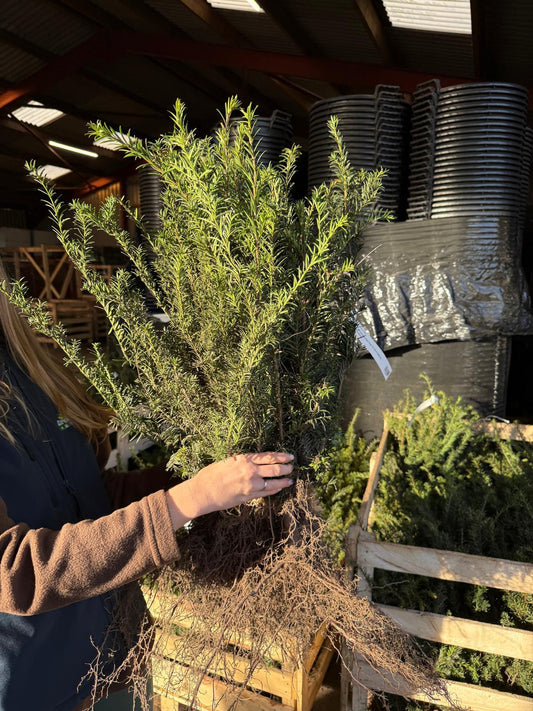
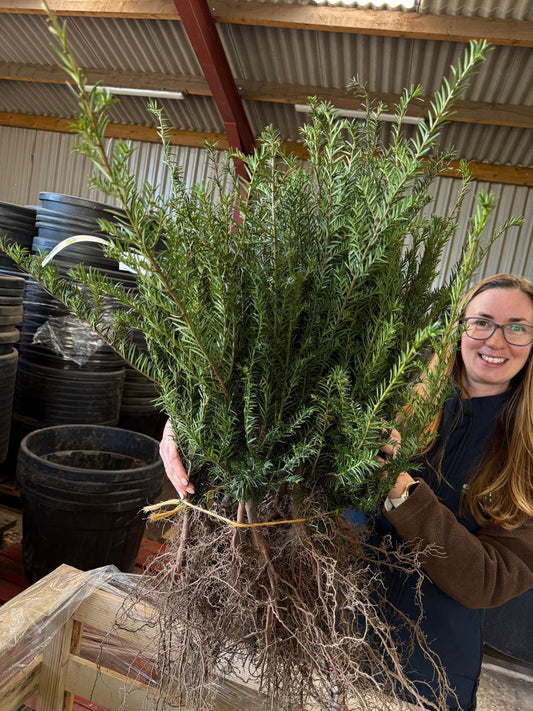
Yew Hedging Bare Root 25-30cm Delivery from November
Taxus baccataFull sunEvergreenIn stockRegular price £2.65Regular price£2.95Sale price £2.65Sale -
Yew Hedging Bare Root 50-70cm Delivery from November
Taxus baccataFull sunEvergreenIn stockRegular price £3.51Regular price£3.90Sale price £3.51Sale







Bare Root Hedging 2026 – Pre-Orders Now Open
The Most Cost-Effective Way to Plant a Hedge
Bare root hedging is the traditional and most economical way to establish a hedge. Lifted fresh from the field during the dormant season and supplied without pots or compost, bare root plants offer outstanding value and establish exceptionally well when planted correctly.
Available from November to March, bare root hedging is ideal for everything from garden boundaries and wildlife hedges to large-scale landscaping, agricultural and countryside planting.
Availability, Ordering & Delivery
Bare root plants are only available during the dormant season, typically from November through to March, depending on weather conditions. The best grades and widest selection are available at the start of the season, so we recommend placing your order early.
Pre-ordering secures your plants before the season begins and allows us to reserve stock ready for lifting as soon as conditions are suitable. Whether you're planting a few metres or several hundred, ordering early gives you the greatest choice of species and sizes.
Each order is lifted fresh from the field specifically for you. Once your plants have been lifted, we'll contact you to let you know they're ready. Collection customers are kindly asked to collect their order as soon as possible after notification, while delivery customers will be contacted again to confirm their delivery date before dispatch.
Because bare root plants are at their best when freshly lifted, we aim to dispatch or have orders collected as quickly as possible. Ordering early helps us plan lifting and deliveries efficiently, ensuring your plants spend as little time as possible out of the ground.
For the best results, plant your hedging as soon as possible after collection or delivery. If planting needs to be delayed, keep the roots cool, moist and protected from drying out. Alternatively, heel the plants into loose soil until you're ready to plant.
As with all field-grown plants, some transplant shock or losses can occasionally occur. However, bare root hedging remains the most cost-effective way to establish a hedge. We recommend ordering a small number of extra plants as a contingency.
Why Choose Bare Root Hedging?
Bare root hedging remains the preferred choice for many gardeners, landscapers and farmers because it offers:
- The most cost-effective way to plant a hedge.
- Excellent establishment during the dormant season.
- Ideal for long hedge runs and larger planting projects.
- Lower transport and packaging impact compared with container-grown plants.
- A wide range of native, deciduous and evergreen hedging species.
Bare Root, Rootball or Pot-Grown?
Each type of hedging has its advantages:
- Bare root hedging – The most economical option for planting during the dormant season, making it ideal for long hedge runs and large projects.
- Rootball hedging – Larger, field-grown plants available from October to March, offering excellent value and instant impact.
- Pot-grown hedging – Available year-round and suitable for planting in any season, although generally more expensive for comparable sizes.
Hedge Plants Commonly Supplied Bare Root
Bare root hedging is available across a wide range of native, deciduous and evergreen species, including:
- Cherry Laurel
- Portuguese Laurel
- Yew
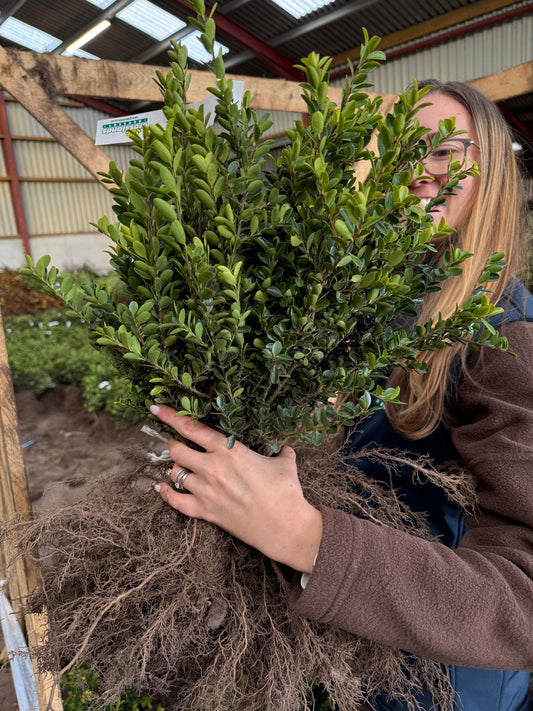
- Box
- Hawthorn
- Blackthorn
- Beech
- Hornbeam
- Mixed Native Hedging
Browse our Native Hedging, Evergreen Hedging and Deciduous Hedging collections to explore the full range.
Planting Bare Root Hedging
Bare root hedging should be planted as soon as possible after collection or delivery.
1. Prepare the Ground
Dig a planting trench or individual holes wide enough to spread the roots comfortably and loosen the surrounding soil to encourage strong root establishment.
2. Keep the Roots Moist
Never allow the roots to dry out. Keep them covered and damp until each plant is placed into the ground.
3. Position the Plant
Spread the roots naturally and plant at the same depth as the original soil mark on the stem. Avoid planting too deeply.
4. Backfill & Water
Backfill using the excavated soil, firm gently around the roots to remove air pockets and water thoroughly after planting.
For detailed advice on spacing, soil preparation and ongoing care, please see our Hedge Planting Guide.
Planting Aftercare – Should I Prune?
Some bare root hedge plants, particularly native deciduous species such as Hawthorn, Blackthorn, Beech and Hornbeam, can benefit from a light formative prune after planting. Reducing the previous season's growth by up to one-third helps balance the plant after lifting, encourages stronger root establishment and promotes bushier growth from the base in spring.
Evergreen species such as Cherry Laurel, Portuguese Laurel, Yew and Box generally do not require pruning at planting, other than removing any damaged, dead or crossing branches.
If you're unsure whether your chosen hedge would benefit from pruning, we're always happy to offer advice.
Aftercare
Good aftercare is the key to successful establishment.
- Water thoroughly after planting and continue watering during prolonged dry spells throughout the first growing season.
- Keep the area around the base of each plant free from weeds and grass to reduce competition for moisture and nutrients.
- Apply a mulch of compost or bark around the base of the plants to help retain soil moisture and suppress weeds, keeping it clear of the stems.
- Replace any failed plants promptly to maintain an even hedge line.
Frequently Asked Questions
When is bare root hedging available?
Bare root plants are generally available from November through to March, depending on weather conditions and the dormant season.
Can I plant bare root hedging in winter?
Yes. Winter is the ideal planting period, provided the ground is not frozen or waterlogged.
How long can bare root plants be left before planting?
Ideally, plant them as soon as they arrive. If planting needs to be delayed, keep the roots cool, moist and protected from drying out, or temporarily heel them into loose soil until you're ready to plant.
Is bare root hedging guaranteed?
Bare root plants are freshly lifted from the field and rely on suitable weather conditions, correct planting and good aftercare to establish successfully. As these factors are outside our control, bare root hedging is supplied without guarantee.