
-
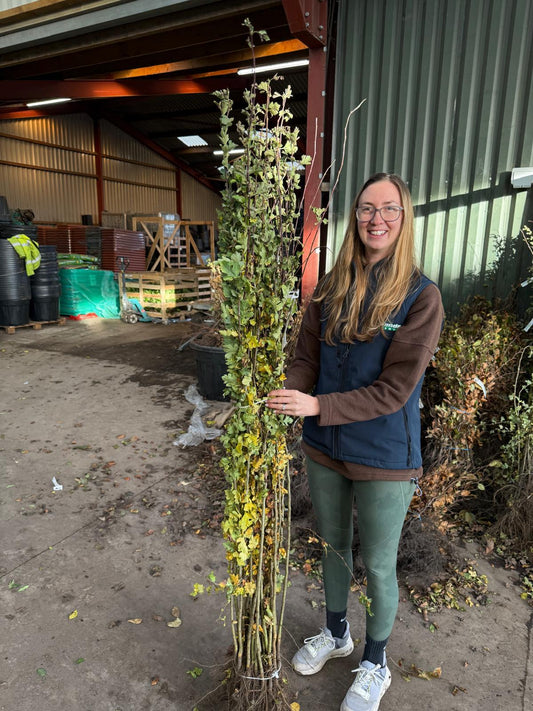
Hawthorn Hedging Bare Root 125-150 cm Delivery from November
Crataegus monogynaFull sunDeciduousIn stockRegular price £3.24Regular price£3.60Sale price £3.24Sale -
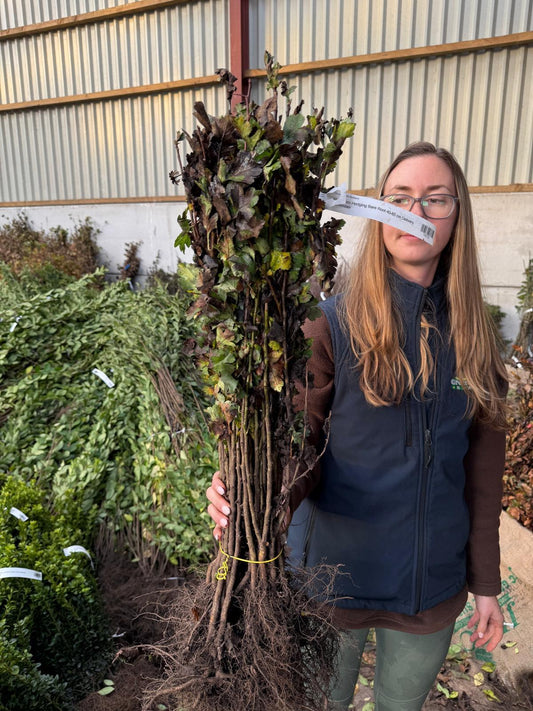
Hawthorn Hedging Bare Root 40-60 cm Delivery from November
Crataegus monogynaFull sunDeciduousIn stockRegular price £1.21Regular price£1.35Sale price £1.21Sale -
Hawthorn Hedging Bare Root 80-100cm Delivery from November
Crataegus monogynaFull sunDeciduousIn stockRegular price £2.16Regular price£2.40Sale price £2.16Sale -
Big Deal Hawthorn Hedging Bare Root 100/125cm x 500 Delivery from November
Crataegus monogynaFull sunDeciduousGetting lowRegular price £1,180.00Regular price£1,475.00Sale price £1,180.00Sale -
Big Deal Hawthorn Hedging Bare Root 125-150 cm x 200 Delivery from November
Crataegus monogynaFull sunDeciduousGetting lowRegular price £612.00Regular price£720.00Sale price £612.00Sale -
Big Deal Hawthorn Hedging Bare Root 80-100cm x 200 Delivery from November
Crataegus monogynaFull sunDeciduousIn stockRegular price £408.00Regular price£480.00Sale price £408.00Sale -
Big Deal Hawthorn Hedging Bare Root 40-60 cm x 500 Delivery from November
Crataegus monogynaFull sunDeciduousGetting lowRegular price £573.75Regular price£675.00Sale price £573.75Sale





Hawthorn Bare Root Hedging – 2026 Pre-Orders Now Open
Traditional Native Hedging – Available November to March
Hawthorn, also known as Quickthorn or May, is one of Britain’s most recognisable native hedging plants. Tough, dependable and rich in wildlife value, it has been used for centuries to create traditional country boundaries, field hedges and secure garden screens.
In spring, Hawthorn produces fresh green foliage followed by masses of fragrant white blossom. Red berries, known as haws, appear during autumn and provide a valuable food source for birds and other wildlife.
Its dense, thorny growth creates a strong natural barrier, making Hawthorn an excellent choice for rural boundaries, farms, paddocks, wildlife gardens and large landscaping projects.
Our bare root Hawthorn is field-grown and lifted during the dormant season without soil around the roots. This makes it lightweight, easy to handle and one of the most economical ways to establish a dense, long-lasting native hedge.
Available exclusively from November to March, Hawthorn remains one of the UK’s most popular bare root hedging varieties.
Why Pre-Order Your Bare Root Hawthorn?
Our Hawthorn hedging is lifted fresh from the field during the dormant season, with the finest selection of plants available from the first lifting of the season.
By pre-ordering now, you’ll benefit from:
✔ Priority access to freshly lifted field-grown plants
✔ The widest choice of sizes and quantities
✔ Better availability for large planting projects
✔ Priority dispatch once lifting begins
✔ Exclusive pre-order offers before the season starts
Bare root Hawthorn is only available for a limited period each year, and popular sizes and larger quantities often sell out early.
Why Choose Bare Root Hawthorn?
Bare root Hawthorn offers exceptional value and is particularly well suited to planting long hedge lines, rural boundaries and large-scale landscaping schemes.
Because the plants are lifted while dormant, they establish extremely well when planted during winter. Their roots can begin settling into the surrounding soil before new growth starts in spring.
Benefits include:
- Excellent value for money
- Fresh field-grown plants
- Reliable winter establishment
- Dense and thorny growth
- Ideal for long hedge runs
- Excellent wildlife value
- Spring blossom and autumn berries
- Suitable for exposed locations
- Easy to transport and plant
- Lower environmental impact than container-grown plants
With the correct planting and aftercare, Hawthorn quickly develops into a dense, strong and attractive native hedge.
A Traditional Wildlife-Friendly Hedge
Hawthorn is an excellent choice for anyone looking to support wildlife while creating an attractive and practical boundary.
Its spring flowers provide nectar for bees and other pollinating insects, while its autumn berries offer food for birds. The dense network of branches also creates valuable nesting sites and shelter throughout the year.
Hawthorn can be planted as a single-species hedge or included within a mixed native hedge alongside varieties such as Blackthorn, Dogwood, Field Maple, Spindle, Guelder Rose, Holly and native roses.
Ideal for:
- Wildlife-friendly gardens
- Rural boundaries
- Farms and paddocks
- Traditional country hedges
- Stock-resistant boundaries
- Woodland edges
- Large landscaping projects
- Mixed native hedging
Hawthorn Flowers, Foliage and Berries
Hawthorn produces fresh green leaves during spring, followed by clusters of scented white flowers, traditionally known as May blossom.
Red haws develop during late summer and autumn. These provide seasonal colour and an important source of food for birds.
Its deciduous foliage turns yellow and golden brown before falling in autumn, revealing a dense framework of thorny branches that continues to provide structure and security through winter.
Planting Bare Root Hawthorn
Bare root Hawthorn should be planted as soon as possible after delivery.
1. Protect the Roots
Never allow the roots to dry out.
Keep the plants cool and protected from wind, direct sunlight and frost until you are ready to plant.
If planting is delayed, temporarily heel the roots into loose soil or keep them securely covered with damp material.
2. Prepare the Ground
Remove grass, weeds and other vegetation from the planting area.
Dig a trench or individual holes wide enough to spread the roots naturally. Loosen compacted soil around the planting area to encourage healthy root development.
3. Plant at the Correct Depth
Plant each Hawthorn at the same depth it was previously growing in the field. A change in stem colour or soil mark may be visible near the base.
Spread the roots naturally within the planting hole and avoid bending them upwards or forcing them into a space that is too small.
4. Backfill
Refill around the roots using the excavated soil.
Gently firm the soil to remove large air pockets while avoiding excessive compaction around the roots.
5. Water Thoroughly
Water well immediately after planting to settle the soil around the root system.
Continue watering during dry periods throughout the first spring and summer.
Hawthorn Planting Distances
The number of Hawthorn plants required will depend on the size supplied and how quickly you would like the hedge to become dense.
As a general guide:
- Plant approximately 3 to 5 plants per metre in a single row.
- Use a double staggered row for a wider and denser hedge.
- Space plants evenly along the hedge line.
- Follow the recommended spacing shown on the individual product listing.
A double staggered row is particularly suitable for rural boundaries, wildlife hedging and situations where a wider, more substantial hedge is required.
Soil and Position
Hawthorn is exceptionally hardy and adaptable, growing successfully in a wide range of soils and locations.
Suitable soil types include:
- Chalk
- Loam
- Sandy soil
- Clay soil
- Moist but well-drained ground
Hawthorn thrives in:
- Full sun
- Partial shade
- Sheltered gardens
- Exposed rural locations
- Inland and coastal areas
Avoid planting in permanently waterlogged soil.
Aftercare
Good aftercare during the first growing season is essential for successful establishment.
We recommend:
- Watering thoroughly immediately after planting
- Continuing to water during dry periods throughout spring and summer
- Keeping grass and weeds clear from around the plants
- Applying mulch to help retain moisture
- Keeping mulch away from direct contact with the stems
- Checking the soil regularly during warm weather
- Protecting young plants from rabbits, deer and livestock
- Replacing damaged guards or supports where required
Grass and weeds compete strongly with newly planted Hawthorn for water and nutrients. Maintaining a clear planting strip will give the plants the best possible start.
Pruning Hawthorn Hedging
Hawthorn responds extremely well to pruning and can be maintained as either a neat formal hedge or a more natural country boundary.
For best results:
- Reduce the top growth by approximately one-third after planting.
- Remove any damaged or broken branches.
- Light formative pruning will encourage dense growth from the base.
- Once established, trim during late summer or autumn.
- Avoid major trimming during the main bird-nesting season.
- Leave some berries where wildlife value is a priority.
Regular pruning will encourage Hawthorn to develop a thick, well-branched structure from the base upwards.
Hawthorn Bare Root Hedging FAQs
When is bare root Hawthorn available?
Bare root Hawthorn is normally available between November and March while the plants remain dormant.
Exact lifting dates may vary depending on seasonal temperatures, rainfall and ground conditions.
Can bare root Hawthorn be planted in winter?
Yes. Winter is the ideal time to plant bare root Hawthorn, provided the ground is not frozen or waterlogged.
How quickly should I plant bare root Hawthorn?
Bare root Hawthorn should be planted as soon as possible after delivery.
If planting is delayed, keep the roots moist, cool and protected from wind and direct sunlight.
Is Hawthorn suitable for exposed locations?
Yes. Hawthorn is extremely hardy and tolerates exposed rural locations, strong winds and a wide range of soil conditions.
Is Hawthorn good for wildlife?
Yes. Hawthorn is one of the best native hedging plants for wildlife.
Its flowers attract pollinating insects, its berries provide food for birds and its dense growth offers shelter and nesting opportunities.
Is Hawthorn suitable for creating a secure hedge?
Yes. Its naturally thorny, densely branched growth creates a strong and effective natural barrier.
It is frequently used for farms, paddocks, rural boundaries and security-conscious planting.
Can Hawthorn be included in mixed native hedging?
Yes. Hawthorn is often used as the main structural species within a mixed native hedge.
It combines well with Blackthorn, Dogwood, Spindle, Guelder Rose, Field Maple, Holly, Rosa canina and Rosa rugosa.
Will bare root Hawthorn look dead when it arrives?
Hawthorn is deciduous and is supplied while dormant, so it will normally arrive without leaves. This is completely normal and does not mean that the plants are dead.
Fresh leaves and shoots should appear once the plants establish and growth begins in spring.
Can bare root Hawthorn be planted in summer?
No. Bare root Hawthorn should only be lifted and planted during the dormant season.
For planting outside the bare root season, choose pot-grown Hawthorn instead.
Is bare root Hawthorn guaranteed?
Bare root plants rely on correct handling, suitable planting conditions, appropriate watering and good aftercare for successful establishment.
As factors such as soil conditions, weather, planting depth, watering and ongoing maintenance are outside our control, bare root Hawthorn is supplied without guarantee.
For larger planting projects, we recommend ordering a small number of additional plants to allow for possible natural losses during establishment.
Reserve Your 2026 Bare Root Hawthorn Today
Bare root Hawthorn provides one of the most economical and effective ways to establish a strong, attractive and wildlife-friendly native hedge.
With fragrant white spring blossom, red autumn berries and dense thorny growth, Hawthorn is ideal for traditional garden boundaries, rural landscapes, farms, paddocks, woodland edges and large landscaping projects.
Pre-order now to secure the freshest field-grown plants, enjoy the widest choice of sizes and quantities, and receive priority availability when lifting begins in November.
For a traditional British hedge offering excellent value, dependable performance and outstanding wildlife benefits, Hawthorn remains one of the very best choices.