

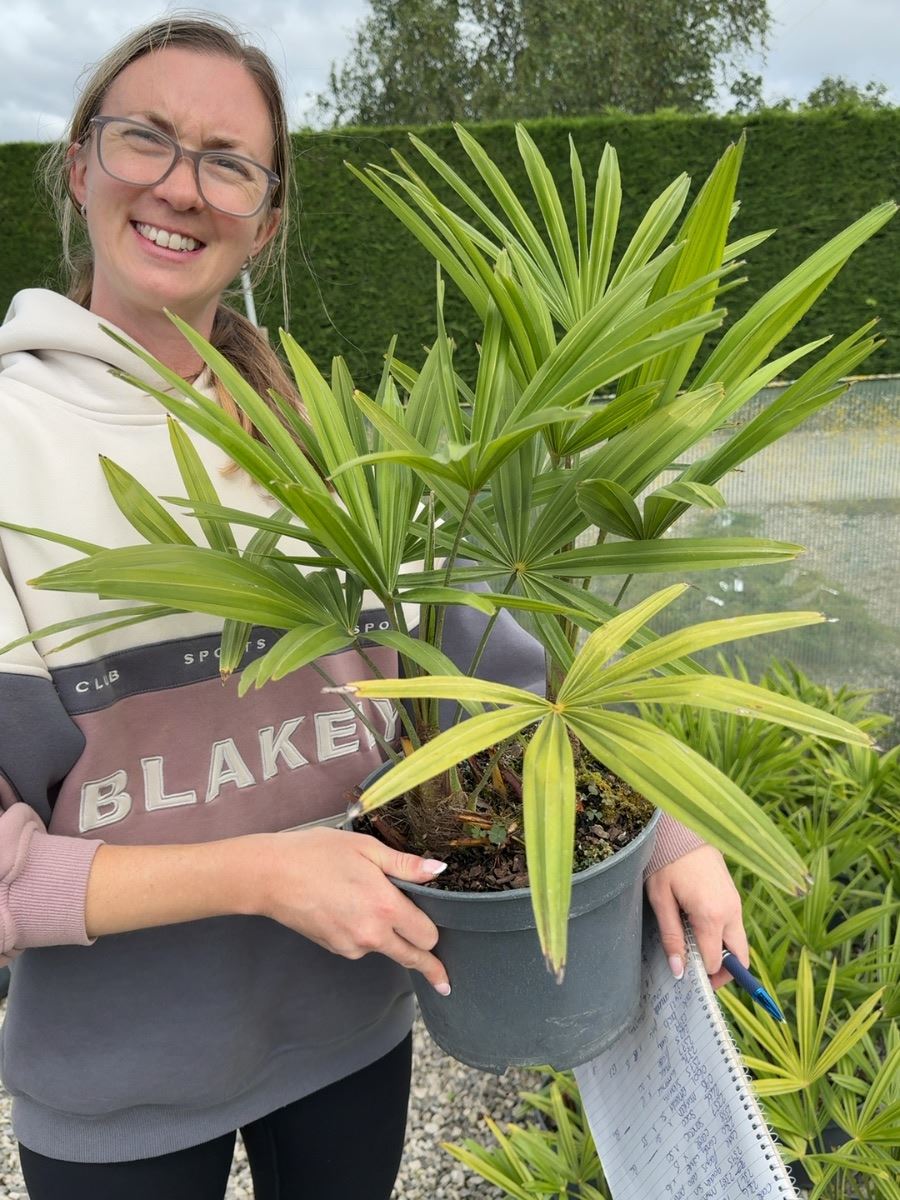
About Trachycarpus Fortunei 5 Litre Pot
Trachycarpus fortunei – The Hardy, Elegant Palm with a Tropical Flair
Trachycarpus fortunei, also known as the Windmill Palm, is one of the most cold-hardy palm varieties, making it an excellent choice for gardeners looking to add a touch of tropical elegance to their landscapes, even in cooler climates. With its distinctive, fan-shaped fronds and slender, rugged trunk, this palm creates a striking focal point in any garden. Whether planted as a specimen tree, in a coastal garden, or as a statement plant in a container, Trachycarpus fortunei brings a bit of exotic flair without the need for tropical warmth.
Why Grow Trachycarpus fortunei?
Cold Hardy – One of the most notable features of Trachycarpus fortunei is its ability to withstand colder temperatures, tolerating winters as low as -10°C (14°F). This makes it the perfect palm for regions with mild winters or even areas with occasional frost.
Tropical Aesthetic – With its large, fan-like fronds, the Windmill Palm brings a distinctive tropical feel to gardens, making it ideal for creating a lush, exotic atmosphere in your landscape.
Low Maintenance – This palm is relatively easy to grow and care for. Once established, it is drought-tolerant and requires minimal upkeep, making it a great choice for gardeners of all experience levels.
Architectural Appeal – With its unique, slender trunk and arching fronds, Trachycarpus fortunei adds structure and visual interest to garden designs. It can serve as a focal point or accent plant in both tropical and more temperate garden styles.
Attracts Wildlife – The palm's flowers are small but attractive to bees and other pollinators, and its dense fronds provide shelter for birds and insects.
Height of Plant
Trachycarpus fortunei typically grows to a height of 3–12 meters (10–40 feet) in its natural habitat, but in garden settings, it generally reaches 4.5–7 meters (15–25 feet), with a spread of about 2–3 meters (6–10 feet). Its trunk is slender but strong, often covered in a distinctive pattern of fibers.
Where to Site Your Trachycarpus fortunei
Due to its cold hardiness and striking appearance, Trachycarpus fortunei works well in a variety of garden settings:
-
Specimen plant, where its bold presence can create a tropical focal point.
-
In coastal gardens, where it thrives in salty air and can add a unique architectural touch.
-
Mixed borders, especially in subtropical, Mediterranean, or tropical-themed gardens, where it complements other exotic or low-maintenance plants.
-
Containers for patios or terraces, where it can bring a bit of the tropics to smaller spaces.
-
Windbreaks, as its dense, broad fronds help to block and filter wind in exposed areas.
How to Grow and Care for Your Trachycarpus fortunei
Soil – Prefers well-drained soil, with a preference for slightly acidic to neutral pH. While it can tolerate a variety of soils, good drainage is essential to prevent waterlogging, which can lead to root rot.
Light – Thrives in full sun to partial shade, with the most optimal growth and leaf colour in a sunny location. It can tolerate some shade, especially in hotter climates, but may become leggy and sparse if grown in too much shadow.
Watering – Windmill Palms need regular watering, particularly during dry spells. However, they do not like to sit in wet soil, so ensure the planting area has good drainage. Once established, they become somewhat drought-tolerant, but they will still benefit from occasional watering during long dry periods.
Maintenance:
-
Pruning – Trachycarpus fortunei generally does not require pruning, but you can remove any dead or damaged fronds to maintain its neat appearance. Be sure to prune cautiously, leaving the healthy fronds intact to help protect the palm’s crown.
-
Feeding – While not a heavy feeder, it benefits from a light application of balanced fertiliser in the spring, especially if grown in poor or sandy soil. Fertilising in the growing season helps promote healthy growth and vibrant foliage.
-
Mulching – Apply mulch around the base to retain moisture, suppress weeds, and protect the roots during colder months.
-
Pest & Disease Resistance – Trachycarpus fortunei is quite pest-resistant. However, watch for scale insects or mealybugs occasionally. Ensuring good air circulation and avoiding overwatering helps to prevent fungal diseases.
-
Cold Hardy – Trachycarpus fortunei is one of the few palms that can withstand freezing temperatures, making it a great choice for cold climates. In areas with harsh winters, protect the crown with frost cloth or mulch to provide extra protection against severe cold.
Perfect Plant Combinations
Trachycarpus fortunei pairs well with both tropical and Mediterranean-style plants. It can be combined with Agave, Yucca, and Bamboo to create a tropical-inspired garden. For a more Mediterranean look, it pairs beautifully with Lavender, Rosemary, and Cistus. Its architectural form also contrasts nicely with grasses like Pennisetum or Feather Reed Grass, as well as succulents and hardy perennials.
With its cold hardiness, tropical appearance, and low maintenance nature, Trachycarpus fortunei is the perfect palm for adding a bit of exotic flair to your garden. Whether used as a specimen plant, in mixed borders, or as part of a coastal or tropical-themed garden, this hardy palm provides a striking visual presence and a unique texture to any landscape.
Plants well with
Our growers' picks to plant alongside Trachycarpus Fortunei 5 Litre Pot for a fuller, longer-lasting display.
-
Cordyline australis - Cabbage Palm 3 Litre Pot
Cordyline australisFull sunEvergreenGetting lowRegular price £7.95Regular price -
Phormium ten. Evening Glow 15 Litre Pot
Phormium 'Evening Glow'Full sunEvergreenIn stockRegular price £56.50Regular price -
Yucca Fil. Colour Guard 3 Litre Pot
Yucca filamentosa 'Color Guard'Full sunEvergreenGetting lowRegular price £14.95Regular price


