


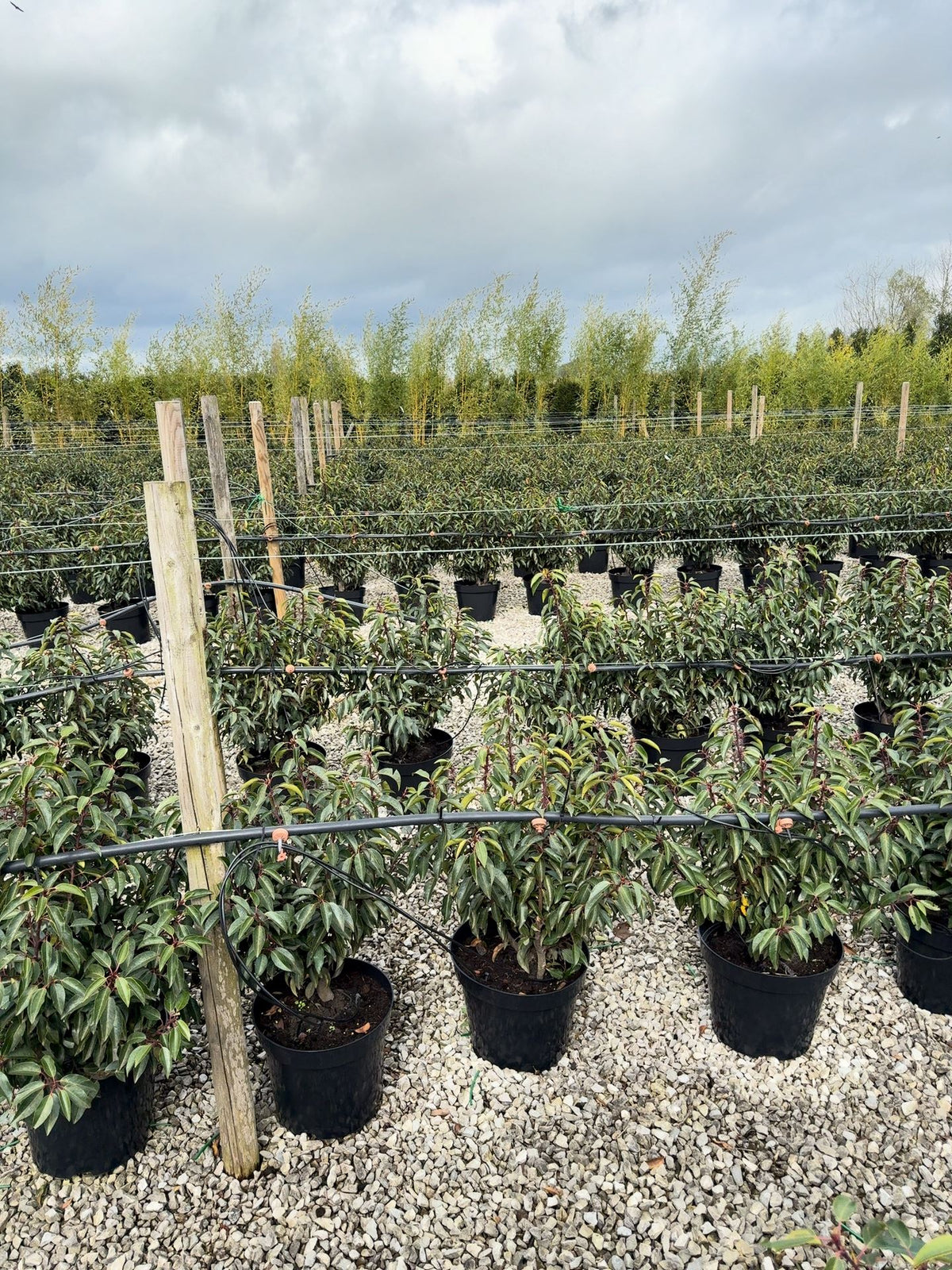
About Portuguese Laurel Angustifolia 10 Litre Pot 80-90cm
Portuguese Laurel ‘Angustifolia’ – A Dense, Evergreen Screen
Portuguese Laurel ‘Angustifolia’ is an evergreen shrub (H 3–5 m) valued for its narrow, glossy green leaves and upright, dense growth habit. Hardy H5, it performs best in full sun or partial shade on fertile, well-drained soil. Its lush foliage provides year-round structure, making it an excellent choice for hedges, screens, or standalone specimen planting.
Seasonal Beauty & Growth
Spring & Summer:
-
Dense, glossy leaves maintain a fresh green colour throughout the growing season.
-
Upright habit provides instant structure and privacy.
Autumn:
-
Leaves remain vibrant, offering garden interest even as other plants fade.
Winter:
-
Evergreen foliage retains form and colour, providing year-round screening and architectural interest.
Structure & Form
Height & Spread: 3–5 m tall with 1.5–2.5 m spread, ideal for medium to large gardens.
Form: Upright, dense, and compact, forming a reliable screen or hedge.
Growth Habit: Fast-growing, low-maintenance, and long-lasting, perfect for creating structured planting schemes.
Perfect for Various Landscapes
-
Hedges & Screens: Excellent for privacy, windbreaks, and garden structure.
-
Specimens & Focal Points: Works as a standalone evergreen feature.
-
Mixed Borders: Provides a dark green backdrop for flowering plants.
Growing Conditions & Care
Position: Full sun or partial shade; best leaf colour in sunnier spots.
Soil: Fertile, well-drained soil; tolerant of most garden soils.
Maintenance: Minimal; light pruning to shape as required.
Watering: Regular watering during establishment; drought-tolerant once mature.
Why Choose Portuguese Laurel ‘Angustifolia’?
With its dense, evergreen foliage, upright form, and low-maintenance habit, Portuguese Laurel ‘Angustifolia’ is perfect for hedges, screens, or specimen planting. It delivers year-round structure, privacy, and elegance, making it a versatile and reliable choice for UK gardens.
Plants well with
Our growers' picks to plant alongside Portuguese Laurel Angustifolia 10 Litre Pot 80-90cm for a fuller, longer-lasting display.
-
Amelanchier Laevis Ballerina 12 Litre Pot 80-100cm
Amelanchier laevis 'Ballerina'Full sunDeciduousGetting lowRegular price £55.50Regular price -
Magnolia Black Tulip 20 Litre Pot 125-150cm
Magnolia Black Tulip ('Jurmag1')Full sunDeciduousGetting lowRegular price £171.00Regular price -
Geranium Johnson's Blue 2 Litre Pot
Geranium × johnsonii 'Johnson's Blue'Full sunDeciduousIn stockRegular price £4.60Regular price


