

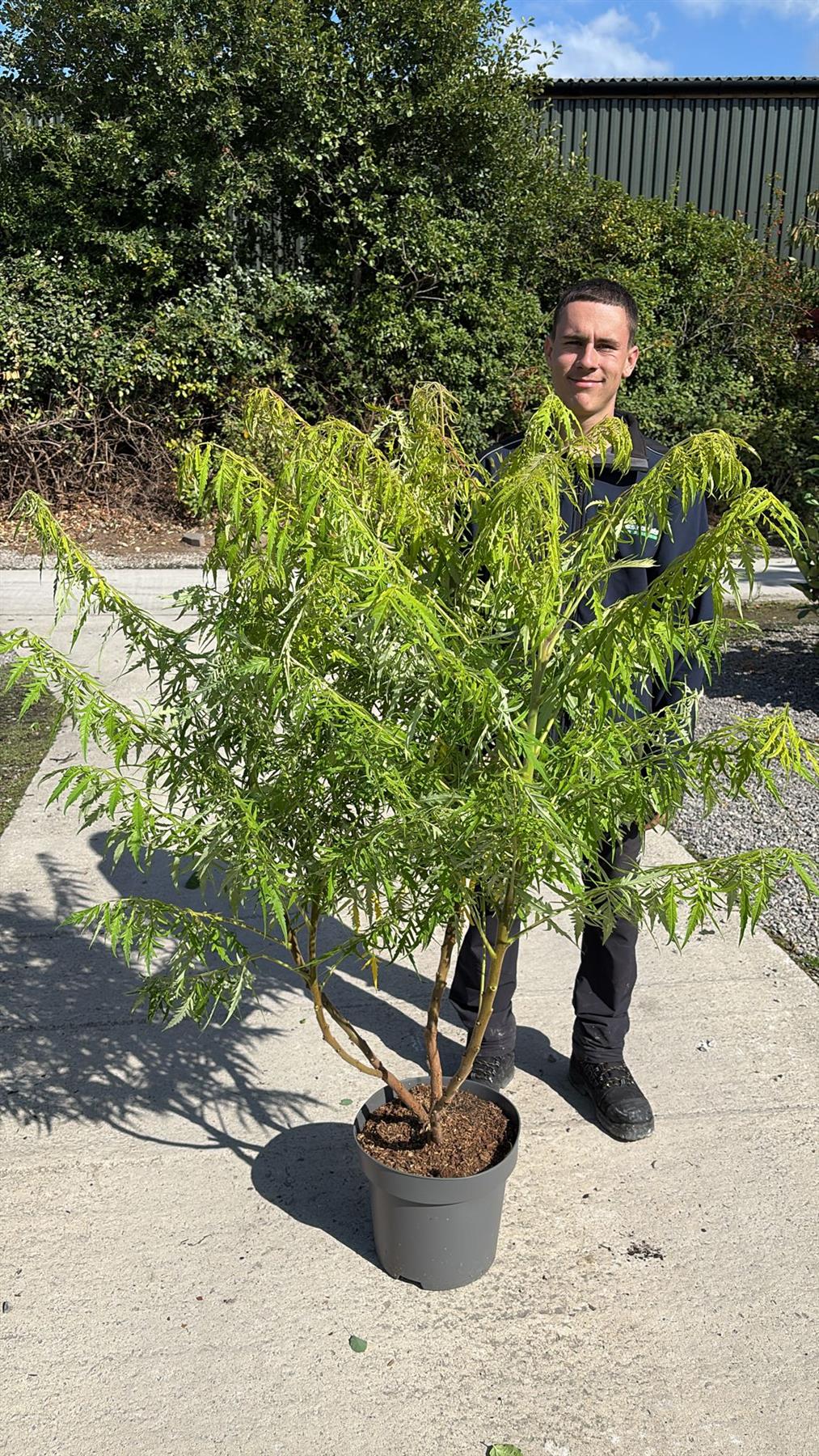
About Rhus typ. Tiger Eyes 12 Litre Pot 80/100cm
Rhus typhina ‘Tiger Eyes’ – A Dazzling Foliage Showpiece
Rhus typhina ‘Tiger Eyes’ is an exceptional, deciduous shrub or small tree (H 2–3 m) prized for its finely dissected, fern-like foliage and ever-changing colours. Emerging in spring as bright chartreuse-green, the leaves quickly turn golden-yellow, glowing against the summer sun. By autumn, the foliage explodes into fiery shades of orange, scarlet, and red, creating a spectacular display. With its compact, upright habit and architectural branching, ‘Tiger Eyes’ is a more restrained and garden-friendly form of the stag’s horn sumach. Hardy (H6) and adaptable to poor or dry soils, it brings drama, structure, and long-lasting colour to both traditional and modern gardens.
Seasonal Beauty & Growth
Spring:
-
Fresh chartreuse-green leaves emerge, finely cut like delicate ferns.
Summer:
-
Foliage turns bright golden-yellow, lighting up borders and focal points.
-
Red, cone-like fruit clusters may develop, loved by wildlife.
Autumn:
-
Foliage bursts into brilliant scarlet, orange, and crimson tones.
Winter:
-
Bare branches with velvet-textured young stems add sculptural interest.
Structure & Form
Height & Spread: Typically 2–3 m tall and wide.
Form: Upright, branching habit with open crown.
Foliage: Finely cut, lace-like leaves in changing shades of green, yellow, and red.
Growth Habit: Compact, slower-growing, less vigorous and less suckering than common sumach.
Perfect for Various Landscapes
-
Specimen Tree: Ideal focal point for small and medium gardens.
-
Borders & Mixed Planting: Combines beautifully with grasses, perennials, and late-flowering shrubs.
-
Wildlife Gardens: Flowers and fruits attract pollinators and birds.
-
Modern & Traditional Gardens: Architectural form suits both naturalistic and designed settings.
Growing Conditions & Care
Position: Full sun for the strongest foliage colours.
Soil: Well-drained, tolerates poor, sandy, or dry soils.
Maintenance: Low-maintenance; prune lightly to shape in winter. Far less suckering than other Rhus types.
Hardiness: Fully hardy (H6) in the UK.
Why Choose Rhus typhina ‘Tiger Eyes’?
Compact, colourful, and striking across the seasons, ‘Tiger Eyes’ is a refined version of the stag’s horn sumach. Its finely cut, luminous foliage and fiery autumn display make it a standout feature in any landscape, bringing drama and elegance without the invasiveness of its relatives.
Plants well with
Our growers' picks to plant alongside Rhus typ. Tiger Eyes 12 Litre Pot 80/100cm for a fuller, longer-lasting display.
-
Cotinus cog. Royal Purple 20 Litre 125/150cm
Cotinus coggygria 'Royal Purple'Full sunDeciduousGetting lowRegular price £123.00Regular price -
Berberis Darwinii Compacta 3 Litre Pot
Berberis darwinii 'Compacta'Full sunEvergreenGetting lowRegular price £8.95Regular price -
Miscanthus Morning Light 2 Litre Pot
Miscanthus sinensis 'Morning Light'Full sunDeciduousGetting lowRegular price £4.95Regular price -
Spindle (euonymus) Hedging Bare Root 60-100 cm Delivery from November
Euonymus europaeusFull sunDeciduousPre-orderRegular price £2.15Regular price£2.40Sale price £2.15Sale


