
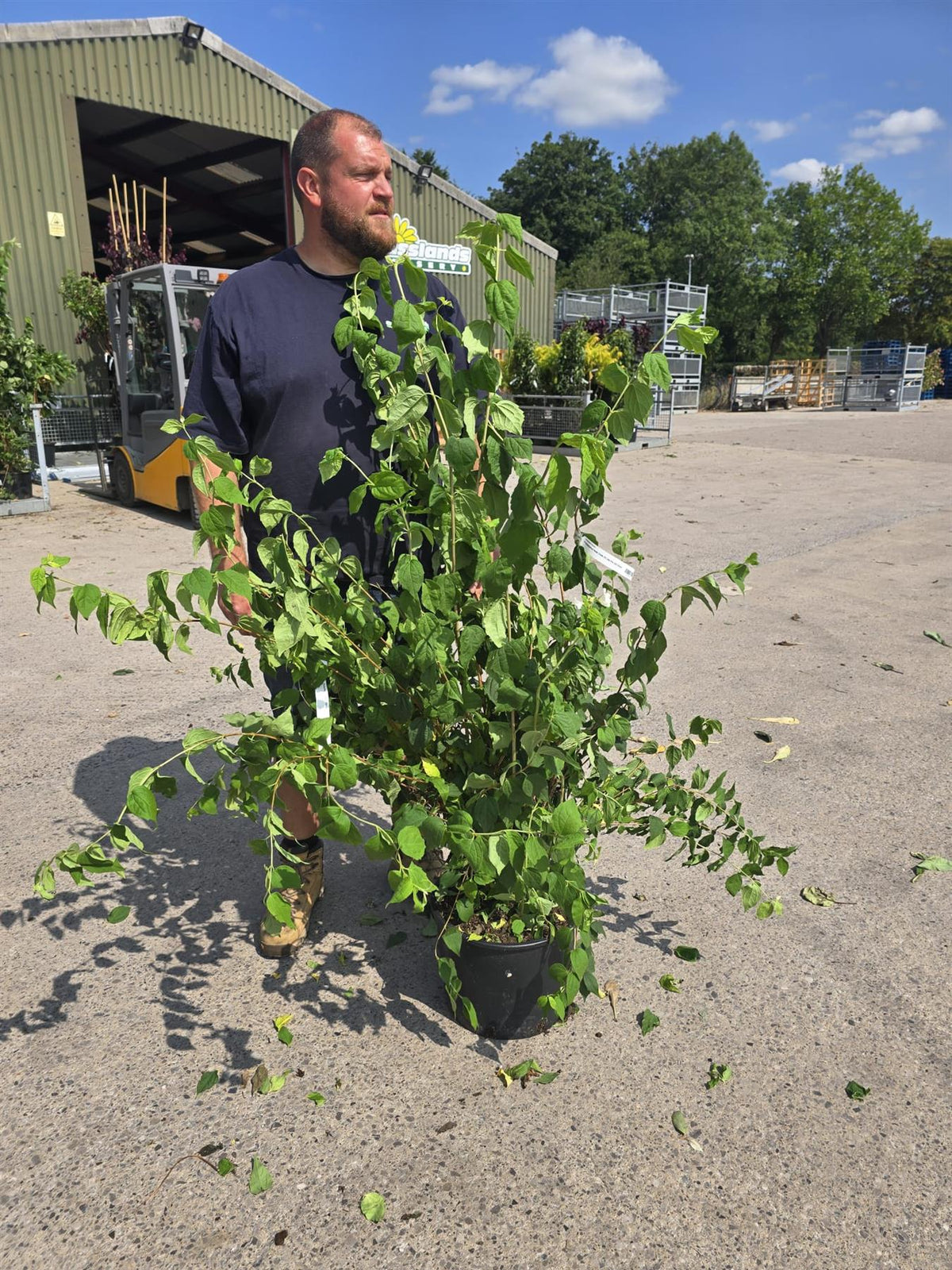
Philadelphus ‘Belle Étoile’ – The Star of the Scented Garden
Few plants can rival the heady perfume of Philadelphus ‘Belle Étoile’, one of the most charming and fragrant mock oranges available. In early summer, arching stems are smothered in single, pure white blooms, each centred with a striking purple-maroon blotch that sets off the golden stamens. The scent is intoxicating – sweet, citrusy, and reminiscent of orange blossom – making it a must-have for any garden focused on fragrance.
‘Belle Étoile’ is a compact, deciduous shrub, reaching around 1.2–1.5 metres in height, with a naturally graceful habit. Its size and beauty make it ideal for smaller gardens, courtyard spaces, and mixed borders, where it can be enjoyed both visually and aromatically. It thrives in most well-drained soils, in full sun or partial shade, and is remarkably easy to grow, requiring little maintenance beyond a light prune after flowering.
Hardy and reliable, it’s a superb choice for planting near seating areas, doorways, or pathways where its scent can be fully appreciated.
Why Choose Philadelphus ‘Belle Étoile’?
-
Exquisite Fragrance – One of the most scented mock oranges.
-
Unique Blooms – White petals with a deep maroon centre.
-
Compact Size – Perfect for small gardens and borders.
-
Low Maintenance – Hardy and easy to grow.
Planting & Care Guide
Position: Full sun to partial shade.
Soil: Well-drained, fertile soil.
Watering: Keep watered until established; tolerates short dry spells once mature.
Pruning: Remove spent flowering stems after bloom to encourage new growth.
Design & Planting Ideas
-
Plant by a patio, bench, or doorway to enjoy the scent.
-
Combine with roses, lavender, or peonies for a romantic cottage garden look.
-
Works beautifully as part of a scented garden scheme.
Guide to Planting Field-Grown Root Balled Plants
Pros:
- Established Roots: Typically stronger, established roots ensure better initial growth.
- Immediate Impact: Larger plants provide instant structure and aesthetics.
Cons:
- Heavy and Bulky: Can be difficult to transport and plant due to size and weight.
- Seasonal Availability: Generally available only in the dormant season (autumn to early spring).
Preparation for Planting:
- Unwrap Carefully: Remove any packaging material, but leave the burlap or wire basket on.
- Keep plants moist: Plants should be kept moist until the time of planting.
Planting Process:
- Dig a Hole: Make a hole twice the width of the root ball and the same depth.
- Position Plant: Place the root ball in the hole, ensuring the top is level with the ground surface.
- Do Not Remove Root Sack: Leave the burlap or wire basket around the root ball. It is bio degradable and will rot away naturally.
- Backfill: Fill the hole with soil, firming gently around the roots to eliminate air pockets.
- Water: Water deeply after planting to settle the soil and avoid wilting.
Possibility of Losses:
- Initial Shock: Some plants may suffer transplant shock, leading to potential losses.
- Mitigation: Proper care and consistent watering during the establishment phase can minimise this risk.
Main Causes of Failure:
- Improper Planting Depth: Planting too deep or too shallow can stress the roots.
- Poor Soil Conditions: Compacted or poorly drained soil can hinder root growth.
- Insufficient Watering: Both under-watering and over-watering can lead to plant stress and failure. Strong wind can dry leafy pants.
- Pest and Disease: Lack of protection and monitoring can result in damage from pests and diseases.
Tips for Success:
- Stake Larger Plants: Support with stakes to prevent wind damage.
- Mulch: Apply a layer of mulch around the base to retain moisture and regulate temperature.
- Regular Monitoring: Check for signs of stress, pests, and disease, and address them promptly.
By following these guidelines and providing consistent aftercare, you can successfully plant and establish field-grown root balled plants in your garden.
Does the height include the pot?
No, we measure from the top of the pot to the tip of the plant except for some of the instant planted screens, in this case it will be stated in the description
How long does delivery take?
Most orders are delivered in just a few days, Smaller items are often sent with Parcelforce on a next day service, Larger items should allow up to 10 days due to the size of the items they often have to be sent on our own transport.
Where will you leave my plants?
We will leave your order at the front of your property, Parcelforce may
leave your items in a safe place if you let us know, Pallet couriers
will require a flat hard surface to deliver to, no gravel or soil, a
driveway or parking spot would be best. Most importantly Deliveries by
pallet courier will require access for a large truck (bin lorry sized)
to get near the delivery point. Deliveries sent on our own transport may come in a small van or larger truck.