

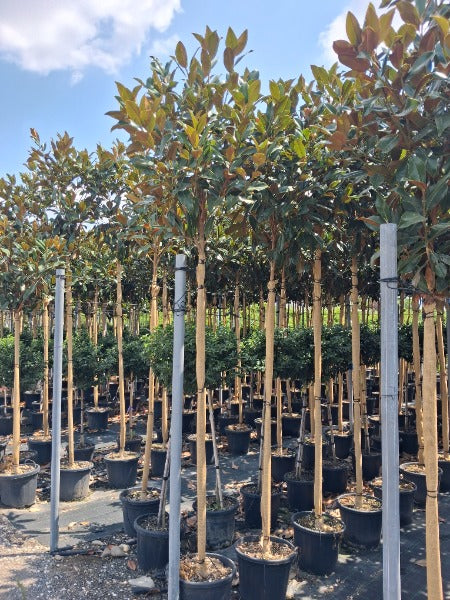

About Magnolia Grandiflora Gallisoniensis Full Standard 8/10cm Girth 30 Litre Pot
Magnolia grandiflora – The Magnificent Southern Magnolia with Bold Evergreen Presence and Iconic Creamy-White Blooms
Magnolia grandiflora, commonly known as the Southern Magnolia, is one of the most majestic and recognisable evergreen trees in cultivation. Celebrated for its large, glossy, dark green leaves with rich russet-brown undersides and its spectacular, bowl-shaped creamy-white flowers, this tree brings a sense of grandeur and timeless elegance to any garden setting. The blooms are among the largest of any hardy tree, releasing a powerful, sweet citrus-like fragrance throughout the summer months. Following the flowers, attractive cone-like seed heads develop, adding further seasonal interest into autumn. With its broad, imposing canopy and year-round handsome foliage, Magnolia grandiflora is a true landmark tree, equally impressive as a freestanding specimen, trained against a warm wall, or as a bold focal point in a larger landscape.
Habit & Appearance
Striking, year-round foliage. The large, leathery leaves of Magnolia grandiflora are a defining feature in their own right. Intensely glossy and deep green on the upper surface, they contrast beautifully with the rich, felted brown or coppery-russet undersides, creating a two-tone effect that catches light and movement throughout the seasons. As an evergreen, it provides dense, lush structure and interest even in the depths of winter.
Spectacular summer flowers. From mid-summer into early autumn, the tree produces enormous, cup-shaped blooms typically measuring 20–30 cm across. Pure creamy-white and richly textured, each flower is composed of thick, waxy petals surrounding a prominent central boss of stamens. The blooms open successively over a long period, ensuring a prolonged and impressive floral display. Their heady, exotic fragrance is one of the finest of any garden tree.
Bold, architectural form. Magnolia grandiflora develops into a broad, densely branched tree with a naturally pyramidal to rounded crown. Its substantial presence makes it an outstanding specimen tree, capable of creating a dramatic focal point in generous garden spaces. It also responds well to wall training, where its foliage and flowers are shown off to exceptional effect against a warm, sunny facade.
Growing Conditions
Position. Magnolia grandiflora thrives in a warm, sunny position and performs best in full sun, though it will tolerate partial shade. It benefits greatly from a sheltered spot, protected from cold, drying winds, which can scorch the foliage. When grown as a wall-trained specimen, a south- or west-facing wall is ideal, providing the warmth and shelter that encourages the richest flowering. In colder or more exposed gardens, a sheltered microclimate will greatly improve performance.
Soil. This tree prefers fertile, humus-rich, well-drained soil that is moist but never waterlogged. It thrives in slightly acidic to neutral conditions and will struggle in shallow, chalky soils or heavy clay that remains waterlogged in winter. Incorporating generous amounts of organic matter at planting time will improve drainage in heavier soils and moisture retention in lighter, sandier ground, giving the tree the best possible start.
Care
Watering. Regular watering is important during the establishment period, particularly in the first two to three years after planting. Once established, Magnolia grandiflora develops a degree of drought tolerance, though it will always benefit from deep watering during prolonged dry spells to maintain healthy growth and abundant flowering.
Feeding. Apply a balanced, slow-release fertiliser or a specialist ericaceous feed in early spring to support vigorous growth and encourage prolific blooming. Avoid over-feeding with high-nitrogen fertilisers, as this can promote excessive leafy growth at the expense of flowers.
Mulching. Apply a generous layer of organic mulch — such as composted bark or leaf mould — around the base of the tree each spring. This helps to retain moisture, suppress weeds, regulate soil temperature, and gradually improve soil structure as it breaks down. Keep mulch clear of the trunk to prevent rot and potential disease issues.
Pruning. Magnolia grandiflora generally requires very little pruning and is best left to develop its natural form. If shaping or size management is needed, prune lightly in mid to late spring, removing any dead, damaged, or crossing branches cleanly at the point of origin. For wall-trained specimens, tie in new growth as required and trim back any outward-facing shoots in late spring or early summer to maintain the desired form. Avoid heavy pruning, as magnolias can be slow to recover from large cuts and are prone to producing excessive regrowth that may reduce flowering.
Pests & diseases. Magnolia grandiflora is largely trouble-free and highly resistant to most common pests and diseases. Occasional issues with scale insects or honey fungus may occur, and leaf scorch can affect foliage exposed to cold, drying winds. Good siting, proper mulching, and maintaining overall plant health are the best preventative measures.
Design & Planting Ideas
Plant as a freestanding specimen tree in a generous lawn or border, where its full, imposing canopy and summer blooms can be appreciated from all angles.
Train against a warm south- or west-facing wall to create a breathtaking architectural feature and maximise flowering performance in cooler climates.
Pair with acid-loving shrubs such as rhododendrons, camellias, and pieris to create a coh