


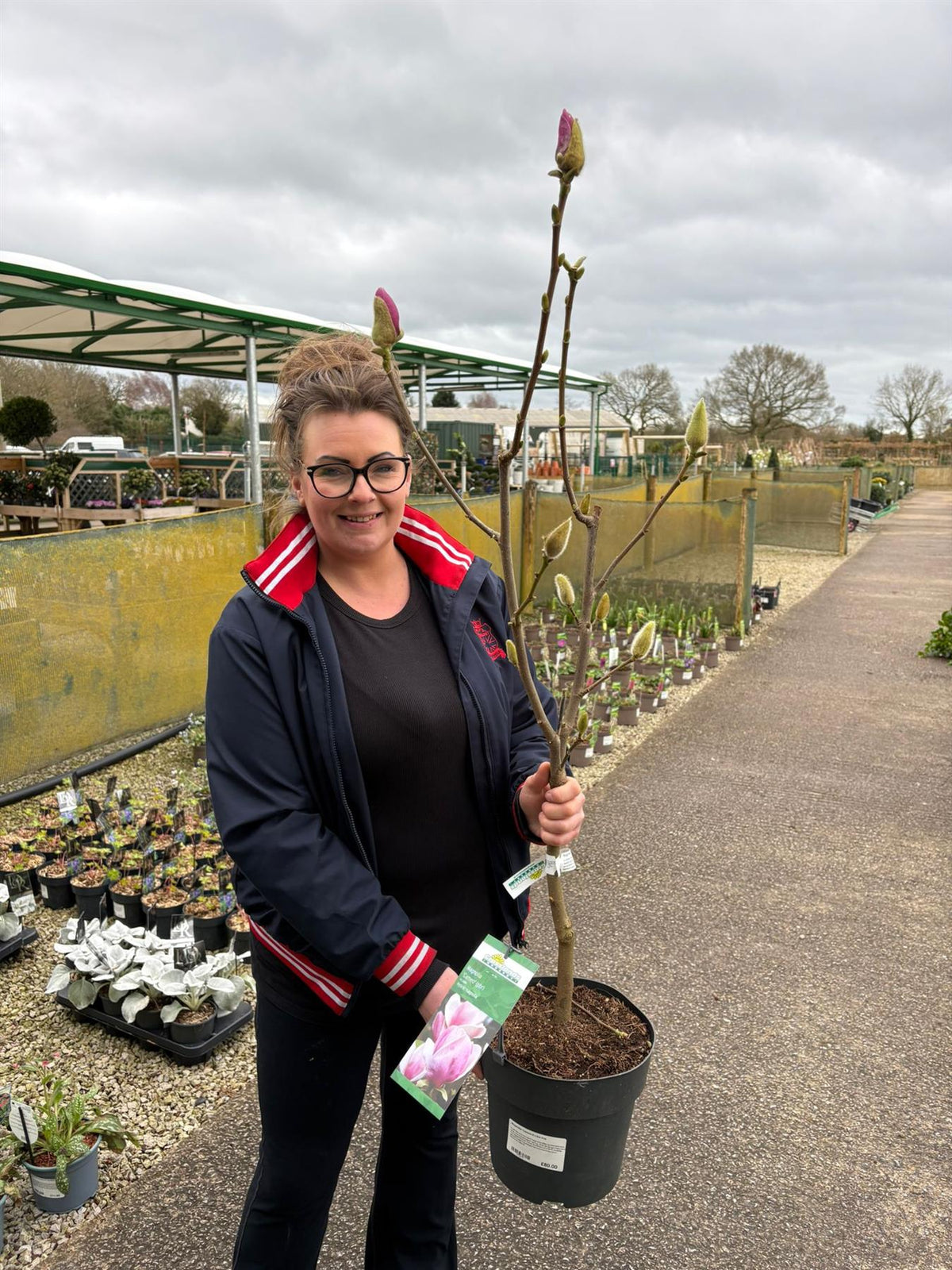
About Magnolia Cameo 6 Litre Pot
Magnolia ‘Cameo’ – A Compact Magnolia with Elegant Two-Tone Tulip Flowers
Magnolia ‘Cameo’ is a compact, deciduous magnolia prized for its upright tulip-shaped flowers in rich burgundy-purple with soft pink interiors. Flowering in spring before the leaves emerge, it creates a dramatic and refined focal point in smaller gardens.
Magnolia ‘Cameo’ is a slow-growing, upright variety that produces large, goblet-shaped blooms held upright on bare branches in early to mid-spring. The outer petals are deep rosy-purple, contrasting beautifully with the paler pink interior, giving the flowers a sculptural, almost porcelain appearance. Its neat habit makes it especially suitable for modern gardens or where space is limited.
Why Grow Magnolia ‘Cameo’?
Striking Two-Tone Flowers –
Elegant, upright blooms display rich purple-red exteriors with softer pink interiors for a dramatic spring show.
Compact and Upright Habit –
Ideal for smaller gardens, courtyard settings, or large containers.
Early Spring Interest –
Flowers appear before the foliage, creating a stunning display on bare branches.
Slow Growing and Manageable –
Develops into a well-shaped small tree or large shrub without becoming overwhelming.
Reliable and Hardy –
Hardy in most temperate gardens and dependable once established.
Height and Spread of Magnolia ‘Cameo’
Typically grows to approximately 3–4m in height with a spread of 1.5–2.5m, maintaining a narrow, upright form.
Where to Site Your Magnolia ‘Cameo’
Feature Planting:
Perfect as a specimen tree in lawns or central border positions.
Small Gardens:
Its compact size makes it suitable for limited spaces.
Sheltered Borders:
Plant in a protected position away from strong winds to protect early blooms.
Courtyard or Patio Settings:
Can be grown in a large container with suitable care.
How to Grow and Care for Magnolia ‘Cameo’
Soil –
Prefers moist, well-drained, slightly acidic to neutral soil rich in organic matter. Avoid waterlogged or highly alkaline soils.
Light –
Best in full sun to partial shade. A sheltered spot encourages the best flowering.
Watering –
Keep soil consistently moist while establishing. Avoid prolonged dry periods.
Maintenance
Feeding –
Apply a balanced fertiliser in early spring to support flowering and growth.
Pruning –
Minimal pruning required. If necessary, prune lightly in mid-summer after flowering.
Mulching –
Apply organic mulch annually to conserve moisture and protect shallow roots.
Pest & Disease Resistance –
Generally trouble-free when grown in suitable conditions.
Plants well with
Our growers' picks to plant alongside Magnolia Cameo 6 Litre Pot for a fuller, longer-lasting display.
-
Camellia Japonica Comte De Gomer 1.5 Litre Pot
Camellia japonica 'Comte de Gomer'EvergreenIn stockRegular price £17.95Regular price -
Easydendron (Rhodendron) Grazeasy Purple 10 Litre Pot
Partial shadeEvergreenGetting lowRegular price £49.50Regular price -
Helleborus Niger Christmas Carol 12cm Pot
Helleborus niger 'Christmas Carol'Semi-evergreenIn stockRegular price £8.15Regular price


