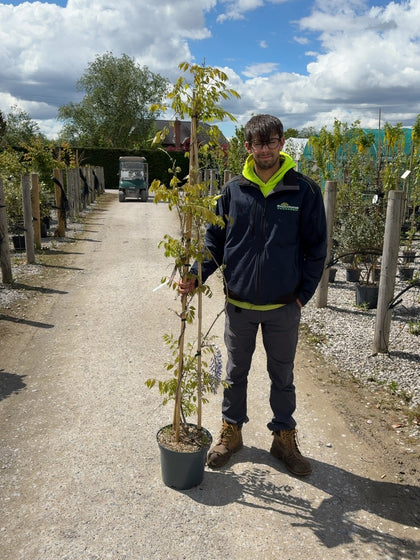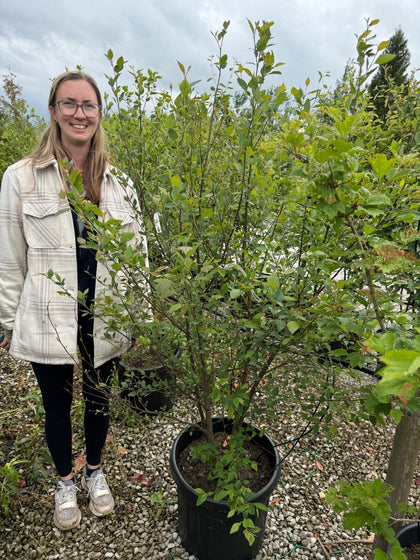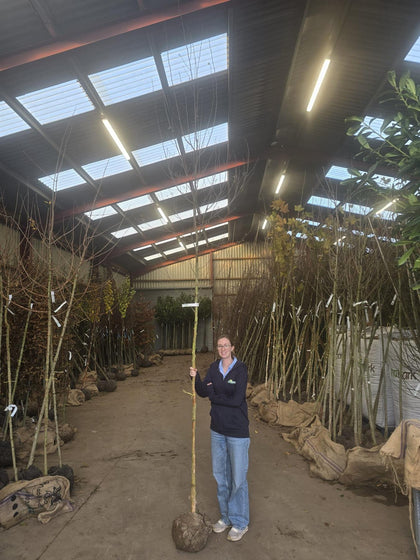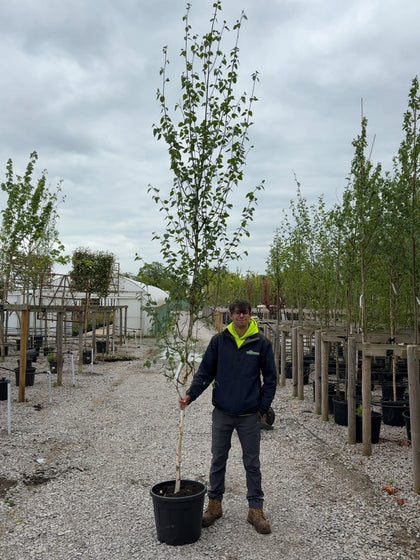
Quercus robur, or the English Oak, is a magnificent tree celebrated for its size, longevity, and ecological significance. Its stunning lobed leaves, beautiful acorns, and thick, rugged bark make it a valuable addition to UK landscapes. With minimal maintenance required and high resilience to pests and diseases, it is an excellent choice for gardens, parks, and natural spaces, providing shelter and food for wildlife while enhancing the beauty of the environment.
- Leaves: Dark green in spring and summer, turning yellow-brown in autumn before dropping. Provides dense foliage that offers shade and habitat for wildlife.
- Flowers: The tree produces separate male (catkins) and female flowers in spring. The male catkins are yellow-green, while the female flowers are less conspicuous.
- Acorns: Produces acorns that take 6-18 months to mature. They are typically 2-3 cm (0.8-1.2 inches) long and are an important food source for various wildlife, including squirrels, birds, and deer.
- Bark: The bark is thick, deeply furrowed, and gray-brown in color, adding character to the tree as it ages.
- Height: Typically grows to heights of 20-40 meters,
- Shape: Features a stout trunk with a rounded, spreading crown, providing ample shade.
- Longevity: English Oaks can live for several hundred years, with some specimens believed to be over 1,000 years old.
Oaks thrive in a variety of soil types, including clay, loam, and sandy soils. Established trees are drought-tolerant but benefit from regular watering during dry spells, especially when young. Pruning is best done in late winter or early spring to maintain shape and remove any dead or crossing branches. Avoid heavy pruning as it can lead to stress and increase susceptibility to disease.
Specimen Tree: Its impressive size and majestic form make it an excellent focal point in large gardens and parks. Commonly planted along avenues and streets due to its grandeur and ability to provide shade. Supports a wide range of wildlife, making it a valuable addition to wildlife gardens.