


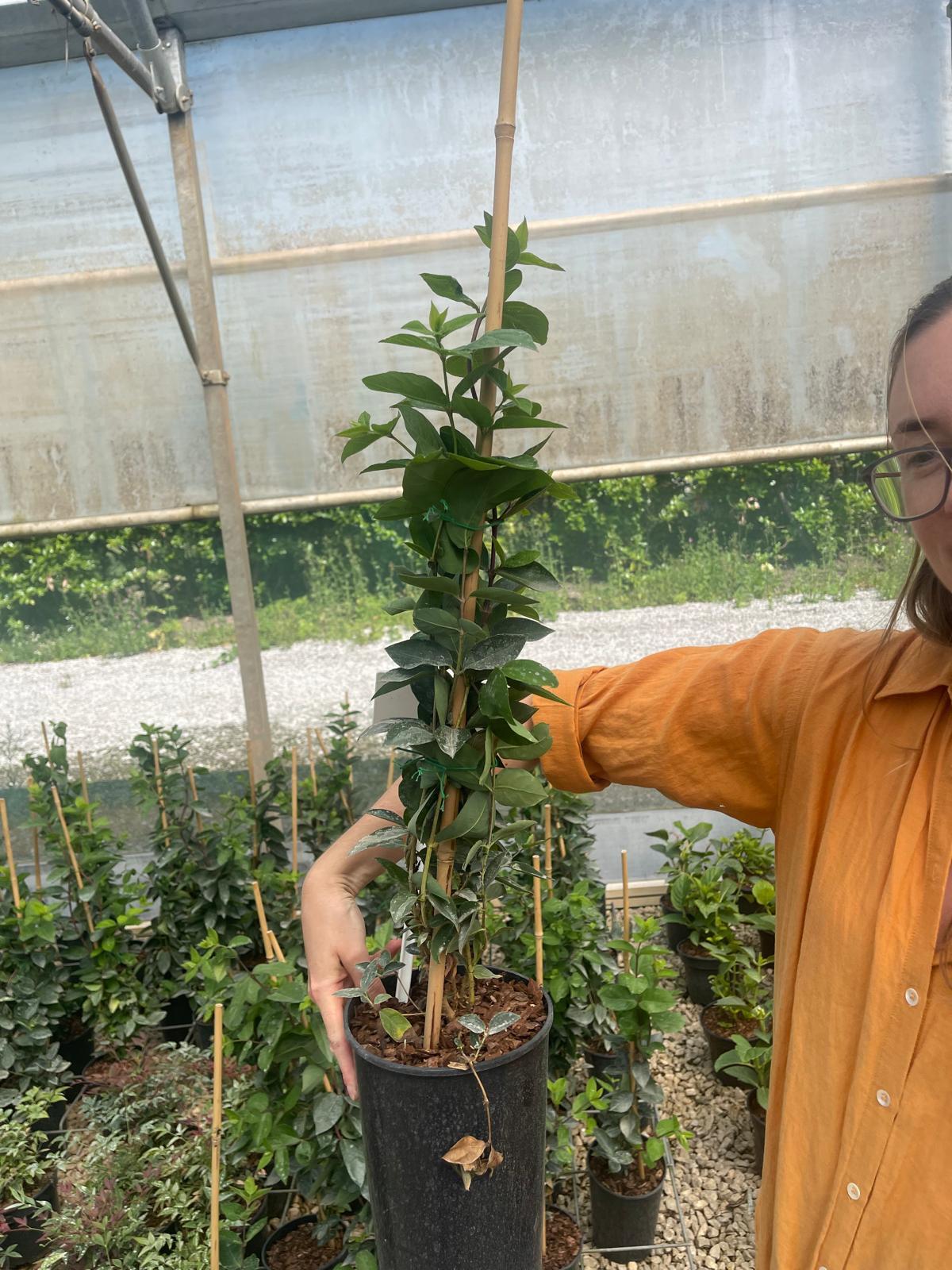
About Lonicera Fragrantissima 3 Litre Pot
Lonicera fragrantissima – A Delightful, Early-Blooming Shrub with Fragrant Flowers
Lonicera fragrantissima, commonly known as Fragrant Honeysuckle, is a deciduous shrub prized for its early-season blooms and sweet fragrance. Reaching a height of 2m with a spread of 2.5m, this hardy shrub is an excellent choice for adding colour, fragrance, and texture to gardens in late winter or early spring when most plants are still dormant. It is perfect for borders, hedges, or woodland gardens, where its delightful scent and charming flowers can be enjoyed.
In late winter to early spring, Lonicera fragrantissima produces clusters of creamy-white, tubular flowers that emit a strong, sweet fragrance, attracting pollinators like bees and butterflies. As the flowers mature, they give way to small, red berries that add seasonal interest and provide food for birds. This easy-to-grow shrub thrives in full sun to partial shade and is known for its vigorous growth and minimal care requirements, making it a great choice for gardeners of all experience levels.
Why Grow Lonicera fragrantissima?
Fragrant Blooms – The clusters of creamy-white flowers produce a powerful, sweet fragrance that signals the arrival of spring, making it a perfect plant to enjoy during the colder months.
Early Bloomer – As one of the earliest blooming shrubs, Lonicera fragrantissima brightens the garden in late winter or early spring when few other plants are in flower.
Wildlife-Friendly – The flowers attract pollinators such as bees and butterflies, and the berries provide food for birds, making it a great addition to a wildlife garden.
Hardy & Low Maintenance – This shrub is known for its hardiness and minimal care requirements, thriving in a variety of conditions and requiring little maintenance once established.
Versatile Growth – Lonicera fragrantissima can be used as a specimen plant, in mixed borders, or as a hedge, where its early blooms and fragrant foliage can be appreciated in multiple garden settings.
Planting & Care Guide
Position: Prefers full sun to partial shade. While it tolerates some shade, planting in a sunny location encourages the best flowering and fragrance. Full sun will also help maintain a healthy and compact growth habit.
Soil: Thrives in well-drained, fertile soil. It is adaptable to various soil types, including clay, loam, and sandy soils, but does best in slightly acidic to neutral pH soil. It prefers moderately moist soil but can tolerate drought once established.
Watering: Water regularly when newly planted to establish a strong root system. Once established, Lonicera fragrantissima is moderately drought-tolerant and requires less frequent watering, though it benefits from occasional watering during dry spells to maintain vigorous growth and flowering.
Maintenance:
Pruning can be done in late winter or early spring before new growth begins. Remove any dead or damaged wood, and trim back older stems to encourage fresh growth and maintain a tidy, compact form. Light pruning after flowering will also help improve air circulation and overall health.
Mulching around the base of the plant helps retain moisture, suppress weeds, and regulate soil temperature. Apply mulch in early spring to help protect the roots from extreme cold temperatures and improve soil fertility.
Fertilizing is not typically required for Lonicera fragrantissima, but a light application of balanced fertilizer in early spring can support healthy growth, especially in nutrient-poor soils.
Perfect Plant Combinations
Lonicera fragrantissima pairs well with early-blooming perennials such as Crocus, Hellebores, or Primula (Primroses), which complement its spring flowers with their own bursts of colour. It also works well with other fragrant plants like Daphne or Sarcococca (Sweet Box), where the combination of scents can fill the garden with an intoxicating aroma. For a more naturalistic look, combine with evergreen shrubs such as Ilex (Holly) or Buxus (Boxwood), which provide structure and contrast to the delicate, fragrant blooms of the honeysuckle.
Plants well with
Our growers' picks to plant alongside Lonicera Fragrantissima 3 Litre Pot for a fuller, longer-lasting display.
-
Clematis Armandii 20 Litre Pot 175/200cm Tall
Clematis armandiiFull sunEvergreenGetting lowRegular price £102.00Regular price -
Wisteria Sinensis 10 Litre Pot 175/200cm
Wisteria sinensisFull sunDeciduousGetting lowRegular price £62.50Regular price

