


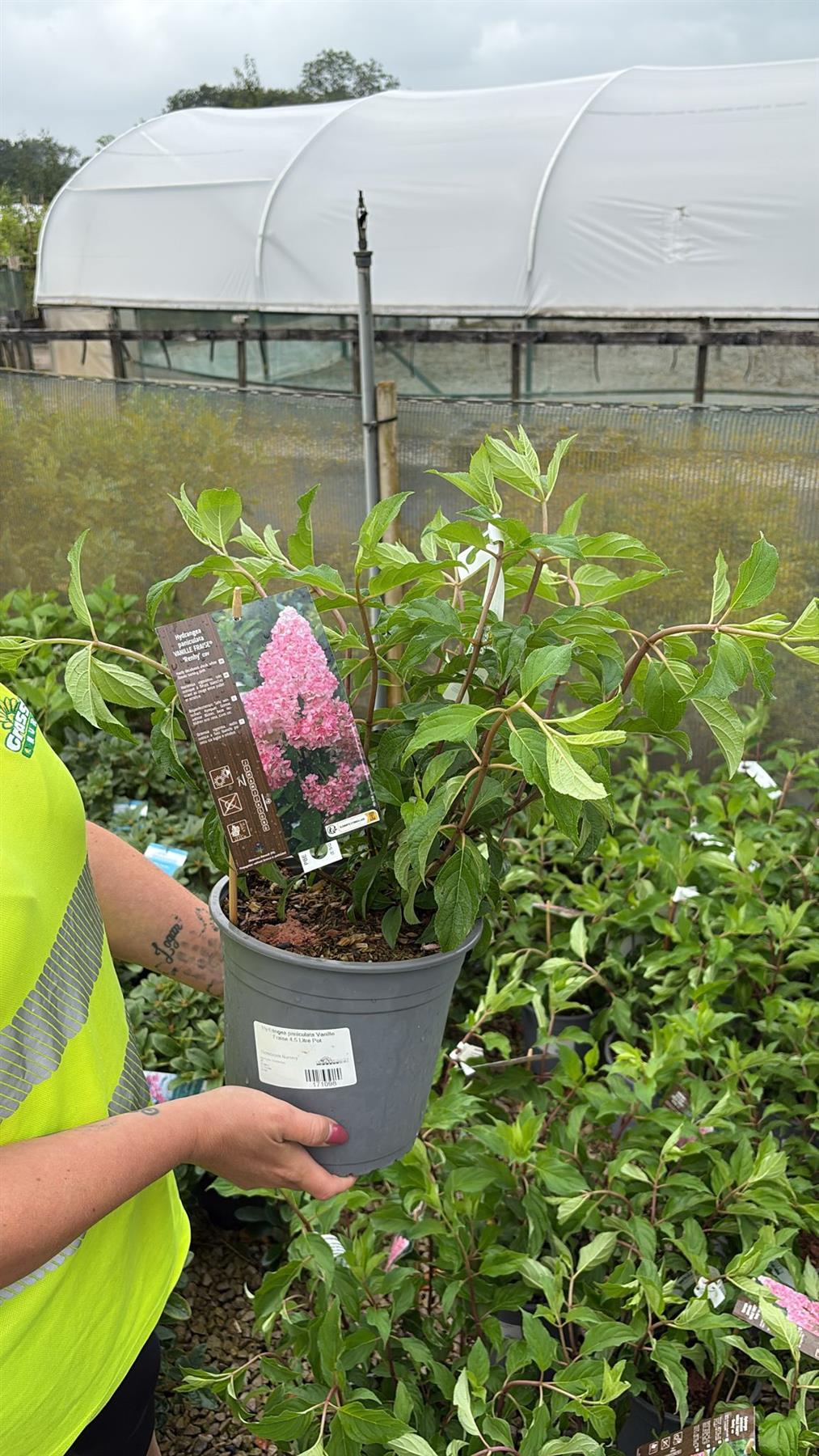

About Hydrangea paniculata Vanille Fraise 4.5 Litre Pot
Hydrangea paniculata ‘Vanille Fraise’ – A Spectacular Three‑Tone Summer to Autumn Display
Hydrangea paniculata ‘Vanille Fraise’ is an award‑winning deciduous shrub celebrated for its dramatic, colour‑shifting blooms and elegant structure. Originating from France, this highly ornamental variety produces large, upright panicles of flowers that change from creamy white to soft pink and finally to rich strawberry red as the season progresses, creating a spectacular tricolour effect. Compact yet vigorous, ‘Vanille Fraise’ adds months of vibrant interest to borders, mixed shrub plantings, and large containers.
Seasonal Interest & Growth
Spring:
Fresh green foliage emerges, forming a bushy, upright framework that sets the stage for the coming floral display.
Summer:
Cone‑shaped flower heads burst into life, opening pure creamy white before gradually blushing soft pink in midsummer.
Autumn:
By late summer and autumn, blooms take on deep raspberry‑red tones, with multiple shades often appearing on the same panicle. Foliage turns golden, extending the season of interest.
Winter:
Spent flower heads add texture and winter interest if left standing. Prune in late winter or early spring to encourage vigorous new growth.
Structure & Form
-
Height: 1.5–2 m
-
Spread: 1.2–1.5 m
-
Habit: Upright, bushy, multi‑stemmed shrub
-
Foliage: Mid‑green, ovate leaves providing a lush backdrop to the blooms
-
Flowers: Large conical panicles (up to 30 cm) transforming through white, pink, and deep red shades
-
Growth Rate: Fast
-
Hardiness: RHS H5 – Hardy across the UK
Ideal Uses
-
Feature Shrub: Striking focal point in mixed borders and informal plantings.
-
Season‑long Display: Colour‑changing flowers offer continuous interest from midsummer to autumn.
-
Cut Flowers: Fresh or dried blooms make excellent arrangements.
-
Cottage and Contemporary Gardens: Versatile in both informal and structured designs.
Care & Growing Tips
-
Position: Prefers full sun or light shade for the best colour transitions.
-
Soil: Fertile, moist but well‑drained soil; adaptable to a range of conditions.
-
Pruning: Cut back hard in late winter or early spring to maintain size and promote large blooms.
-
Watering: Water regularly during dry spells to encourage lush growth.
-
Feeding: Apply a balanced fertiliser in spring for optimal flowering.
Plants well with
Our growers' picks to plant alongside Hydrangea paniculata Vanille Fraise 4.5 Litre Pot for a fuller, longer-lasting display.
-
Hosta Sieboldiana Elegans 2 Litre Pot
Hosta sieboldiana var. elegansPartial shadeDeciduousIn stockRegular price £5.45Regular price -
Fatsia Japonica 18 Litre Pot
Fatsia japonicaFull sunEvergreenGetting lowRegular price £66.00Regular price

