


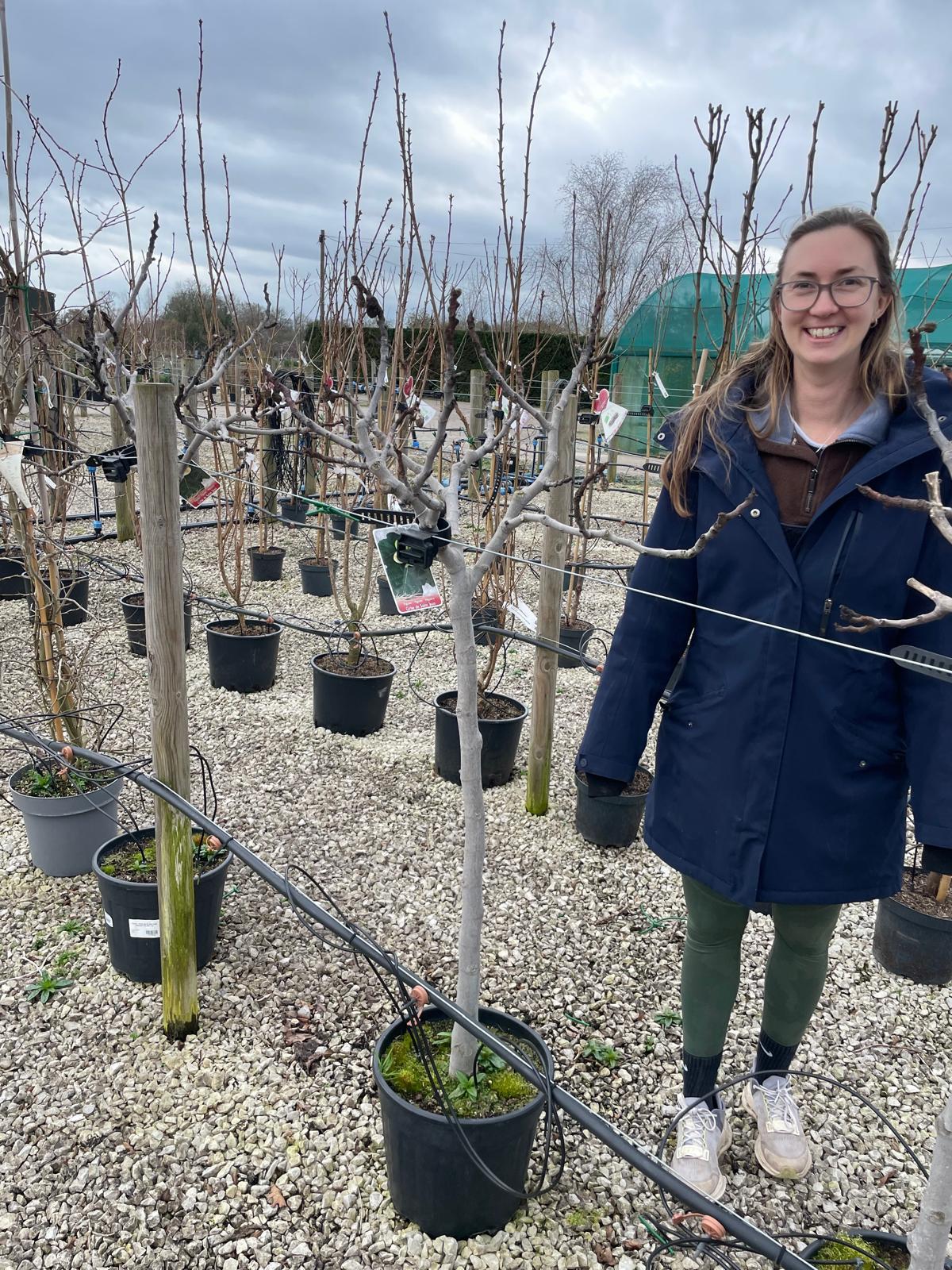
About Ficus c. Grise de St Jean Half Standard 18 Litre Pot
Fig 'Grise de St. Jean' – A Robust, Dual-Cropping Fig with Exquisite Flavor
Fig 'Grise de St. Jean' is a vigorous and productive deciduous fruit tree known for its rich, sweet figs and attractive foliage. This variety produces two crops per year in warm climates—an early breba crop in late spring followed by a larger main crop in late summer. The fruit starts off green and ripens to a soft greyish-purple, with a sweet, juicy interior and a complex, honey-like flavor. Reaching a height of up to 3–4 meters, it is ideal for gardens, patios, or greenhouse cultivation.
Why Grow Fig 'Grise de St. Jean'?
Delicious, sweet figs – The medium-sized fruit has a rich, honeyed flavor with a soft, juicy texture. Perfect for fresh eating, drying, or making jams.
Dual cropping – Produces two abundant harvests per year in warm conditions, ensuring a longer season of homegrown figs.
Hardy and adaptable – While best suited to warm climates, this variety can be grown in cooler areas with proper protection. It thrives in open ground or large containers, making it versatile for different garden spaces.
Attractive ornamental tree – The large, deeply lobed green leaves create a lush, tropical effect, making it a stunning addition to edible gardens, patios, or courtyards.
Self-fertile – Requires no pollination partner, making it easy to grow with reliable fruit production.
Planting & Care Guide
Position: Prefers full sun and a sheltered location, such as against a south-facing wall, for the best fruiting results. In colder climates, grow in a container to allow for overwintering in a greenhouse or protected space.
Soil: Grows best in well-drained, moderately fertile soil. Loamy or sandy soil with good drainage is ideal. If planting in a pot, use a mix of high-quality compost and added grit or sand for aeration.
Watering: Water regularly during the growing season, particularly in dry periods. Once established, figs are fairly drought-tolerant but benefit from consistent moisture. Avoid waterlogging, which can damage the roots.
Maintenance
-
Pruning: Prune in late winter or early spring to remove dead or weak growth and encourage strong fruiting branches. In colder regions, cut back new shoots in autumn to promote healthy regrowth.
-
Feeding: Apply a balanced, slow-release fertilizer in early spring to support fruit production. Avoid excessive nitrogen, which promotes leafy growth at the expense of fruiting.
-
Mulching: Add a layer of mulch around the base to retain moisture, suppress weeds, and protect roots from temperature fluctuations.
Perfect Plant Combinations
Mediterranean companions – Pair with sun-loving plants like rosemary, lavender, and olive trees for a warm, Mediterranean-style garden.
Pollinator-friendly plants – Combine with nectar-rich flowers like thyme, marjoram, or echinacea to attract bees and beneficial insects.
Groundcover contrast – Underplant with low-growing, drought-tolerant species such as creeping thyme or sedum to enhance the base of the tree.
Fig 'Grise de St. Jean' is a fantastic choice for gardeners seeking a productive, easy-to-grow fig with outstanding flavor. With its reliable cropping, ornamental beauty, and adaptability to different growing conditions, it makes a valuable addition to any edible or ornamental garden.