


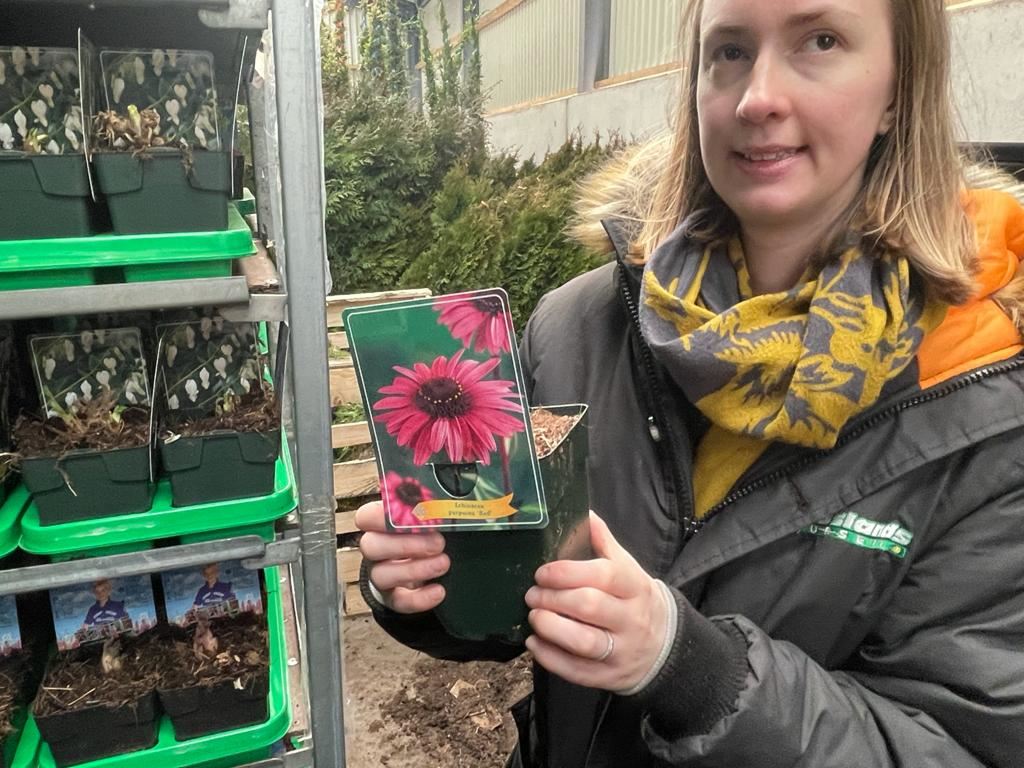
About Echinacea Purpurea Magnus 11cm Pot
Echinacea purpurea ‘Magnus’ – The Bold Coneflower with Striking Summer Colour
Echinacea purpurea ‘Magnus’, commonly called the Coneflower, is a robust, herbaceous perennial admired for its large, daisy-like blooms that brighten the summer garden. From midsummer through early autumn, it produces striking rosy-purple petals surrounding prominent, coppery-orange central cones that attract pollinators in abundance.
Unlike many coneflowers, the petals of ‘Magnus’ are held flat rather than drooping, creating a stronger, more dramatic floral display. The flowers stand proudly above sturdy stems and coarse, dark green foliage, making them both ornamental and reliable in the garden.
Reaching around 90–100 cm in height with a spread of 45–60 cm, ‘Magnus’ has a bold, upright habit, making it ideal for the middle of borders, prairie-style plantings, or pollinator gardens. Its resilience and long flowering period ensure months of vibrant colour and wildlife activity.
Why Choose Echinacea purpurea ‘Magnus’?
-
Long-Lasting Summer Blooms – Vibrant purple-pink flowers from July into September.
-
Pollinator Magnet – Bees, butterflies, and other beneficial insects flock to its nectar-rich blooms.
-
Architectural Cones – Prominent seed heads add texture and extend garden interest into autumn and winter.
-
Hardy and Reliable – Withstands heat, drought, and poor soils once established.
Planting & Care Guide
-
Position: Full sun is best, though light shade is tolerated.
-
Soil: Prefers well-drained, moderately fertile soil; adaptable to clay, sand, or loam.
-
Watering: Moderate water needs; drought tolerant when mature.
-
Feeding: A light mulch or compost in spring supports healthy growth.
-
Pruning: Deadhead spent flowers to encourage continued blooms, or leave seed heads standing for winter interest and birds.
Design & Planting Ideas
-
Plant in prairie-style borders with ornamental grasses, rudbeckias, and salvias for a naturalistic look.
-
Use in pollinator-friendly gardens, where it serves as a valuable nectar source.
-
Combine with late-summer perennials such as asters, heleniums, and veronicas to extend seasonal colour.
-
Leave seed heads for winter structure and to provide food for goldfinches and other seed-eating birds.