

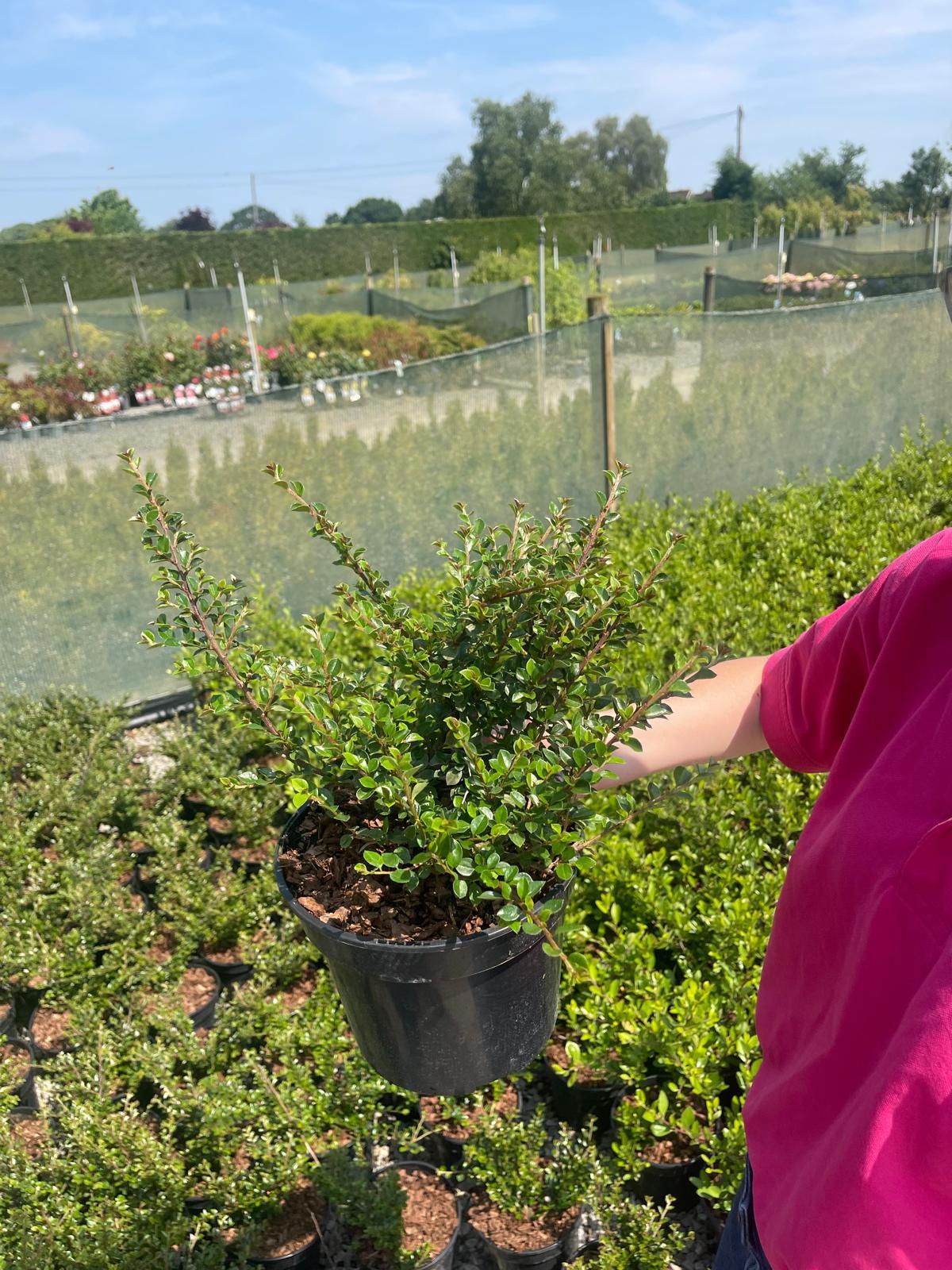
About Cotoneaster Horizontalis 3 Litre Pot
Cotoneaster horizontalis (Creeping Cotoneaster) – A Low-Growing Ground Cover with Charming Red Berries and Seasonal Interest
Cotoneaster horizontalis, commonly known as Creeping Cotoneaster, is a versatile, low-growing deciduous shrub that makes a perfect ground cover or border plant. This spreading shrub is known for its attractive, finely textured leaves, which turn a brilliant red in autumn, adding seasonal colour to the garden. In late spring, small, white to pinkish flowers emerge, followed by clusters of glossy red berries that persist into winter, providing interest and food for birds. Reaching a height of 30–45 cm (12–18 inches) and spreading 1.5–2.5 meters (5–8 feet), Cotoneaster horizontalis is an excellent choice for covering slopes, rockeries, or creating a low-maintenance ground cover in sunny or partially shaded spots.
Why Grow Cotoneaster horizontalis (Creeping Cotoneaster)?
Attractive Red Berries – The clusters of bright red berries in autumn and winter provide a beautiful contrast to the foliage and attract birds, making this shrub a wildlife-friendly addition.
Seasonal Foliage – The finely textured, dark green leaves turn a vibrant red in autumn, offering eye-catching seasonal colour before the plant loses its leaves for winter.
Hardy & Low-Maintenance – Cotoneaster horizontalis is a hardy, easy-to-grow shrub that requires minimal care, making it ideal for gardeners looking for a reliable and decorative ground cover plant.
Ground Cover & Spreading Habit – With its spreading nature, this shrub works well for covering slopes, erosion-prone areas, or creating a dense, low-maintenance ground cover that will suppress weeds.
Pollinator-Friendly – The small flowers attract bees and other pollinators, making this shrub a great addition to wildlife-friendly gardens.
Planting & Care Guide
Position – Prefers full sun to partial shade. It grows well in borders, as a ground cover, or along slopes, and can tolerate a variety of garden settings.
Soil – Thrives in well-drained, moderately fertile soil. It is adaptable to different soil types, including slightly acidic to neutral conditions.
Watering – Water regularly during dry periods, especially during the first growing season to establish the plant. Once established, Creeping Cotoneaster is relatively drought-tolerant and requires minimal watering.
Maintenance:
- Pruning – Prune in early spring to remove any dead or damaged growth and to maintain the plant’s compact form. Pruning can also help control its spread if desired.
- Mulching – Apply mulch around the base to retain moisture and prevent weed growth.
- Fertilizing – Fertilize with a balanced fertiliser in spring to encourage healthy growth, especially in nutrient-poor soils.
Perfect Plant Combinations
Creeping Cotoneaster works beautifully when paired with other ground-cover plants like Thymus or Ajuga to create a rich, textured carpet of plants. For a more dynamic look, combine with shrubs such as Lavender, Spiraea, or Hydrangea that offer contrasting forms, colours, and textures. In autumn, pair it with perennials that have vibrant foliage, such as Heuchera or Japanese Blood Grass, for a complementary seasonal display. Its spreading habit and berries make it an excellent choice for wildlife-friendly gardens, as well as for planting under trees or along fences.