

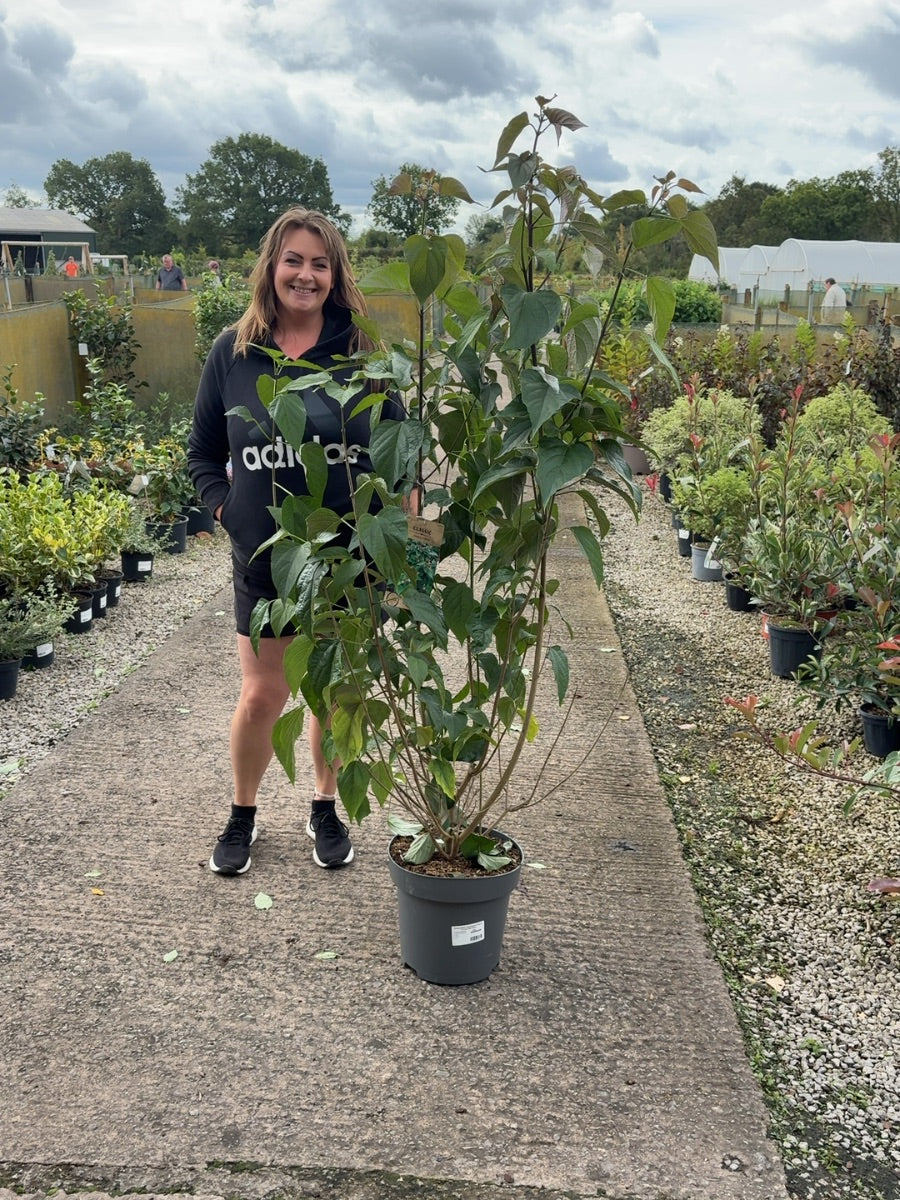

About Clerodendron Trichotomon Fargesii 12 Litre 100-125cm
Clerodendrum trichotomum var. fargesii – Harlequin Glorybower, the Autumn Jewel of the Shrub Border
Clerodendrum trichotomum var. fargesii, commonly known as Harlequin Glorybower, is a truly spectacular large shrub or small multi-stemmed tree that delivers an extraordinary sequence of ornamental interest from late summer right through to autumn. Sweetly fragrant, pure white flowers, each cradled within a distinctive blush-pink to deep rose calyx, open in loose, airy clusters from late summer onwards, filling the surrounding air with a delicate, jasmine-like scent that draws in butterflies and bees in impressive numbers.
As the flowers fade, the display reaches an even more dramatic crescendo: vivid, turquoise-blue berries emerge from within the now-enlarged, star-shaped, crimson calyces, creating a jewel-like contrast of colour that few other garden plants can rival in autumn. This striking combination of scarlet and metallic blue persists well into the season, offering an unforgettable late-year spectacle. The variety fargesii is particularly valued for its smooth, hairless leaves and generally more refined habit compared to the straight species, making it a choice selection for ornamental planting.
The foliage of Clerodendrum trichotomum var. fargesii is broad, ovate, and carried on arching branches that give the plant a graceful, open character. Over time it develops into a handsome large shrub or small tree with an elegant, layered branching structure. Reasonably hardy in sheltered UK gardens, it performs best in a warm, protected position, where it can develop its full beauty season after season.
Why Choose Clerodendrum trichotomum var. fargesii?
-
Fragrant Late-Summer Flowers – Clusters of sweetly scented white blooms with eye-catching rose-pink calyces.
-
Spectacular Autumn Berries – Vivid turquoise-blue fruits set against bright crimson calyces create a truly unique seasonal display.
-
Wildlife Magnet – Fragrant flowers are irresistible to bees, butterflies, and other beneficial pollinators.
-
Refined Foliage – Smooth, broad leaves and elegant branching structure provide season-long interest.
-
Dual-Season Drama – Earns its place in the garden from late summer through to autumn with flowers and fruit in succession.
-
Versatile Character – Suits use as a large feature shrub or trained as a handsome small multi-stemmed tree.
Planting & Care Guide
Position: Full sun to light partial shade; choose a warm, sheltered spot protected from cold winds and hard frosts to encourage the best flowering and fruit set.
Soil: Moist, fertile, well-drained soil; tolerates most soil types provided waterlogging is avoided. Incorporates well-rotted organic matter at planting to support establishment.
Watering: Keep the soil consistently moist during the growing season, particularly during dry spells. Established plants develop reasonable drought tolerance but perform best with adequate summer moisture.
Feeding: Apply a balanced general fertiliser in spring to encourage vigorous growth and a generous display of flowers and berries.
Pruning: Little pruning is required to maintain the natural, graceful habit. Remove any dead, damaged, or crossing branches in early spring. If grown as a shrub, older stems can be thinned periodically to maintain an open, airy framework. When training as a small tree, gradually remove lower branches to develop a clear stem over several seasons.
Winter Care: In colder or more exposed gardens, apply a generous mulch of bark or well-rotted compost around the base in autumn to insulate the roots. Young plants benefit most from frost protection until fully established.
Design & Planting Ideas
-
Use as a bold focal point in a sheltered mixed border, where its flowers and berries can be admired at close range.
-
Train as a small multi-stemmed tree to add structure and height to a courtyard, patio garden, or larger bed.
-
Pair with late-flowering perennials such as salvias, dahlias, or asters to create a vibrant, richly coloured autumn planting scheme.
-
Plant near seating areas or garden paths where the evening fragrance of the flowers can be fully appreciated.
-
Combine with other berrying shrubs such as callicarpa or cotoneaster to amplify the impact of autumn fruit colour across the garden.
-
Ideal for sheltered urban or walled gardens where a slightly exotic, sophisticated character is desired.
Plants well with
Our growers' picks to plant alongside Clerodendron Trichotomon Fargesii 12 Litre 100-125cm for a fuller, longer-lasting display.
-
Hydrangea Arborescens Annabelle 4.5 Litre Pot
Hydrangea Arborescens AnnabelleFull sunDeciduousIn stockRegular price £21.50Regular price -
Hibiscus syr.William R Smith 4 Litre Pot 40-60cm
Hibiscus syriacus 'William R. Smith'Full sunDeciduousGetting lowRegular price £21.50Regular price -
Cotinus cog. Dusky Maiden 10 Litre Pot
Cotinus coggygriaFull sunDeciduousIn stockRegular price £34.50Regular price -
Elaeagnus ebbingei Viveleg - Oleaster 3 Litre Pot
Elaeagnus × ebbingeiFull sunEvergreenIn stockRegular price £8.15Regular price


