

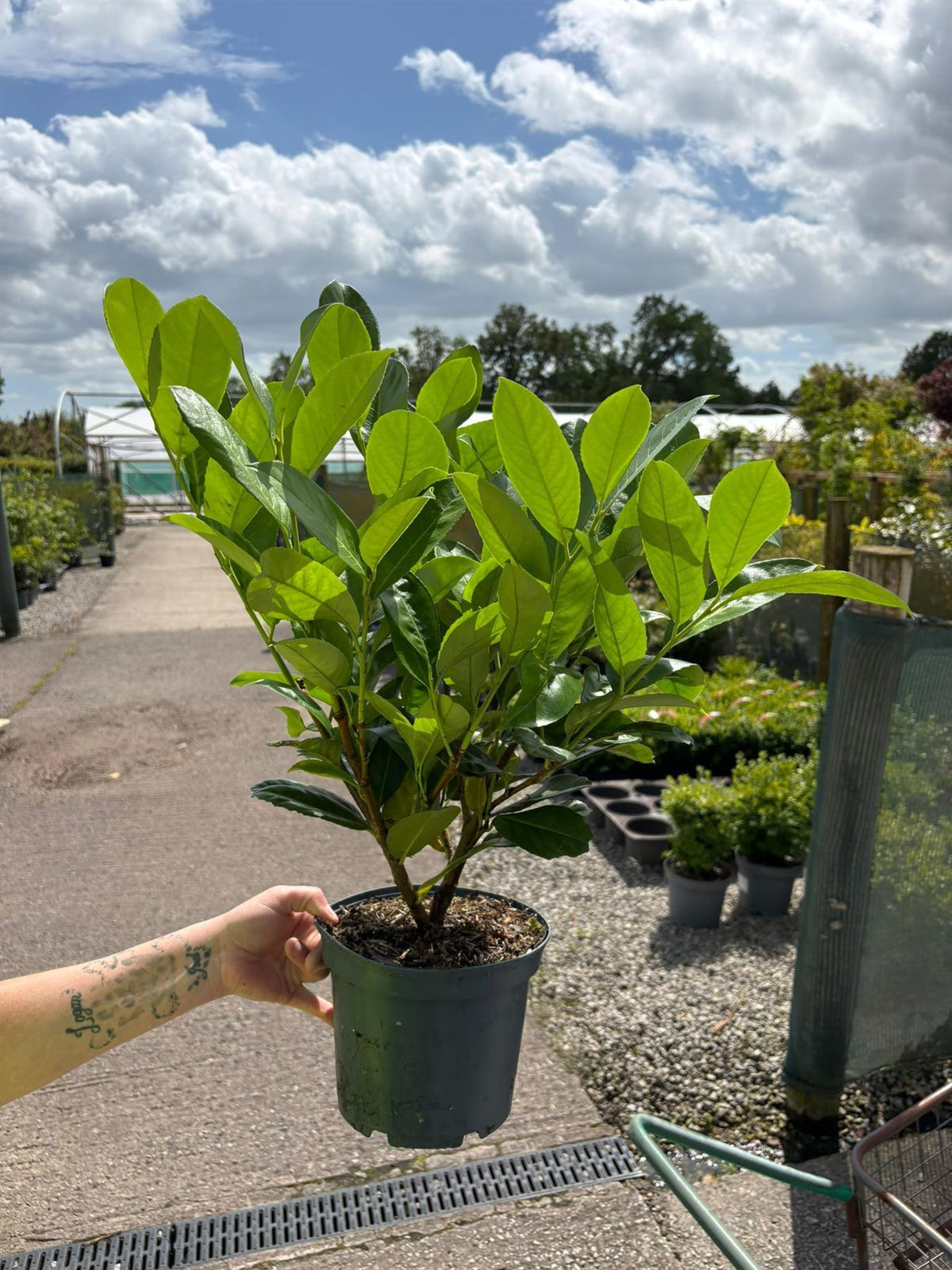
About Pallet Deal Cherry Laurel Hedging 3 Litre 60-70cm x 100
Cherry Laurel (Prunus laurocerasus) – A Hardworking Evergreen for Screening, Hedging, and Beyond
Prunus laurocerasus, commonly known as Cherry Laurel, is one of Britain's most widely planted and best-loved evergreen shrubs. Its bold, glossy foliage, vigorous growth habit, and remarkable adaptability have made it a firm favourite for privacy hedges, windbreaks, and large-scale planting schemes across gardens of every description. Few plants offer such consistent, year-round performance with so little fuss.
Beyond its screening credentials, Cherry Laurel brings genuine ornamental value through the seasons — fragrant white flower spikes brighten the garden in spring, while clusters of dark berries follow in autumn, providing an important food source for birds and other wildlife. Whether clipped into a smart formal hedge or left to develop naturally as a bold specimen, this is a plant that earns its place in almost any setting.
Key Features
Fast-growing, dense evergreen shrub with large, lustrous, rich-green foliage
Outstanding year-round screening, privacy, and shelter
Upright spikes of sweetly scented white flowers in spring
Autumn berries highly attractive to birds and wildlife
Exceptionally tolerant of shade, urban pollution, exposed sites, and a wide range of soils
Suitable for formal clipped hedges, informal screens, specimen planting, and mass ground cover
Habit & Appearance
Foliage: The leaves of Cherry Laurel are among the most striking of any hardy evergreen — large, leathery, and a deep, lustrous green with a polished surface that catches the light beautifully throughout the year. Young growth emerges in a fresh lime-green, providing a pleasing contrast against the mature foliage during the growing season.
Flowers & Fruit: In mid to late spring, erect racemes of small, creamy-white flowers are produced in abundance, carrying a pleasant, delicate fragrance. These are followed in late summer and autumn by clusters of small, rounded fruits that ripen from red to deep purple-black — much appreciated by thrushes, blackbirds, and other garden birds. Note that the berries, leaves, and seeds are toxic if ingested by humans or pets.
Ultimate Size: Unpruned, Cherry Laurel will develop into a large, spreading shrub or small multi-stemmed tree, capable of reaching 5–8m in height with a considerable spread. In good conditions, annual growth of 30–60cm is typical. With regular pruning, it is easily maintained at whatever size suits the garden.
Growing Conditions
Position: One of Cherry Laurel's greatest strengths is its tolerance of difficult light conditions. It performs well in full sun, partial shade, and even deep shade, making it one of very few vigorous evergreens capable of thriving beneath established tree canopies or against heavily shaded north-facing boundaries. It is equally at home in open, exposed positions.
Soil: Highly adaptable to most soil types, including clay, loam, chalk, and sandy soils, as long as conditions are reasonably well-drained. It performs best in a moist, fertile growing medium but is surprisingly resilient in drier or poorer soils once established. Persistently waterlogged ground should be avoided.
Hardiness: Fully hardy throughout the UK and across most of Northern Europe. Cherry Laurel withstands hard frosts reliably and rarely suffers significant cold damage, even during severe winters.
Care & Pruning
Watering: During the first growing season, water regularly and thoroughly to encourage strong root establishment. Once settled in, Cherry Laurel is notably drought-tolerant and will generally manage well on natural rainfall in typical UK conditions, though a deep watering during prolonged dry spells will keep plants looking their best.
Feeding: Apply a balanced general-purpose fertiliser in early spring to promote vigorous, healthy growth — particularly beneficial in poorer or sandier soils. An annual mulch of well-rotted organic matter around the base helps retain soil moisture, suppress weeds, and gradually improve soil structure.
Pruning: For formal hedging or clipped screens, trim once or twice per year — the first cut in late spring after flowering, and a second light trim in late summer if a particularly neat finish is required. Where possible, use secateurs rather than powered shears to avoid cutting through the large leaves; shears can leave unsightly brown edges at the cut surfaces. Plants grown as informal specimens or allowed to develop naturally require very little pruning — simply remove any crossing, crowded, or misplaced branches in late spring to maintain an open, well-balanced framework.
Pests & Disease: Cherry Laurel is a robust and generally trouble-free plant. The most common issue encountered is shot hole, a fungal or bacterial condition that causes small, circular holes to appear in the leaves. Whilst occasionally alarming in appearance, this is rarely serious and has little impact on the long-term health or vigour of an otherwise well-grown plant.
Versatile, tough, and genuinely handsome in all seasons, Cherry Laurel remains one of the most reliable evergreen shrubs available — equally at home creating a dense, structured hedge or making a bold statement as a standalone garden plant.
Plants well with
Our growers' picks to plant alongside Pallet Deal Cherry Laurel Hedging 3 Litre 60-70cm x 100 for a fuller, longer-lasting display.
-
Amelanchier Laevis Ballerina 12 Litre Pot 80-100cm
Amelanchier laevis 'Ballerina'Full sunDeciduousGetting lowRegular price £55.50Regular price -
Magnolia Black Tulip 20 Litre Pot 125-150cm
Magnolia Black Tulip ('Jurmag1')Full sunDeciduousGetting lowRegular price £171.00Regular price -
Geranium Johnson's Blue 2 Litre Pot
Geranium × johnsonii 'Johnson's Blue'Full sunDeciduousIn stockRegular price £4.60Regular price


