

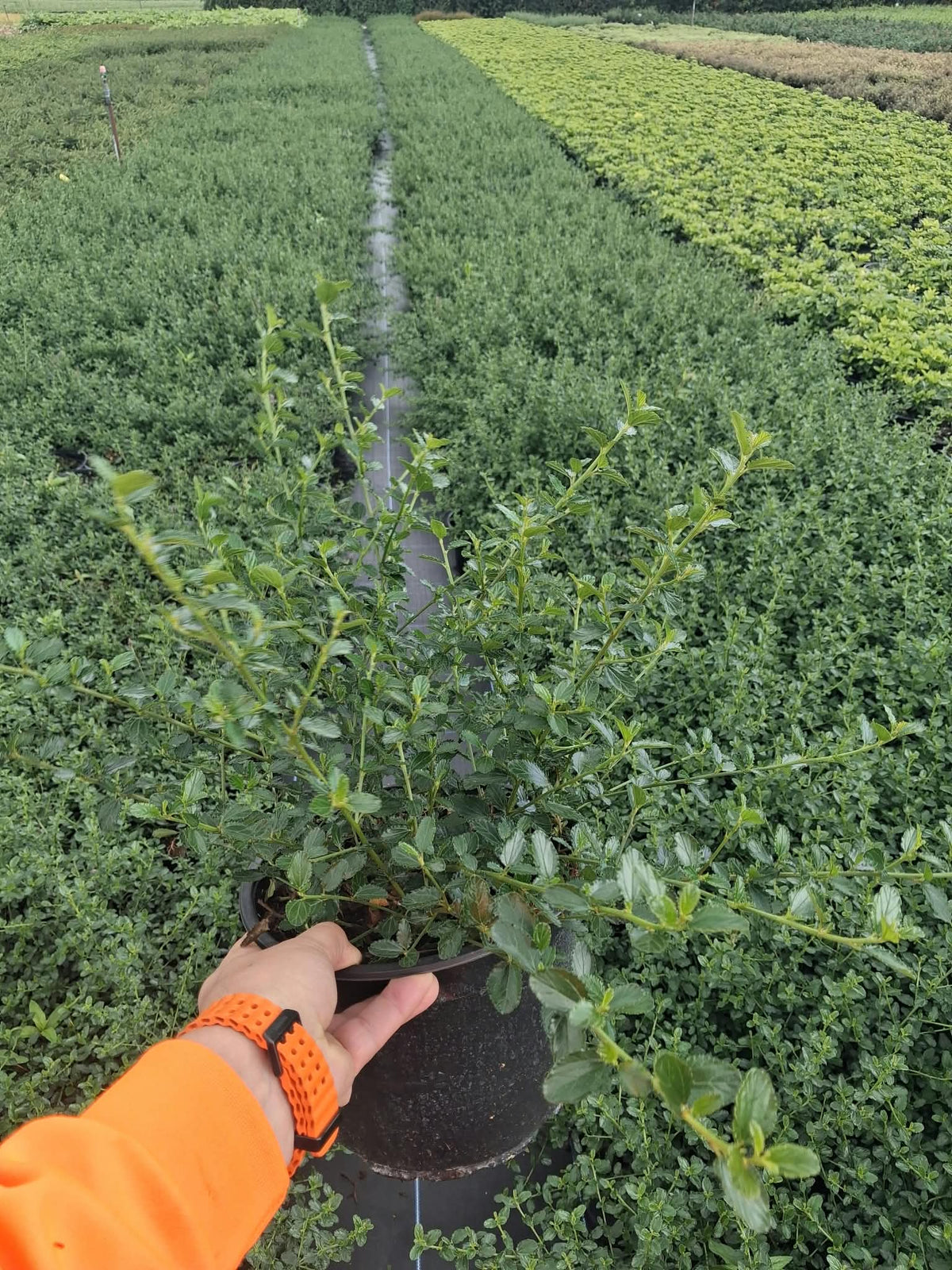

About Ceanothus Repens 5 Litre Pot
Ceanothus thyrsiflorus var. repens – Creeping Blue Blossom
Ceanothus thyrsiflorus var. repens, commonly known as Creeping Blue Blossom, is a low-growing, spreading evergreen shrub that smothers itself in clusters of soft to mid-blue flowers each spring. Unlike its upright relatives, this ground-hugging variety forms a broad, mounding carpet of glossy dark green foliage, making it one of the most versatile and visually striking groundcover shrubs available for sunny gardens. Its naturally sprawling habit, combined with its reliable and generous flowering, earns it a well-deserved place in any low-maintenance planting scheme.
With its dense, weed-suppressing growth and beautiful floral display, Creeping Blue Blossom is equally at home cascading over banks and retaining walls, softening hard landscaping edges, or filling large open borders with evergreen colour and structure year-round.
Why Grow Ceanothus thyrsiflorus var. repens?
Clouds of Blue Flowers – Produces generous clusters of soft to rich blue blooms in late spring, creating a spectacular low-level display that few other groundcover shrubs can match.
Evergreen Groundcover – Dense, glossy dark green foliage provides year-round weed suppression and structure, reducing the need for regular maintenance once established.
Low, Spreading Habit – Forms a wide, mounding carpet that hugs the ground naturally, ideal for covering slopes, banks, and awkward open spaces with minimal effort.
Pollinator-Friendly – The profuse spring flowers are a magnet for bees and butterflies, making this an excellent choice for wildlife-conscious gardeners.
Drought-Tolerant Once Established – Well-suited to free-draining soils and warmer, drier spots, thriving with little supplementary watering once its root system is well anchored.
Where to Site Your Creeping Blue Blossom
-
Banks and Slopes: Exceptional for stabilising and covering sloping ground, where its spreading habit does all the work.
-
Sunny Borders: Perfect as a low front-of-border plant, providing colour and evergreen texture at ground level.
-
Coastal Gardens: Tolerates coastal conditions well, making it ideal for seaside planting schemes exposed to salt winds.
-
Wall Tops and Raised Beds: Allowed to tumble over edges, it creates a striking cascading effect of blue flowers and glossy foliage.
-
Rockeries and Gravel Gardens: Thrives in the sharp drainage and open aspect of rock and gravel planting schemes.
Growing Conditions
Soil – Prefers well-drained, moderately fertile soil. Sandy, loamy, or stony soils are ideal. Avoid heavy clay or permanently waterlogged ground, which can cause root rot and poor establishment.
Light – Thrives in full sun, which encourages the most prolific flowering and the most compact, healthy growth. Will tolerate partial shade but may flower less freely and grow more loosely.
Aspect – Best positioned in a south- or west-facing aspect, sheltered from harsh cold winds where possible. Reasonably hardy in most UK conditions, though prolonged hard frosts in exposed sites may cause some dieback.
Watering – Water regularly during the first growing season to help establish a strong root system. Once settled in, Creeping Blue Blossom is notably drought tolerant and requires little additional irrigation.
Care and Maintenance
Pruning: Trim lightly after flowering in late spring or early summer to tidy the shape and encourage denser, more bushy growth. Avoid cutting back hard into old wood, as ceanothus does not regenerate reliably from mature stems.
Feeding: Apply a balanced, general-purpose fertiliser in early spring to support healthy growth and a generous flowering display. Avoid excessive nitrogen, which promotes leafy growth at the expense of flowers.
Mulching: A layer of gravel or organic mulch around the base helps retain soil moisture during the establishment period and keeps the root zone cool in summer.
Pests & Diseases: Generally trouble-free and robust. Good drainage is the single most important factor in keeping plants healthy and long-lived.
Perfect Plant Combinations
-
Mediterranean Companions: Pair with Lavandula, Rosmarinus, and Cistus for a drought-tolerant, sun-loving planting scheme with complementary colours and textures.
-
Perennials: Combine with Salvia, Geranium, and Phlomis for a relaxed, naturalistic border with extended seasonal interest.
-
Grasses: Ornamental grasses such as Stipa or Festuca provide movement and fine