

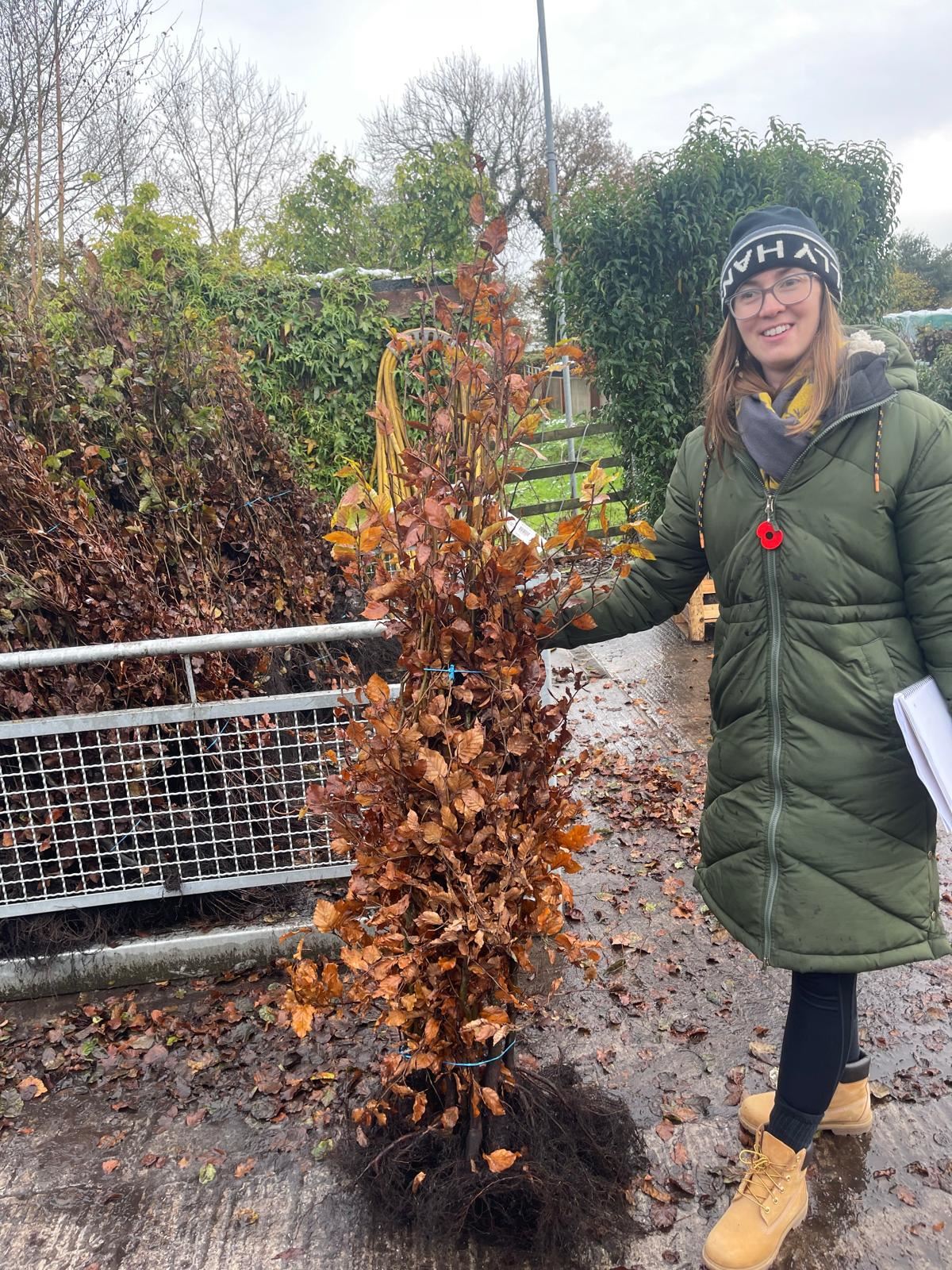
About Big Deal Copper Beech Hedging Bare Root 125-150cm Delivery from November
Copper Beech – Fagus sylvatica 'Purpurea'
A Majestic Specimen Tree with Year-Round Colour & Dramatic Presence
Copper Beech (Fagus sylvatica 'Purpurea') is one of Britain's most spectacular native tree selections, prized for its rich, deep foliage and imposing stature. Fresh purple-red leaves emerge in spring with a jewel-like intensity, deepening to a lustrous dark copper-purple through summer before transitioning to glowing bronze and russet in autumn. Even in winter, the smooth silver-grey bark and elegant branching structure ensure year-round garden interest, making this an outstanding choice as a long-lived specimen or feature tree.
Key Features
-
Foliage: Rich purple-red in spring, deepening to dark copper-purple in summer, with warm bronze and russet tones in autumn
-
Bark: Distinctive smooth silver-grey, providing winter structure and ornamental appeal
-
Growth Rate: Moderate – typically 30–60cm per year once established
-
Form: Broad, domed canopy with a strong, upright central leader when young
-
Hardiness: Fully hardy throughout the UK
-
Wildlife Value: Supports insects, birds, and small mammals; mast (beech nuts) provides food for wildlife in autumn
Perfect For
-
Landmark specimen planting in large gardens, estates, and parkland
-
Creating bold colour contrast in mixed tree and shrub planting schemes
-
Formal avenues and statement drives
-
Wildlife-friendly gardens and naturalistic landscapes
-
Long-term structural planting where a legacy tree is desired
Growing Conditions
-
Position: Full sun to partial shade; best foliage colour is achieved in an open, sunny aspect
-
Soil: Fertile, well-drained soil; tolerates chalk, loam, and sandy soils – avoid heavy, waterlogged ground
-
Shelter: Reasonably wind-tolerant once established; young trees benefit from a sheltered position while they develop
-
Aspect: South-, east-, or west-facing positions are ideal
Tip: A sunny position not only intensifies the deep purple-copper leaf colour but also promotes a fuller, more vigorous canopy over time.
Planting & Care
-
Planting Season: Bare-root trees are best planted between October and April; container-grown specimens can be planted year-round
-
Watering: Water thoroughly after planting and keep well-watered throughout the first growing season until fully established
-
Mulching: Apply a generous mulch of bark or compost around the base (keeping it clear of the trunk) to retain moisture and suppress weeds
-
Staking: Stake young trees for the first two to three years to provide stability while the root system anchors
-
Feeding: A balanced slow-release fertiliser applied in spring will support healthy establishment and strong seasonal growth
Pruning
-
Formative pruning: Remove crossing, rubbing, or badly placed branches in late winter or early spring while the tree is dormant, to build a strong, balanced framework
-
Established trees: Copper Beech requires minimal pruning once the main structure is set – light tidying in late winter is usually sufficient
-
Avoid late summer pruning: Heavy pruning after midsummer can expose the tree to disease; restrict significant work to the dormant season
Note: Copper Beech is a large, long-lived tree that will grow to considerable size over time. Ensure adequate space is allowed at planting for the eventual spread of the canopy.
Why Choose Copper Beech?
-
Dramatic, season-long colour from spring purple through to autumn bronze
-
Striking silver-grey bark for winter ornamental interest
-
Fully hardy and long-lived – a true legacy planting for generations